After standing unused for 26 years, Beirut’s Central Market may finally reopen or be reinvented as part of a broader commercial and agri-food hub project.


After standing unused for 26 years, Beirut’s Central Market may finally reopen or be reinvented as part of a broader commercial and agri-food hub project.

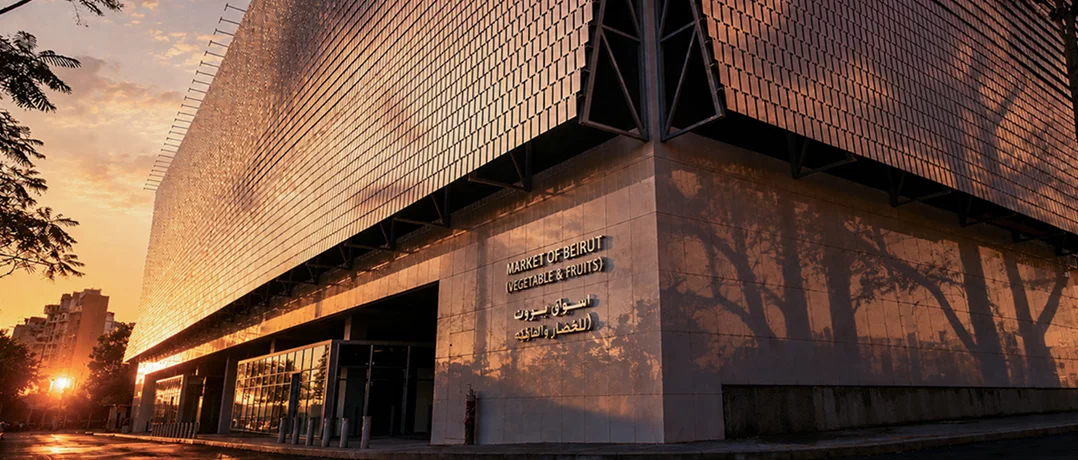
An eight-story building designed to transform the capital's fruit and vegetable trade has sat idle since 2000. Now, it may finally open or be repurposed entirely.
The Beirut Central Market, an eight-story facility equipped with refrigeration units, cold storage infrastructure, and large trading halls, was completed in the year 2000 with a clear mandate: to bring order to the capital's chaotic fruit and vegetable trade, formalize street vending, and create a centralized hub connecting farmers, wholesalers, and retailers under one roof. It never opened.
Almost immediately after construction was completed, the numbers did not add up. Operating costs were projected to exceed expected revenues, and the project was quietly shelved. For 26 years, the building has stood equipped but inactive, a monument to infrastructure ambition overtaken by economic reality. Now, for the first time in over two decades, the project is back on the table.
The Beirut Central Market's failure to launch reflects a broader pattern in Lebanon's public infrastructure history: projects conceived and built at scale, without a financially sustainable operating model to back them up. The market was designed to be one of the capital's largest trading venues, but the cost of running refrigeration, staffing, logistics, and maintenance in a country with chronic electricity shortages and a fragile economy proved too steep for projected revenues from fruit and vegetable trading alone.
Meanwhile, Lebanon's informal economy filled the void. Street vendors, roadside stalls, and unregulated wholesale points continued to define how most produce moved through the city dispersed, untaxed, and deeply entrenched. The informality the market was meant to replace simply grew around it.
What has changed today is the thinking behind the revival. Authorities are no longer treating the facility as a standalone produce market. The current proposal involves rehabilitation of the building alongside an expanded commercial model, introducing additional revenue-generating activities to supplement and cross-subsidize the market's core food trading function.
The cost of restarting operations is estimated at around $1 million, a relatively modest figure given the scale of the existing infrastructure. A committee has been formed to oversee rehabilitation efforts and clear the obstacles standing between the building and reopening. A decision on the project's future is expected within a month.
The two paths under discussion are clear: relaunch it as a functioning modern central market for fruits and vegetables, or repurpose it within a broader economic project that uses the space differently while retaining some of its original mandate.
What makes the facility potentially valuable beyond basic trading is its full complement of meeting and training halls, which position it as a possible agri-food hub, a space where farmers, producers, and consumers can interact, learn, and do business in the same location.
The next few weeks will determine whether Beirut's long-dormant market becomes a functioning institution or is reinvented into something else. What's notable is that the conversation is happening at all, that after 26 years of silence, the building is being reconsidered seriously enough to form a committee, commission rehabilitation estimates, and set a decision deadline.
Whether the eventual answer is a fruit and vegetable market, a mixed commercial hub, or something else entirely, the Beirut Central Market represents a test case for Lebanon's ability to activate its own idle public assets at a moment when the country can least afford to leave them unused.

