



Électricité du Liban warns of electricity cuts to public institutions over $248 million in unpaid bills, raising concerns about the impact on essential public services.
$248 million in unpaid bills: EDL’s biggest debtors
$248 million in unpaid bills: EDL’s biggest debtors
By The Beiruter | October 26, 2026

Reading time : 4 min
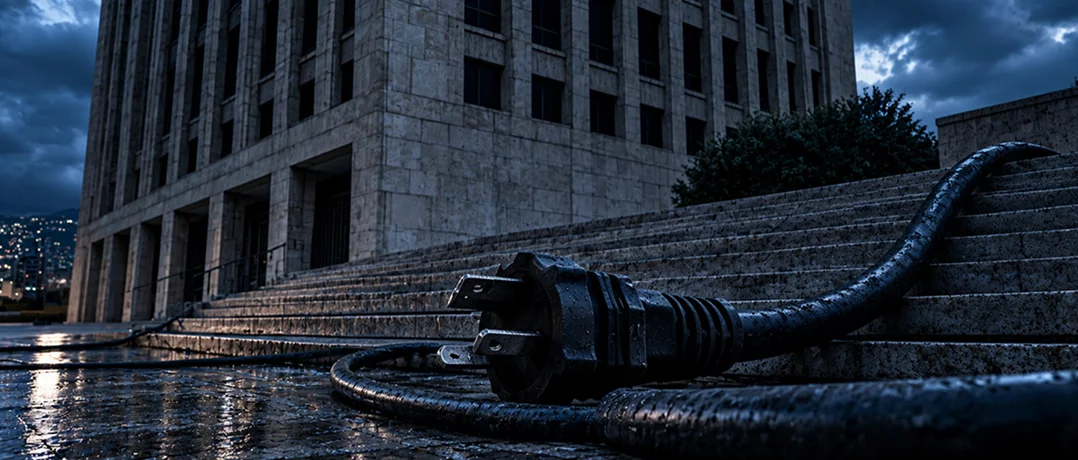
Électricité du Liban (EDL) has decided to cut power to public administrations, institutions, and autonomous public authorities that have not paid their electricity bills. They have until November 2, 2026, to pay.
State institutions owe EDL about $248 million, including $49 million in exemptions. The decision had been postponed several times for political and other reasons. Government hospitals are exempted from the cuts for humanitarian reasons, although they remain among the institutions still owing large amounts of money.
Which public institutions owe the most?
The unpaid bills cover from November 1, 2022, to June 30, 2026, the period since EDL first introduced its new tariff.
The South Lebanon Water Establishment and its branches owe the most, about $88 million. Next is the Directorate General of Civil Aviation, with $22 million unpaid. The Ministry of Telecommunications owes about $7.36 million across the country. Security institutions have run up large debts too: the Internal Security Forces (ISF) owe about $5 million and the Lebanese Army $4 million. Government hospitals are exempted from the cuts but still owe substantial amounts. Rafik Hariri University Hospital owes the most compared to any other public hospital, with an estimate of $5.44 million. Among municipalities, Sohmor owes the most, about $1.7 million.
However, not all public institutions have failed to meet their financial obligations such as The National Archives, several Banque du Liban branches, the Industrial Research Institute, and the municipalities of Dahieh, Bikfaya, Hadath, Qabb Elias, and Hasbaya.
Why are public institutions failing to pay?
The unpaid bills have drawn attention to the financial difficulties affecting public institutions and to EDL's relationship with the Ministry of Finance.
On October 6, Energy Minister Joe Saddi announced that he was stepping back from his duties. One of the reasons he gave was public institutions' failure to pay their electricity bills.
The unpaid amounts have made it harder for EDL to buy fuel and keep producing electricity. Public institutions, for their part, say the problem is not necessarily an unwillingness to pay. Several blame their unpaid bills on insufficient budget allocations from the Ministry of Finance. Some of them used to pay regularly and fell behind when their funding ran short.
What happens after November 2?
If EDL goes ahead with the cuts after the November 2 deadline, government offices, public administrations, and essential services that rely on a steady power supply could be affected.
Water establishments are a particular concern because they supply water to households and communities, and losing power would make that work harder.
Three things remain open before the deadline: whether the Ministry of Finance will provide the allocations, whether public institutions can pay, and whether EDL will carry out the cuts.
-
-
-
The Beiruter
-
