



United Nations Development Program warns that Middle East conflict fallout could push 32 million more people into poverty worldwide.
32 million face risk of poverty as middle east tensions escalate
32 million face risk of poverty as middle east tensions escalate
By The Beiruter | May 03, 2026

Reading time: 3 min
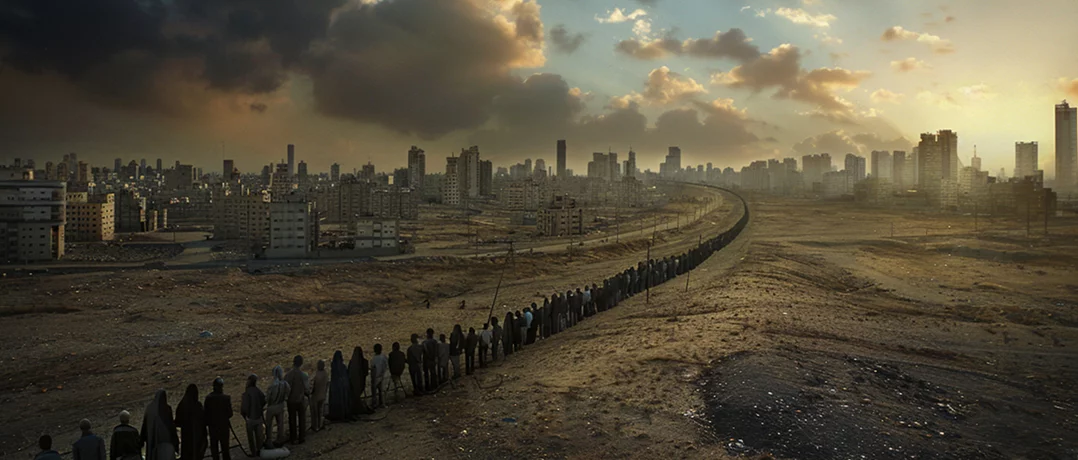
The economic shockwaves of the Middle East conflict reach far beyond the region, falling hardest on countries least equipped to absorb them.
The ongoing military escalation in the Middle East threatens to push more than 32 million people into poverty across 162 countries, the United Nations Development Program warned in a sobering policy brief. The findings underscore a reality that often gets lost in conflict coverage: the economic fallout of war does not stop at borders.
A crisis going global
The analysis, titled Military Escalation in the Middle East: Reversals in Global Development, Policy Response Options, uses Global Trade Analysis Project (GTAP) modelling to simulate economic impacts under scenarios ranging from short-lived disruption to a prolonged shock lasting eight months. Under the worst-case scenario, an additional 32 million people worldwide could be pushed below the poverty line.
Now, the conflict has already begun transitioning from what the brief calls an "acute" phase to an "enduring" one, a shift that significantly amplifies the risk of lasting harm. The longer the escalation continues, the deeper the development reversals are likely to be, particularly in countries far from the fighting but tightly bound to global energy and food markets.
Countries in the Gulf region, Asia, Sub-Saharan Africa, and Small Island Developing States are identified as uniquely vulnerable, places where fiscal space is thin, food import dependency is high, and social safety nets are already stretched.
Development in reverse
UNDP Administrator Alexander De Croo explained, "War is development in reverse. Conflict can undo in weeks what countries have built over years," he said. He stressed that the crisis was forcing impossible trade-offs on the world's most constrained governments: stabilize prices today, or fund health, education, and jobs tomorrow.
Rising energy and food prices, the primary transmission mechanisms of the shock, hit poor households the hardest, as they spend a far greater share of their income on these essentials. But the governments of developing nations, already burdened by debt and limited revenues, have little room to cushion the blow.
What policymakers should do
The brief sets out a tiered set of policy recommendations calibrated to each scenario. The first line of defense, UNDP argues, should be targeted and temporary cash transfers to protect the poorest and most vulnerable households. Depending on the severity of the crisis, as much as $6 billion in transfers could be required to make this measure effective at scale.
The report also recommends temporary, targeted subsidies or vouchers for minimum consumption blocks of electricity or cooking gas, a more precise tool than the blanket energy subsidies common across the developing world. Those broad subsidies, the brief cautions, disproportionately benefit wealthier households and are financially unsustainable over time.
The wider stakes
The message running through all socio-economic analyses is the same: the cost of inaction compounds. Every week of escalation deepens structural damage that will take years to repair, in economies that, in many cases, have not yet recovered from the cascading crises of the past half-decade. For the world's most vulnerable, the conflict is arriving at their doorsteps through higher prices, tighter budgets, and narrowing futures.
-
-

-
The Beiruter
-
