



Pope Leo XIV’s historic Lebanon visit highlights peace, interfaith unity, youth engagement, and St. Charbel’s spiritual legacy.
4 highlights ahead as Pope visits Lebanon

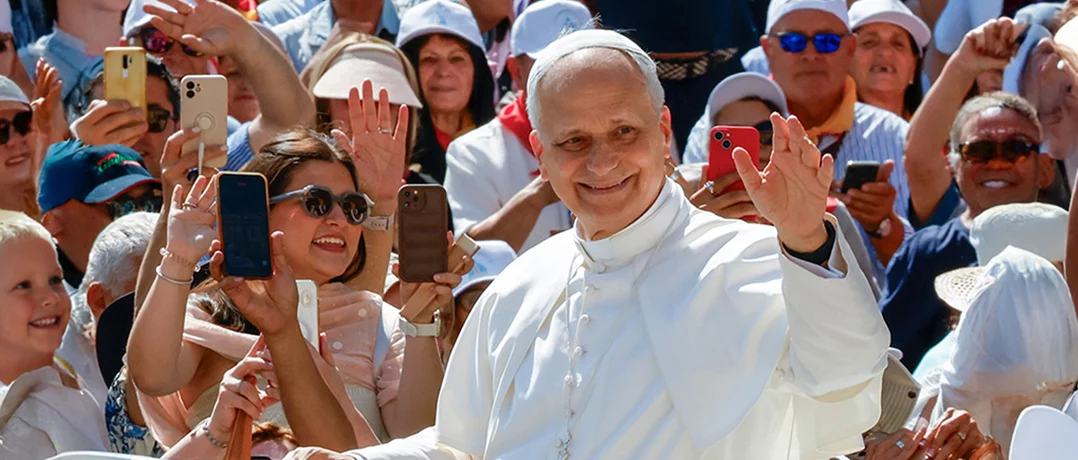
On 30 November 2025, Pope Leo XIV is set to visit Lebanon on his first official trip abroad. Without any doubt, the pontiff’s schedule is extremely tight and busy, which includes meetings with Lebanese officials, clergy and the youth, among others.
However, if we were to highlight 4 key moments and potential takeaways that the people should be keeping close eye on, they will definitely be: the Pope’s visit to St. Maroun Monastery in Annaya, the meetings with the religious leaders in Martyrs’ Square in Beirut and the youth in Bkerke (all three will be held on 1 December 2025), as well as the pontiff’s anticipated message of peace to Lebanon and the region as a whole.
From Rome to Annaya, thus the world
The Monastery of St. Maroun in Annaya, long revered for its spiritual weight and historical depth, is preparing to receive an unprecedented visitor: Pope Leo XIV, the first Supreme Pontiff to pray before the tomb of St. Charbel.
This visit highlights the monastery’s evolution from a rural Byblos estate into one of the world’s most prominent pilgrimage destinations. Annaya’s quiet atmosphere, infused with incense and prayer, has helped shape its identity as a place of reflection for thousands who travel there seeking solace and repentance. St. Charbel’s influence has elevated the small village to international renown, and the monastery continues to adapt its facilities to serve the steady flow of visitors while preserving its spiritual character.
Pope Leo XIV’s visit, occurring amid shifting conditions in Lebanon, mirrors past papal trips yet carries special significance. His prayer at Charbel’s tomb underscores the heritage of Eastern Christianity, the Maronite Church’s unique identity, and the ongoing importance of monastic life. It also signals the Vatican’s intention to reinvigorate the Church’s presence in Lebanon and the wider region by encouraging stronger pastoral engagement and renewing the mission of monastic orders.
Simultaneously, the visit seems to also be elevating St. Charbel’s standing and reputation across the world (in addition to his already infamous position). Some have even claimed that the St. Maroun Monastery might be proclaimed as an international religious monastery.
Interfaith dialogue with Lebanon’s religious components
Preparations are underway for one of the most symbolic events of Pope Leo XIV’s visit: an ecumenical gathering in Beirut’s Martyrs’ Square. It will feature a series of high-level interfaith meetings in a designated tent for the “Christian–Islamic Gathering.” The location was deliberately chosen for its proximity to major churches and the Mohammad al-Amin Mosque, as well as for its long history as a space where Lebanon’s communities have met through both hardship and unity.
The event is private and limited to 330 invited guests, selected to reflect Lebanon’s spiritual and national diversity. It brings together leaders from all Christian traditions, Islamic authorities, and proponents of interfaith dialogue, reaffirming that Lebanon’s resilience and diversity continue to sustain its identity as a meeting point of faiths and cultures.
Alongside the major gathering planned in central Beirut with Christian and Muslim leaders, the Pope will host an additional meeting at the Apostolic Nunciature in Harissa with senior figures from Lebanon’s Islamic sects. Those invited include the Grand Mufti Sheikh Abdel Latif Derian, Shiite Council Vice President Sheikh Ali al-Khateeb, Druze spiritual leader Sheikh Sami Abi al-Mona, and Sheikh Ali al-Qaddour representing the Alawite community.
The Pope will also hold a distinct session with the heads of the Orthodox churches: the Greek Orthodox Patriarch of Antioch, the Syriac Orthodox Patriarch, and the Armenian Orthodox Patriarch.
From here, Pope Leo XIV aims to highlight Lebanon’s rare tradition of religious coexistence. He hopes to reaffirm that his pastoral responsibility extends to all peoples and faiths, and that Lebanon’s interfaith balance offers a model worth safeguarding and sharing globally.
Bkerke set for a meeting with the youth
Another exciting and anticipated moment is the Pope’s gathering with young people at the Maronite Patriarchate in Bkerke, under the title “Bkerke Jeune.” In a country strained by economic collapse, emigration, and uncertainty, the event is being framed as a chance to restore confidence and reaffirm the place of youth at the heart of the Church.
The meeting is central to the Pope’s visit, as the young people represent the life force of the Church. This will be Pope Leo XIV’s first youth meeting since his election, during which he will respond to questions submitted by young people and address youth from all faiths.
Organizers highlighted the enthusiasm surrounding the visit and the extensive collaboration between Church youth offices, supported by multiple committees handling spiritual, logistical, and media preparations. One must also recall Bkerke’s long history as a meeting point between Popes and Lebanon’s youth.
As the date approaches, the Church hopes the gathering will mark a new beginning for Lebanon, carried forward by its young generation. This is especially true to stop the mass emigration that has been taking place during the past years, decreasing the number of youths in the country, who are considered the backbone and future for Lebanon’s prosperity and desired change (economically, politically and socially).
A message of peace to Lebanon and the region
During his first ever speech following his election as pope, the pontiff stood on the balcony of Saint Peter’s Basilica in Rome and addressed the public with a message centered on “Christ’s peace.” The word “peace” was even mentioned 9 times (the most repeated term) in his brief speech, alongside other notable references to dialogue and unity.
Similarly, the same message will be brought to Lebanon and the Middle East as a whole. The Pope will aim to spread peace in a country and a region that have suffered immensely from divisions, economic turmoil and never-ending conflicts. Many hope that his visit would bring peace and avoid a renewal of war with Israel, as many speculations and analysts believe has become inevitable.
As Lebanon is working to build a new, prosperous and safe country, restoring trust, credibility and stance locally and abroad, the Pope’s visit seems to resonate with the goals and aspirations of the Lebanese (officials and citizens alike).
Will he succeed in his visit and achieve the intended objectives, or is Lebanon’s situation too complex and fragile that even the Pope’s blessing and presence could fail to prevent the worst to come?
-
-

-
The Beiruter
-
