



As China and Lebanon mark 55 years of diplomatic relations, Chinese Ambassador Chen Chuandong outlines Beijing's commitment to Lebanese sovereignty, stability and reconstruction, alongside opportunities for deeper cooperation in governance, development and regional diplomacy.
55 years on, China reaffirms its commitment to Lebanon's future
55 years on, China reaffirms its commitment to Lebanon's future
By Michella Rizk | November 13, 2026

Reading time: 6 min
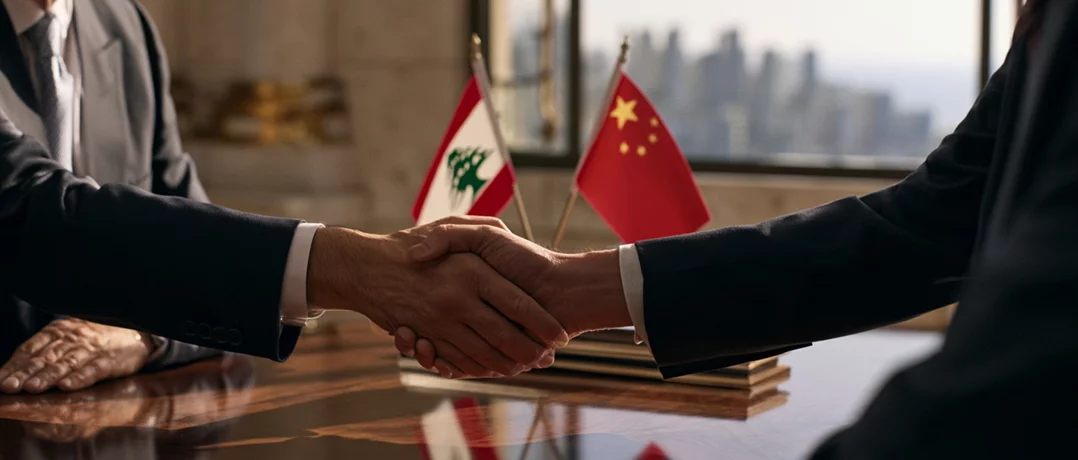
As China and Lebanon celebrate 55 years of diplomatic relations, Beijing is looking toward a new chapter of cooperation built on mutual respect, political dialogue and a shared commitment to stability and development.
At a media briefing held on November 12, 2026, Chinese Ambassador to Lebanon Chen Chuandong presented the outcomes of the Fifth Plenary Session of the 20th Central Committee of the Communist Party of China (CPC), connecting China's domestic reforms to its international partnerships and longstanding relationship with Lebanon.
The discussions addressed China's anti-corruption policies, opportunities for institutional cooperation, Beijing's contribution to peacekeeping operations in southern Lebanon and its diplomatic efforts to promote regional stability.
China's push for stronger governance and anti-corruption
The Fifth Plenary Session of the 20th Central Committee of the Communist Party of China (CPC), held over four days in late October, adopted a resolution aimed at strengthening government accountability, preventing abuses of power and intensifying anti-corruption efforts.
With approximately 100 million members and 5.4 million local Party organizations, the CPC is pursuing reforms intended to improve public administration and support China's long-term development under President Xi Jinping.
Since 2012, Chinese disciplinary authorities have handled more than eight million corruption-related cases, with approximately 7.9 million Party members facing disciplinary measures, including 963 senior officials, according to figures presented by Chinese Ambassador to Lebanon Chen Chuandong.
The latest plenary session also confirmed the expulsion of 33 senior officials for violations of Party discipline.
The resolution introduces more than 200 measures across nine priority areas, including stricter financial disclosure requirements, restrictions on conflicts of interest, oversight of officials' family business activities and measures targeting nepotism, improper gifts, misuse of public funds and corruption involving digital currencies.
Beyond disciplinary action, China's approach seeks to prevent corruption through stronger institutions and promote a culture of integrity and public service. The reforms also aim to establish clearer rules for officials, allowing them to carry out their responsibilities while maintaining accountability.
Linking these efforts to China's economic development, Chen cited growth of approximately 5.4% and GDP per capita exceeding $13,000 as indicators of the country's continued economic progress alongside its governance reforms.
The meeting also confirmed that the next Communist Party Congress will convene in Beijing in the second half of 2027.
What China's governance experience means for Lebanon
China's experience in public administration and combating corruption is creating opportunities for cooperation with Lebanon, particularly through training, institutional exchanges and governance programs.
Speaking to The Beiruter, Ambassador Chen highlighted China's existing cooperation with Lebanese political representatives, including annual visits by more than a dozen officials from different political parties to participate in exchanges on governance and anti-corruption.
"In the Arab world, we have a word, wasta. In China, we have a word, guanxi," he told The Beiruter, drawing parallels between the influence of personal connections in both societies.
Addressing such practices, he suggested, requires more than legislation and disciplinary measures. It also involves promoting integrity, responsibility and ethical conduct in public office.
The ambassador raised the possibility of comparative studies examining how cultural traditions influence governance and anti-corruption efforts in both countries.
Further opportunities could emerge from China's recently adopted legislation targeting cross-border corruption, which regulates the conduct of Chinese public officials, state-owned enterprises and private companies operating internationally.
The legislation also applies to Chinese business activities in Lebanon and could provide a basis for closer cooperation between the two countries, including exchanges of expertise and potential collaboration in corruption investigations.
China's support for Lebanese sovereignty, stability and recovery
China continues to support Lebanon's sovereignty, independence, territorial integrity and national unity through diplomatic engagement, peacekeeping operations and initiatives aimed at supporting local communities.
A central part of this commitment is Beijing's longstanding participation in the United Nations Interim Force in Lebanon (UNIFIL). For approximately 20 years, Chinese peacekeepers have contributed to demining, explosive ordnance disposal, construction, maintenance activities along the Blue Line and medical services.
China currently has more than 460 personnel serving with UNIFIL, according to Ambassador Chen Chuandong, including officers stationed at the mission's headquarters.
With the future of the international peacekeeping presence under discussion, Beijing has expressed support for Lebanon's request to extend UNIFIL's mission and intends to work with the Lebanese government and United Nations Security Council members to maintain a strong UN presence in southern Lebanon.
Beyond peacekeeping, China has also undertaken local initiatives to support communities facing economic and security challenges. During recent visits to southern Lebanon, Chen highlighted efforts to assist residents and contribute to recovery.
In Jezzine, the Chinese delegation purchased apples from local farmers struggling to sell their produce. Another initiative involved donating a solar energy system to a center serving children with special needs.
These initiatives, although modest in scale, reflect China's broader commitment to supporting Lebanese communities alongside its diplomatic and peacekeeping efforts. Beijing has also reaffirmed its willingness to contribute to the reconstruction and recovery of southern Lebanon.
Drawing on China's own historical experience of foreign intervention and national hardship, Chen emphasized the understanding and solidarity between the two countries.
"China is here to support you," he affirmed, describing a message he has consistently conveyed to Lebanese officials, political representatives and community leaders.
China's diplomatic approach to regional peace
Beyond Lebanon, China is seeking to strengthen its diplomatic role across the Middle East through dialogue, cooperation and efforts to reduce regional tensions.
Beijing's foreign policy is based on independence and peace, favoring international partnerships over military alliances and negotiated solutions over the use of force.
Recent diplomatic efforts have included high-level visits to China by leaders and officials from Oman, Qatar, the United Arab Emirates, Iran and Pakistan, alongside Chinese engagement with regional mediation initiatives.
Beijing has also dispatched three diplomatic envoys to the region to encourage dialogue and help ease tensions, including through contacts with countries such as Iran, Saudi Arabia and Oman.
These efforts reflect China's position that lasting regional security requires political solutions developed and supported by the countries concerned.
The approach is consistent with four international initiatives proposed by President Xi Jinping: the Global Development Initiative, Global Security Initiative, Global Civilization Initiative and Global Governance Initiative.
Together, they form part of China's vision of building a community with a shared future, promoting cooperation, peaceful development and greater coordination between nations.
For Lebanon, whose stability remains closely connected to wider regional developments, China's diplomatic engagement represents another dimension of its relationship with Beijing.
Fifty-five years of China-Lebanon relations
Since the establishment of diplomatic relations on November 9, 1971, China and Lebanon have developed a longstanding partnership built on political dialogue, cultural ties and mutual cooperation.
Speaking to The Beiruter, Ambassador Chen described bilateral relations as "excellent and becoming stronger," identifying mutual respect and equality as the foundations of the friendship between the two countries. Despite differences in size, political systems and cultural traditions, both nations have maintained a relationship based on respect and practical cooperation.
The discussion also recalled the legacy of Dr. George Hatem, the physician with roots in Hammana who became an important figure in modern Chinese history, reflecting the historical connections between the two societies.
Looking ahead, Chen expressed confidence in Lebanon's future, highlighting its strategic location, cultural diversity, strong educational foundations, skilled population and extensive diaspora network as assets that could drive economic recovery and long-term development.
While acknowledging Lebanon's immediate challenges, the ambassador remained optimistic about its prospects and the potential for stronger bilateral relations.
As the two countries mark 55 years of diplomatic ties, opportunities for cooperation continue to expand across governance, reconstruction, peacekeeping and regional diplomacy. Building on decades of friendship, China and Lebanon are looking toward a new chapter defined by mutual respect, equality and a shared commitment to stability and development.
-
-

-
Michella RizkContent Manager/WriterFocusing on social affairs.
-
