The war in Ukraine is reshaping modern warfare, revealing how drones, persistent surveillance, and precision strikes are challenging the traditional principles of maneuver warfare and forcing armies toward dispersed, attritional combat.


The war in Ukraine is reshaping modern warfare, revealing how drones, persistent surveillance, and precision strikes are challenging the traditional principles of maneuver warfare and forcing armies toward dispersed, attritional combat.

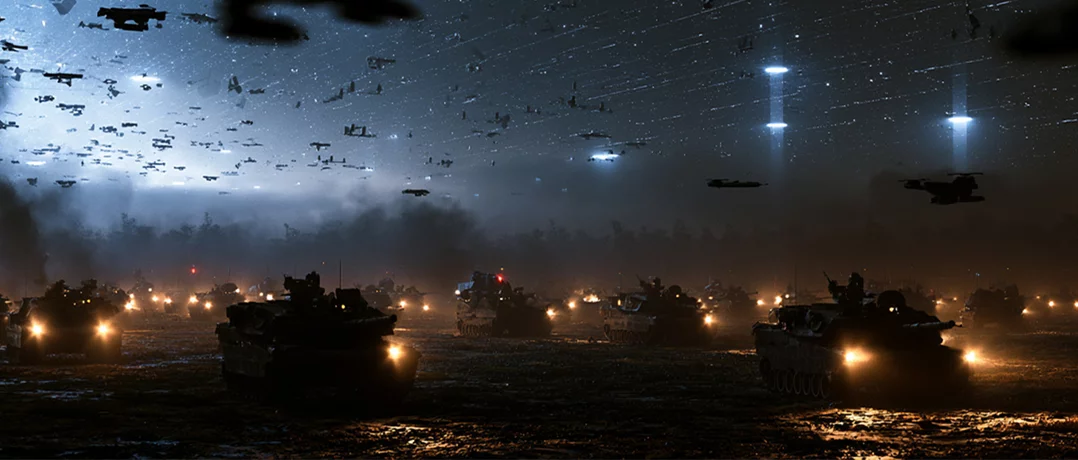
Along the Ukrainian front, this nightmare is a daily reality. Above the soldiers, drones of every size prowl the battlefield, waiting for the opportune moment to strike. For us, the pursuit ends when we wake. For a soldier caught in a drone’s sights, it may end in death.
On the battlefield, a kill zone extending roughly 30 kilometers across parts of the front has placed roads, supply routes, artillery positions and infantry movements under near-constant observation. Soldiers hide in small underground positions, vehicles race across exposed terrain, and any large concentration of troops or armor risks being detected and struck before it can enter battle.
This has created one of the central paradoxes of modern warfare. The spread of drones, precision weapons and battlefield sensors were expected to make armies faster, more lethal, and more capable of maneuver. Instead, it has increasingly immobilized them. While conventional warfare has not disappeared, the maneuver-based model on which modern armies were built is becoming harder to execute.
To understand what is changing, it is first necessary to distinguish maneuver from simple movement. Armies move troops, vehicles, and supplies every day without altering the operational balance. Maneuver begins when movement creates a wider effect: disrupting the enemy’s position faster than it can recover.
That requires an army to conceal its intentions, concentrate combat power at a chosen point, achieve local superiority, and penetrate the defensive line. The breach must then be widened quickly enough for reserves to pass through and strike command centers, supply routes, artillery positions, and rear-area infrastructure before the defender can reorganize.
The German offensive against France in 1940 remains one of the clearest demonstrations of this logic. German forces concealed the main thrust of their offensive by drawing Allied armies into Belgium and the Netherlands. Meanwhile, they concentrated their armored formations in the Ardennes, crossed the Meuse at Sedan, and broke through the French defenses.
Once the French line was penetrated, the German armored columns did not stop to eliminate every defensive position. They moved rapidly toward the English Channel, with the speed of the advance preventing the Allies from reorganizing a coherent front and trapping much of their northern armies near Dunkirk, which led to the famous evacuation.
Modern conventional forces are built around this sequence. Tanks, mechanized infantry, artillery, engineers, air defense, and logistics are meant to operate together so that a tactical penetration becomes an operational breakthrough. The decisive test is therefore whether allied troops can exploit success faster than the enemy can detect, reinforce, and strike them.
Modern armies must concentrate tanks, mechanized infantry, engineers, artillery, air defenses, and logistics to break through a fortified line. Yet the distance at which such forces can assemble safely has steadily increased. In May 2022, Russian forces were still attempting battalion-scale mechanized actions close to the front, including the disastrous Siverskyi Donets crossing, where more than 70 armored vehicles were reportedly destroyed.
By 2025, the contested gray zone had expanded from around 500 meters–2 kilometers the previous year to as much as 5–7 kilometers in some sectors. As of today, armored vehicles are often concealed 3–10 kilometers behind the line, while the drone threat extends roughly 15 kilometers into rear areas. Both sides have therefore moved away from gathering large formations close to the front, where they can be identified and struck before an offensive properly begins.
Persistent surveillance also makes surprise increasingly difficult. Preparations that once could be concealed behind the front now leave visible patterns in traffic, logistics, communications, and artillery activity. It is pushing more of the battlefield underground. Russian drone crews operate from buried positions and basements, while Ukrainian infantry shelter in camouflaged foxholes, emerging only briefly to avoid detection.
During Russia’s March 2025 counteroffensive in Kursk, assault troops took this logic further by moving through an unused gas pipeline and emerging near Sudzha from an unexpected direction. While the infiltration did not alone cause the collapse of the salient, it helped seize vital positions and supported a wider offensive that soon forced Ukrainian troops to withdraw from most of the territory they had captured. Its significance lay in briefly restoring surprise on a battlefield where visible movement had become increasingly difficult to conceal.
That advantage, however, is usually temporary. When only one army possesses this level of awareness, information superiority can accelerate maneuver. But when both sides can observe and strike each other, transparency may produce paralysis instead. This helps explain why local penetrations in Ukraine rarely develop into operational breakthroughs.
A more substantial exception was Ukraine’s offensive around Kharkiv in autumn 2022. Ukrainian forces struck a thinly held sector near Balakliia and quickly ruptured the Russian line. Moscow’s troops were badly overstretched, with too few reserves behind the front to contain the breach. Once Ukrainian units pushed into the rear, they encountered little organized resistance, severed key supply routes, and forced a broad Russian withdrawal from Kupiansk and Izyum. Within eight days, Ukraine had recovered approximately 8,500 square kilometers of territory.
That success depended on conditions that are far harder to reproduce today. Russian forces lacked sufficient defensive depth, nearby reserves, and much of the battlefield experience accumulated over the following years. Since then, both armies have adapted by dispersing forces, strengthening defensive belts, expanding drone coverage, and improving their ability to detect preparations before an attack begins. Finding another sector so weakly defended that a breach could develop into a rapid collapse is now far less likely.
The battlefield emerging in Ukraine is increasingly organized around dispersion rather than mass. Instead of overwhelming a sector through one concentrated assault, both sides seek to identify and destroy individual vehicles, artillery pieces, command posts, supply routes, and drone operators. Combat power is still concentrated, but increasingly through coordinated strikes rather than the physical massing of troops and equipment.
Territory must still be occupied by infantry, but soldiers now often operate in groups of only one to three men, moving through gaps and gradually establishing positions in buildings, trenches, or tree lines. Artillery remains essential, especially when fog or poor weather limits drone operations, while tanks are heavily camouflaged, protected by cages, and used sparingly to reduce the risk of detection.
The result is a shift from concentration, breakthrough, and exploitation toward dispersion, detection, attrition, and incremental occupation. Combat power is still massed, but increasingly through coordinated effects rather than the physical concentration of troops and vehicles.
It would be wrong to say that these developments announce the end of conventional warfare. Armies must still capture territory, destroy enemy forces, and hold defensive positions. What the Ukrainian conflict calls into question is whether they can accomplish those objectives through the familiar sequence of massing armor, breaching a line, and rapidly exploiting into the rear.
The drone threat now extends roughly 15 kilometers behind parts of the front, while the chain between detecting a target and attacking it can take as little as three to five minutes. Under such conditions, an army that assembles a large exploitation force before suppressing the enemy’s surveillance network risks losing it before it begins moving.
Future breakthroughs may therefore begin with a battle to blind the opponent through electronic warfare, decoys, deception, and attacks on drone crews, communications, and artillery. Only after creating a temporary pocket of opacity can an army concentrate and move. Maneuver is not disappearing, but the conditions required to achieve it are becoming far more demanding.