A cautious Syrian-Egyptian rapprochement emerges through symbolic visit, blending economic cooperation and regional security concerns amid lingering ideological distrust today.




A cautious Syrian-Egyptian rapprochement emerges through symbolic visit, blending economic cooperation and regional security concerns amid lingering ideological distrust today.

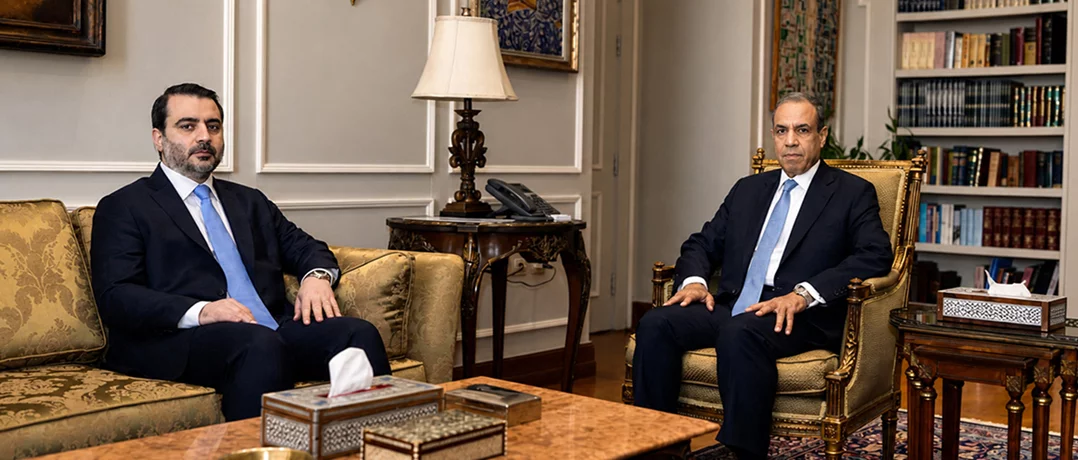
The official visit of Syrian Foreign Minister Asaad al-Shaibani to Cairo marks one of the most politically significant moments in Syrian-Egyptian relations since the collapse of the government of Bashar al-Assad on 8 December 2024. It represented a cautious but deliberate attempt by Damascus and Cairo to rebuild communication channels after years of distrust, hesitation, and regional turbulence.
Yet despite the positive diplomatic language surrounding the visit, the relationship remains shaped by deep political sensitivities, particularly Egypt’s longstanding suspicion toward Islamist movements and the ideological background associated with elements of Syria’s new leadership.
Shaibani’s visit to Cairo was the first official visit by a Syrian foreign minister to Egypt since the political transition in Damascus. Its timing was particularly important, coming only days after Syrian President Ahmad al-Sharaa met Egyptian President Abdel Fattah el-Sisi on the sidelines of the Arab-European consultative summit in Cyprus (which some observers criticized the encounter for being a bit “cold”).
The talks in Cairo focused on several interconnected files: bilateral cooperation, economic integration, regional security, Israeli military actions in Syria, developments in Lebanon, and the broader consequences of escalating tensions involving Iran and the United States (U.S.). Egyptian officials reiterated their support for Syria’s territorial integrity and condemned Israeli violations of Syrian sovereignty, particularly after Israel expanded its military presence in the Golan buffer zone following Assad’s fall.
Egypt’s emphasis on Syrian unity reflects a broader strategic calculation. Cairo fears that prolonged instability in Syria could deepen regional fragmentation, strengthen extremist networks, and create new security threats across the Arab world. For Egypt, preserving the Syrian state (regardless of who governs it) has become a matter of regional and national security.
At the same time, Syria’s new leadership appears eager to secure Arab legitimacy and reduce diplomatic isolation (which has plagued the country since the beginning of the civil war in 2011). Cairo, with its political weight and central role in Arab diplomacy, represents a critical gateway for Syria’s reintegration into the regional order.
While political symbolism dominated headlines, economic considerations may ultimately become the real foundation of the evolving relationship between Cairo and Damascus.
The Syrian delegation included Economy and Industry Minister Nidal al-Shaar, underscoring the importance both governments attach to commercial cooperation. Discussions focused heavily on investment opportunities, industrial partnerships, reconstruction projects, and energy coordination.
Syria’s reconstruction needs remain enormous after years of war and institutional collapse. Egyptian companies, particularly in infrastructure, construction, telecommunications, and energy, are positioning themselves to play a significant role in rebuilding Syrian state infrastructure (while other regional actors have been eying for a role as well in Damascus). The formation of a Syrian-Egyptian business council during the visit further demonstrated the intention to institutionalize economic cooperation.
Energy cooperation may prove especially significant. Egypt has ambitions to become a major energy and liquefied natural gas (LNG) hub, while Syria’s geographical position offers potential strategic transit opportunities connecting the Eastern Mediterranean to Europe.
This convergence of interests creates an economic incentive which may gradually help both governments overcome lingering distrust and move toward a more stable relationship.
Despite the diplomatic warmth surrounding the visit, Cairo’s approach toward the new Syrian leadership remains cautious and heavily conditioned by security considerations.
Since the rise of Muslim Brotherhood-linked political movements across the region after the 2011 Arab uprisings, Egypt has adopted an uncompromising stance against political Islam. Following the removal of former Egyptian President Mohammad Morsi in 2013, who was himself affiliated with the Muslim Brotherhood, the Egyptian state viewed Islamist organizations not merely as political competitors, but as existential threats to state stability.
This legacy continues to shape Egyptian foreign policy. Cairo remains deeply suspicious of any regional political force perceived to have ideological or organizational ties to Islamist currents, particularly movements influenced by the Muslim Brotherhood or militant Islamist factions.
The new Syrian leadership (meaning Hay’at Tahrir al-Sham, which is an Islamist movement previously affiliated with al-Qaeda and ISIS) has therefore faced intense scrutiny from Egyptian security institutions. Concerns have centered on the presence of foreign fighters, armed factions, and Islamist elements within Syria’s transitional political landscape. Egyptian officials have repeatedly highlighted the need to combat extremism, preserve state institutions, and prevent Syria from becoming a platform for transnational militant activity.
This explains why Egypt’s rapprochement with Syria has moved cautiously compared to some other Arab states.
Israel’s intensified military activity in Syria, fears of wider regional escalation involving Iran, uncertainty in Lebanon, and concerns over state fragmentation have all reinforced the perception that Arab coordination is urgently needed. Egypt increasingly sees Syria’s stabilization as part of a broader effort to prevent regional collapse.
Similarly, Syria’s leadership understands that rebuilding the country requires Arab economic support and diplomatic legitimacy, both of which Egypt can help facilitate.
The relationship therefore reflects a partnership of necessity rather than full strategic alignment. Both sides remain cautious, but both also recognize that continued estrangement may no longer serve their interests in an increasingly volatile regional environment.
Although major differences and mutual suspicions persist, particularly regarding Islamist movements and security concerns, both Cairo and Damascus appear increasingly convinced that cooperation is preferable to continued distance.
The success of this relationship will therefore depend on whether both sides can convert pragmatic cooperation into sustainable political trust.

