

France and Germany abandon their flagship fighter project, exposing divisions in European defense cooperation and challenging ambitions for strategic autonomy.
A fracture in European defense ambitions

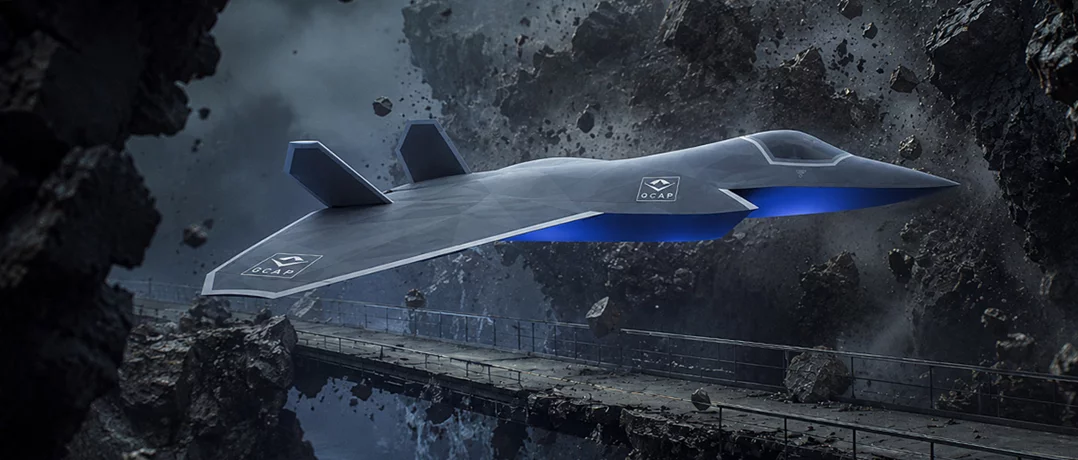
The decision by France and Germany to abandon their joint next-generation fighter jet program marks one of the most significant setbacks in European defense cooperation in recent years. Conceived in 2017 as the centerpiece of the Future Combat Air System (FCAS), the project was intended to symbolize a new era of military integration among European powers. More than just an aircraft, FCAS represented a strategic vision of a technologically advanced, interconnected combat system that would strengthen Europe’s defense capabilities while reducing reliance on external partners.
However, after nearly a decade of negotiations, industrial disputes, and political efforts to keep the initiative alive, Berlin and Paris have concluded that the project’s core objective, a jointly developed 6th-generation fighter aircraft, is no longer achievable. The collapse of the program comes at a particularly sensitive moment, as Europe faces growing security challenges from Russia, uncertainty regarding long-term American security commitments, and increasing calls for greater strategic autonomy.
The origins of FCAS
The Future Combat Air System was launched by French President Emmanuel Macron and former German Chancellor Angela Merkel in 2017. Spain later joined the initiative, transforming it into one of Europe’s most ambitious multinational defense projects.
The program was designed to replace France’s Rafale fighter jets and the Eurofighter aircraft operated by Germany and Spain around 2040. Beyond the aircraft itself, FCAS envisioned a networked battlefield architecture that would integrate drones, sensors, communications systems, and artificial intelligence (AI) into a unified combat environment.
Estimated to cost more than €100 billion, the project was regarded as a cornerstone of Europe’s efforts to develop independent military capabilities and strengthen its defense industrial base.
Industrial rivalries prove insurmountable
Despite strong political backing from both governments, the project struggled from the outset due to tensions between its principal industrial partners: France’s Dassault Aviation and Airbus Defense and Space, representing German and Spanish interests.
At the heart of the dispute was the question of leadership. Dassault, drawing on its experience developing the Rafale, insisted on taking primary control of the fighter aircraft’s design and development. Airbus, however, rejected a subordinate role and demanded a more balanced distribution of authority and responsibilities.
Disagreements also emerged over intellectual property rights, access to technological knowledge, and the division of future production work. These issues became increasingly difficult to resolve as both companies sought to protect their industrial interests and national strategic priorities.
Over time, negotiations became characterized by repeated delays and public disagreements, creating uncertainty about the project’s future.
Diverging military requirements
Industrial rivalries were compounded by fundamental differences in military doctrine and operational requirements.
France envisioned an aircraft capable of carrying nuclear weapons and operating from aircraft carriers, reflecting the country’s independent nuclear deterrent and naval aviation capabilities. Germany, by contrast, had little interest in such features and instead prioritized a larger platform focused on air superiority missions.
These differing expectations created significant design challenges. Attempts to develop multiple variants of the aircraft failed to gain sufficient support, as doing so would have increased costs and complexity while reducing the benefits of joint development.
The disagreements highlighted a broader challenge facing European defense cooperation: while member states often share strategic concerns, they do not necessarily share identical military needs.
A blow to European strategic ambitions
The collapse of the fighter jet component of FCAS carries far-reaching implications, with critics, such as Franziska Brantner, co-leader of Germany’s Green Party, describing it as a serious setback for European security and defense policy.
For years, European leaders have argued that the continent must assume greater responsibility for its own security. Russia’s ongoing war against Ukraine, combined with concerns about the future reliability of American security guarantees, has reinforced calls for Europe to strengthen its defense capabilities.
The fighter program was widely viewed as a test of Europe’s ability to translate political ambitions into practical military cooperation. Its failure raises questions about whether Europe can successfully execute large-scale defense projects involving multiple countries and competing industrial champions.
The decision is particularly symbolic because it comes at a time when European institutions are actively promoting deeper defense integration, increased military spending, and greater industrial cooperation; with defense spending across European Union (EU) member states until 2030 surging to €800 billion. Indeed, 79% of the continent’s citizens support a common European defense and security policy.
What remains of FCAS?
Although the fighter aircraft has been abandoned, the broader FCAS framework will not disappear entirely.
France and Germany have agreed to continue work on the Combat Cloud, a sophisticated digital network intended to connect aircraft, drones, sensors, and weapons systems in real time. The concept reflects the growing importance of data sharing, AI, and network-centric warfare in modern military operations.
Officials from both countries have indicated that future defense cooperation will focus on a smaller number of realistic and achievable projects rather than attempting to sustain an increasingly unworkable aircraft partnership. This may allow both governments to preserve their defense relationship and strategic ambitions instead of abandoning them altogether.
New paths for Europe’s defense industry
The end of the joint aircraft project opens new opportunities for both companies.
Dassault is expected to continue developing a successor to the Rafale independently, preserving France’s longstanding tradition of sovereign fighter aircraft development.
Airbus, meanwhile, may seek new international partnerships. Industry observers have identified Sweden’s Saab and participants in the British-Italian-Japanese Global Combat Air Programme (GCAP) as potential collaborators for future projects.
These developments suggest that Europe’s next generation of combat aircraft may emerge from multiple competing initiatives rather than a single unified platform. Indeed, the continuation of the Combat Cloud initiative and the search for new partnerships demonstrate that European defense collaboration is evolving rather than disappearing.
Hence, the challenge for Europe now will be to transform this setback into an opportunity to develop more realistic, flexible, and effective models of defense cooperation capable of meeting the continent’s increasingly complex security needs.
-
-

-
The Beiruter
-
