

Five days into the U.S.–Israel offensive on Iran, the conflict is raising fears of regional escalation, energy disruption, and uncertainty over what comes after the Iranian regime.
A most unnerving war

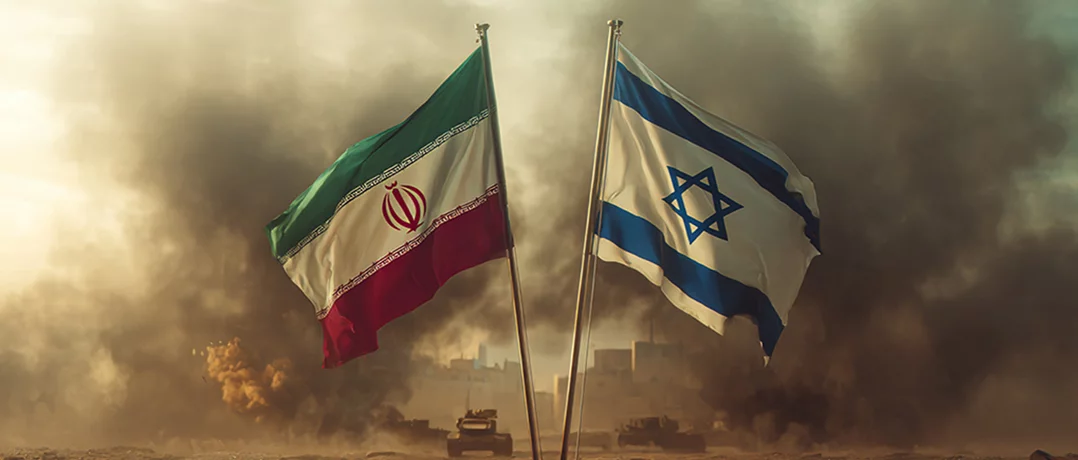
Four days into Operation Epic Fury, the joint US-Israel war on Iran is deeply unnerving for those caught in the crossfire – or just watching. One driving reason is that the competencies and motives of the protagonists are deeply suspect, literally and figuratively: the Iranian regime has never been a reliable negotiator, and has been prevaricating about its nuclear capabilities for decades. Israel’s Prime Minister is operating according to perverse political and legal pressures, and the United States is in the middle of a de facto constitutional crisis. None of the decision-makers represent the interests and desires of the majority of their constituents.
As of writing, Iran’s Supreme Leader Ali Khamenei and scores of senior Iranian leaders are dead. The Straits of Hormuz is closed. Gulf countries face bombardment by Iranian missiles, forcing airport closures and shelter-in-place orders. Hezbollah has broadened the conflict to Lebanon, drawing in Israel, in contravention of the last cease fire. And while quiet so far, Iran may call on the Houthis in Yemen to close the Red Sea Bab Al Mandeb straits, boxing in the bulk of Gulf oil exports on both sides of the Arabian Peninsula – a nightmare long gamed out in regional military scenarios. While the bombing campaign may end in weeks, the sub-regional conflicts will persist for years. And we’re only five days in.
The case for war
And yet, there was a case for war. Iran has been arguably the most insidious actor in the Middle East for decades, directly and through its regional proxies in Iraq, Syria, Lebanon, the Palestinian territories, and Yemen. Iran’s nuclear and ballistic programs, and the arms race they are already encouraging, are a highly significant threat to regional security. Iran’s human rights abuses are legion. Appeasement in the past has not worked, and nor will it work in the present or future.
While one cannot trust the entirety of claims regarding the urgency of striking Iran now, it is undeniable that a “window of opportunity” had opened, following past strikes against the regime’s infrastructure, and a tremendous amount of Iranian public anger at the catastrophic economic conditions and a ruthless crackdown in January that killed at least six thousand, with some estimates reaching into the tens of thousands. At the same time, Netanyahu’s claim that Iran’s nuclear sites would be “immune” to attack within weeks (what immune means here, precisely, is unclear) is not supported by recent satellite imagery showing the start of a multi-year hardening process.
But the “window” looks in part, suspiciously like a political construct. The operation began February 28, the day before Trump’s State of the Union address, as midterm primaries kicked off, and as his administration faces domestic challenges. Now that the war is on, the salient question is whether it can be prosecuted in a way that contains the most severe risks, while producing an outcome whose near- and long-term benefits outweigh the consequences.
The risks are manifest
Some risks are obvious, and many are already visible. Oil prices are already spiking—earlier and faster than expected—threatening 20% of global oil supply. There is no evidence that the IRGC command structure has been degraded, despite eliminations of the Supreme Leader and scores of senior officials. And Iran is suspected to be capable of unleashing asymmetric warfare, possible sleeper terror cells, and striking at gulf oilfields, as happened during the Iran-Iraq war, and the Iraq invasion of Kuwait. Those options may be being reserved for a later stage in the conflict, or as a ‘parting gift’ should the regime feel itself facing the end.
On the flip side, a positive change in leadership in Iran could make the region much safer, positively affect the lives of 90 million Iranians, significantly reduce the risk of war—and nuclear war—and create opportunities for an economic and social renaissance in the region.
Even if things go “well”
Without detailed intelligence, it’s hard to put a probability on any of these outcomes. Some things are reasonably clear: the United States is not prepared for a long war, despite President Trump’s statement that the operation will take “4-5 weeks” but could go “far longer.” Its military is overstretched globally; ammunition and interceptor supplies are finite. Iran’s logical strategy would be to extend the conflict as long as possible and attempt to regain leverage—to survive, retaliate, and potentially negotiate. And it may be able to do so.
Even if things go “well,” as in the Iranian regime is toppled relatively quickly, the problem of what comes next—a proverbial one in recent US history of regime change in the Middle East—quickly kicks in. There is no obvious source of infrastructure that could transition Iran from its current militarized government to a stable, pluralistic society—let alone some form of democracy. And there are multiple parties inside and outside Iran, as was the case in Iraq, Syria, and Afghanistan, which are poised to exploit instability to their own ends.
The only outcome that I can think of that might forestall a long period of factorization is an organized, international force such as the one that helped to transition Japan and Germany after the Second World War. That model required total military defeat with no question who won, intact bureaucracies willing to cooperate with occupiers, external enemies to unify against (the USSR provided this), massive sustained investment (Marshall Plan: hundreds of billions of dollars in today’s equivalency), decades-long commitment (US troops still in Germany and Japan 80 years later), and international consensus through UN backing and allied coordination.
The current situation meets none of these conditions. The regime could survive in weakened form—or shed the theocratic element and morph into a more standard violent dictatorship. Unlike the Baath party membership in Iraq, the IRGC membership is far deeper “in” to Iran’s crimes and would be expected to resist until they either re-established control or exhausted all options. There is no evidence of either the will or the resources with which to effect an Iranian “Marshall Plan”—even the Gaza Peace plan, which covers a far smaller area, is still not operational months after the end of the Israel-Hamas war. The prospects that other countries will join in to a stabilization campaign are highly uncertain—certainly Russia and China are unlikely. And there are multiple actors poised to exploit chaos, as in Iraq 2003, Libya 2011, and Syria from 2011 to the present.
And while Hegseth has not ruled out ground troops, troops are only a small part of what would be required to stabilize a post-regime Iran—and the American diplomats, aid experts and other professionals required to pull together a plan have mostly been sidelined. Hegseth has disparaged state building efforts, but this is precisely what’s required to put Iran back together in a way that adds, rather than detracts from regional security.
The domestic risk
If the stakes weren’t high enough, for Americans the conflict carries with it major uncertainties on the home front, as Middle East wars are perennially tied to domestic political calculations. It is unclear whether and how the Trump administration will use the war to further erode American institutions (a process that, indeed, began long before Trump). Both quick and extended wars can serve different strategies for amassing political power. If the regime falls quickly, this provides victory soundbites; if the conflict is long, a quagmire becomes justification for emergency powers, and executive unilateralism.
And then one has this disturbing example of conflicting interests: days before the launch of Epic Fury, FBI Director Kash Patel fired a dozen agents and staff from CI-12, the FBI’s elite counterintelligence unit tasked with monitoring Iranian threats on U.S. soil. The unit had been instrumental in tracking Iranian retaliation plots after the 2020 Soleimani killing, including assassination attempts against Trump himself. The agents were dismissed because they had investigated Trump’s retention of classified documents at Mar-a-Lago after he left office—an investigation that included obtaining Patel’s own phone records. Days before launching a war with Iran, America’s primary defense against Iranian threats was significantly weakened.
What we can’t know and what we can
The most likely outcome is instability and volatility within global institutions, supply chain networks, and energy supplies—which in turn could easily precipitate another international financial meltdown.
To assess whether this war is “worth it,” one would need detailed intelligence on the actual status of Iran’s nuclear program and quantities and levels of enriched fuel; on IRGC cohesion, on Iranian popular sentiment post-Khamenei, regional states’ absorption capacity for economic shock, Chinese and Russian intervention calculus, actual US military readiness for sustained operations, and—most critically—the actual plan for post-regime transition. Some of this information may not even be available to those prosecuting the war.
Five days in, the ‘coalition’ has, once more, decapitated a Middle East regime without a plan for the day after. A substantial fraction of the world’s energy resources is hemmed in. We’ve further added to the destabilization of the Red Sea basin, where there are multiple actually and potentially catastrophic wars in process. And the overall objectives remain unclear. With information publicly available, and given the current trajectory, the most likely outcome will not be Iranian democracy; but regional chaos, economic crisis, and the instrumentalization of conflict for domestic political gain.
-
-

-
Dr. Ethan ChorinA senior foreign affairs analyst, a former US diplomat and a Middle East and Africa-focused scholar
-
