

Defense and security expert Colonel David B. Des Roches, speaking in an exclusive interview with The Beiruter.
A new Middle East and Lebanon’s test

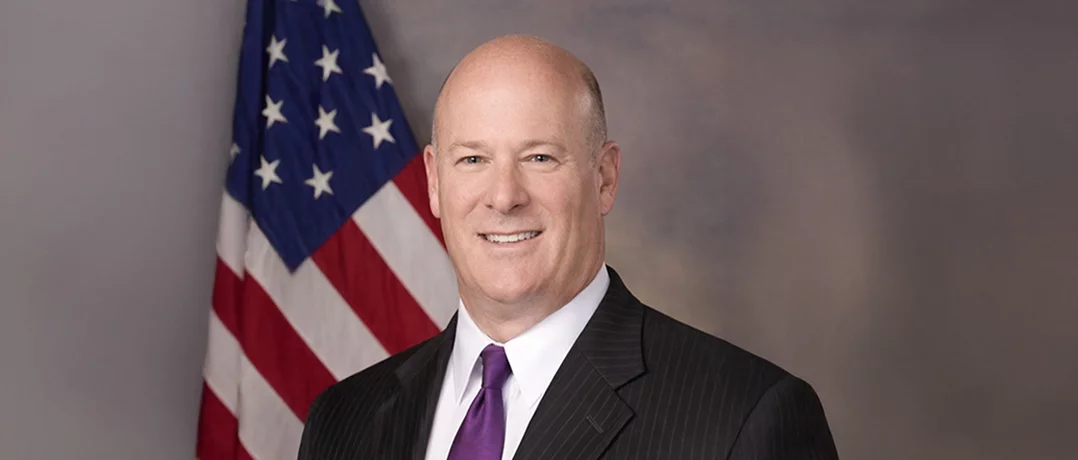
As the Middle East enters one of its most volatile periods in recent years, shifting alliances, intensifying conflicts, and the growing confrontation between Israel and Iran are reshaping the region’s strategic landscape. In an exclusive interview to The Beiruter, Colonel David B. Des Roches, a defense and security expert, examines the geopolitical consequences of these developments and assesses what they may mean for Lebanon and the broader regional balance of power.
According to Des Roches, the chain of events that set the current regional escalation in motion began with Hamas’s October 7 attack on Israel, an event he describes as the most significant strategic trigger in the current cycle of conflict. The attack came at a moment when Israeli Prime Minister Benjamin Netanyahu was politically weakened and, in Des Roches’s words, “on the verge of political extinction.” The crisis, however, transformed Netanyahu’s political standing by shifting the focus from domestic political controversy to national security leadership an arena in which Netanyahu has historically been strongest.
Hezbollah’s subsequent entry into the conflict further escalated the situation, providing what Des Roches characterizes as the pretext for a military campaign whose scale and effectiveness few had anticipated. At the same time, regional dynamics were further reshaped by the collapse of the Syrian Assad dictatorship, which Des Roches says occurred largely due to other factors but nonetheless reinforced Netanyahu’s strategic opening to confront Iran more directly. That opportunity expanded when Iran, in his assessment, abandoned the long-standing informal norm under which Israel and Iran avoided directly attacking each other.
With Donald Trump in the White House, Des Roches argues, the strategic environment was framed as a potential “window” for confronting what Washington and its allies perceive as the Iranian threat before it could expand further. While many actors have played roles in this complex escalation, Des Roches ultimataely traces the spark of the current conflict to Yahya Sinwar, whom he identifies as the individual who set the chain of events in motion.
Hezbollah’s changing role in Iran’s regional strategy
Des Roches argues that Hezbollah’s position within Iran’s regional strategy has evolved significantly in recent years. Once seen as Iran’s strategic deterrent against a direct Israeli attack, Hezbollah now functions more as what he describes as a powerful local extension of Iran’s Islamic Revolutionary Guard Corps (IRGC).
A key turning point, he says, was the death of longtime Hezbollah leader Hassan Nasrallah, after which no surviving figure within the organization has possessed comparable authority to challenge or even question Iranian directives. Des Roches points to an earlier internal rupture as well: the killing of Hezbollah commander Mustafa Badreddine, which he attributes to Iranian general Qassem Soleimani after Badreddine resisted orders to send additional Hezbollah fighters into the battle for Aleppo during the Syrian war.
Since then, Des Roches argues, Hezbollah has increasingly become an organization run in accordance with Iranian strategic priorities, even when those priorities diverge from Lebanon’s national interests. In his view, the group has declined from a quasi-state military power to a more fragmented force operating as a regional warlord structure in parts of Lebanon and as a deeply entrenched insurgent network in others.
Israeli military operations, he adds, will likely continue to weaken Hezbollah’s operational capacity. Yet the organization will still retain a base of popular support, particularly as long as the Lebanese state struggles to provide security and essential services.
A region entering a new phase?
Despite the dramatic escalation, Des Roches does not believe the Middle East’s broader security architecture will fundamentally change in the near term. Instead, he sees the region continuing to revolve around a familiar set of alignments, shaped primarily by perceptions of Iran as a regional threat.
In his assessment, Iran has already demonstrated hostility toward much of the region, noting that nearly every neighboring country has faced Iranian drone or missile attacks in the past five years, with the notable exceptions of Turkmenistan and Afghanistan. Gulf states, he argues, increasingly view Iran not as a potential partner but as a destabilizing power seeking regional dominance.
The United States, meanwhile, occupies a more complicated position. If the aftermath of the war with Iran leaves the region less stable, Washington will likely bear the blame. If stability improves, Des Roches believes the United States may receive little credit.
Yet despite this ambiguity, he argues that no viable alternative security partner exists for the Gulf states. Russia and China lack both the willingness and the capacity to sustain expeditionary military operations across the region, while European powers, in his words, have shown neither the unity nor the resolve required to maintain a comparable security presence. As a result, the United States remains the region’s primary external security guarantor.
The risk of escalation on Lebanese soil
When it comes to preventing further escalation, Des Roches is skeptical about the ability of international actors to meaningfully constrain the conflict in the short term.
By directing Hezbollah to attack Israel amid a wider regional war, he argues, Iran may have both sealed Hezbollah’s fate and ensured that Lebanon will remain a battlefield for some time. With global attention focused on the broader confrontation with Iran, Israel currently enjoys a relatively wide operational margin to pursue Hezbollah militarily.
The consequences, however, will be borne largely by Lebanon itself. According to Des Roches, the fighting will unfold on Lebanese territory, placing Lebanese civilians at significant risk. The only practical limitations on Israel’s operations, he says, are the logistical constraints imposed by manpower and equipment already committed to the broader war against Iran.
From Netanyahu’s perspective, Des Roches concludes, the current moment represents a strategic window to dismantle Hezbollah, a window that opened when Hezbollah entered the war at Iran’s direction.
Lebanon’s enduring paradox
Despite the bleak security outlook, Des Roches ends on a note of cautious optimism about Lebanon’s long-term potential.
He acknowledges that he is not a Lebanon specialist and notes that countless people know the country better than he does. Yet based on his experience across the Middle East, he observes a striking paradox: many of the region’s most successful businesses and institutions are run by Lebanese professionals; everywhere except Lebanon itself.
For Des Roches, this contradiction reflects the enormous human capital the country possesses. He argues that Lebanon’s continued struggles cannot be understood without recognizing the role of external interference and political dysfunction.
If Israel ultimately succeeds in breaking Hezbollah’s hold over the Lebanese state, he suggests, there is a genuine possibility that Lebanon could recover its historic role as the Middle East’s social and cultural capital. In that scenario, he believes, the ingenuity and creativity of the Lebanese people could once again define the country’s trajectory.
The trajectory of the conflict remains uncertain, largely dependent on how the confrontation between Israel and Iran unfolds. For Lebanon, however, the consequences are already taking shape, as military pressure on Hezbollah and shifting regional alliances reshape the environment in which the Lebanese state must operate.
Whether this moment becomes another chapter in Lebanon’s recurring crises or a turning point toward renewed sovereignty will depend on developments both inside and beyond its borders. If Hezbollah’s dominance vanishes, Lebanon could face a rare strategic opening one that will test whether the country can rebuild stronger institutions and restore state authority.
-
-

-
Josiane Hajj MoussaReporter
-
