



A portrait of Lebanese icon Sabah, exploring her legendary career, artistic collaborations, generosity, controversies and the personal struggles behind one of the Arab world’s most fearless cultural figures.
A pioneer in the spotlight: Remembering Sabah’s lasting influence
A pioneer in the spotlight: Remembering Sabah’s lasting influence
By Patricia Khoder | February 03, 2026

Reading time: 6 min
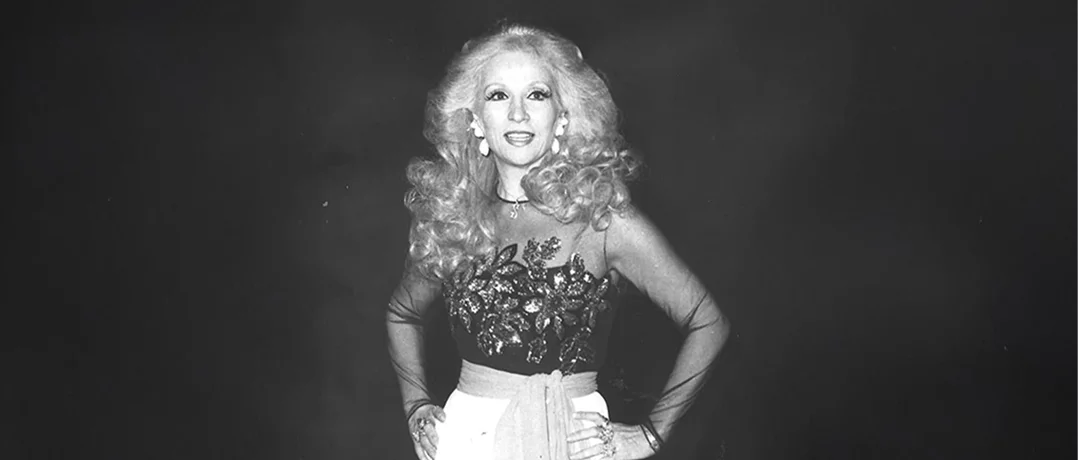
Few artists in the Arab world achieved the level of fame, longevity and cultural impact enjoyed by Sabah. With her unmistakable voice, flamboyant style and fearless personality, she became one of the most celebrated singers and actresses in modern Arab history. More than a performer, Sabah was a pioneer a trendsetter in music, fashion and lifestyle, she consistently challenged conventions and expanded the boundaries of what female artists could represent in the region.
“I trained myself to be happy,” Sabah often said, a sentence that became her personal mantra. She also frequently emphasized patience as a life philosophy. “She always repeated that one must arm oneself with patience,” her niece, Clauda Feghali Akl, tells The Beiruter, recalling the journey of an exceptional woman whose life was marked by both brilliance and hardship.
Sabah shared that happiness generously. Over a career that spanned more than six decades, she recorded more than 3,000 songs, appeared in approximately 85 films, performed in dozens of theatrical productions and made thousands of appearances on stage and television. According to Akl, Sabah’s presence was considered a good omen in the television industry. “Joy emanated from her so strongly that TV producers were keen to invite her as the first guest on a new program. For them, having Sabah on set was a sign of success,” she says.
Born Jeanette Gergis Feghali in 1927 in the Lebanese mountain village of Bdadoun, Sabah would go on to become one of the most prominent Arab stars of the 20th century. Her powerful singing talent was discovered early, particularly her mastery of traditional mountain folk styles such as mijana and ataba. She began performing publicly at the age of 12, appearing alongside her uncle, a leading figure in zajal - popular oral poetry - during poetic evenings held across Lebanon and Egypt. By 13, she had released her first song.
Her striking beauty and warm personality complemented her voice, creating a winning combination that soon attracted the attention of Asia Dagher, a prominent Lebanese film producer based in Egypt. Dagher persuaded Sabah’s family to allow her to move to Cairo, where she signed a three-film contract. The decision proved life-changing. Sabah never looked back.
“She admired the Egyptian singer Leila Mourad, and she entered cinema through the front door, starting with leading roles,” Akl notes. Indeed, Sabah quickly became one of the most sought-after actresses of her era. The leading men of Arab cinema wanted to work with her, and the most renowned composers competed to write her songs.
A demanding perfectionist
Her collaborators read like a who’s who of Arab music and film history. In Egypt, she worked with legendary composers including Riyad al-Sunbati her first vocal coach Zakariyya Ahmad, Mohammed al-Qasabgi, Mohammed Abdel Wahab, Baligh Hamdi and Farid al-Atrash. Although al-Sunbati refined her powerful voice, he reportedly never managed to eliminate its unmistakable mountain flair. In Lebanon, Sabah collaborated with Filimon Wehbe, Walid Gholmieh, Zaki Nassif, the Rahbani Brothers, Elias Rahbani and Romeo Lahoud.
Sabah also played a key role in shaping Lebanon’s cultural landscape, inaugurating major festivals outside Beirut, including those in Baalbek, Beiteddine, the Cedars and Byblos. Internationally, Sabah broke barriers by becoming the first Arab star to perform in elite venues and opera houses in Paris, London, New York and Sydney.
Constantly in the spotlight, Sabah possessed an extraordinary ability to captivate audiences. While her public image radiated joy and spontaneity, those who worked with her knew her as a demanding perfectionist. She was deeply devoted to her craft and meticulous about every detail, whether related to music, theater, festivals or wardrobe. Known for her punctuality, Sabah was famously disciplined, arriving at rehearsals before everyone else including her own staff.
Yet, beneath her confident exterior lay intense performance anxiety. “She was so anxious before every show that doctors had to administer an intravenous infusion to lower her blood pressure,” Akl says. “This was necessary before every performance, especially theatrical ones, because her blood pressure would drop.”
Generosity and trendsetting
Sabah’s exceptional voice, outspoken nature and passion for fashion continue to fascinate audiences today. Her love of fashion began in childhood. When she was 12 and just starting her singing career, her aunt, Haifa, made her clothes. As her fame grew, her platinum-blond wigs, bold makeup and glamorous gowns transformed her into a fashion icon and trendsetter.
Early in her career, two couturiers dressed her: Joseph Harouni, who designed her costumes for Egyptian films, and Raife Salha, a prominent seamstress who worked with Coco Chanel and Pierre Balmain. Lebanese international designer William Khoury later created more than 400 dresses for Sabah. She also actively supported emerging designers, helping them gain recognition simply by wearing their creations. One notable example was Zuhair Murad, who benefited early on from her patronage.
Sabah was equally renowned for her generosity. She frequently auctioned off her dresses for charitable causes and gave many of them to relatives and friends for weddings and social events. According to Akl, even men requested her gowns and she gave them away. “She gave everything: her clothes, her records, her belongings,” Akl recalls. Proceeds from her concerts were donated to the construction of schools, to scholarships and to places of worship, including St. Charbel Church in Adonis.
Her generosity extended to everyday life. Known for extravagant tips, Sabah once justified giving a tip twice the value of a restaurant bill by saying, “The waiter is standing to serve us while we are enjoying ourselves.” When her tips reached $100, she explained, “He probably has a miserable salary, a wife and children. At least tonight, he will go home with good groceries.” “On stage, her generosity was legendary. When called back for encores, she would sing not one song, but sometimes up to five. Composer Mohammed Abdel Wahab famously dubbed her “the most generous artist in the world”, notes Clauda Akl.
Troubled personal life
Despite her professional success, Sabah’s private life was deeply troubled. Her childhood was traumatic. Her father reportedly bullied and neglected her, and the trauma intensified when her brother murdered their mother, believing she was having an affair. Sabah was especially close to her mother, with whom she regularly went to the cinema in Beirut.
Sabah married nine times and was rumored to have had several relationships throughout her life. Her husbands came from diverse backgrounds, including politicians and fellow actors. Among them was the celebrated Egyptian heartthrob Rushdi Abaza. She had two children: her son, Sabah Najib Shammas, who became a medical doctor in the United States, and her daughter, Hwaida Anwar Mansi, who acted in films before also moving to the U.S.
Through her children, Sabah obtained American citizenship. In addition to her Lebanese passport, she also received the Egyptian and the Jordanian citizenships, the latter granted as a mark of esteem from the late King Hussein of Jordan.
When asked in an interview why she didn’t move to the US where her daughter, son and two grandchildren lived, Sabah replied: ‘I love them all very much, but there I would feel that I’ve become merely a grandmother and forget my glory and that I am Sabah. I love myself and don’t like to be insignificant. I’m not selfish, but I love the artist in me.’ This sentiment probably sums up her life.
In her later years, financial difficulties forced Sabah to leave her home and spend the final years of her life in a hotel room. Yet even as circumstances changed, her public image remained one of resilience and candor.
When she died in 2014, leading American and European news agencies published special reports on her life and legacy. Sabah had not only broken records but also shattered taboos. On talk shows, she spoke openly about marriage, motherhood, sexuality, betrayal and personal failure subjects rarely discussed so candidly by Arab women of her generation. Remarkably, she never publicly disparaged fellow artists and consistently rose above religious divisions and political intrigue.
More than a decade after her death, Sabah’s legacy endures. Her freedom, frankness, and fearless embrace of life continue to captivate new generations. She remains not just a star, but a symbol of joy, defiance, and an unrelenting commitment to living fully on her own terms.
-
-
-
Patricia KhoderJournalistFocusing on culture and entertainment.
-
