



Mounted police patrols return to Beirut’s streets, blending practicality and symbolism as security adapts to changing urban and economic realities.
A return to horse patrols in Beirut

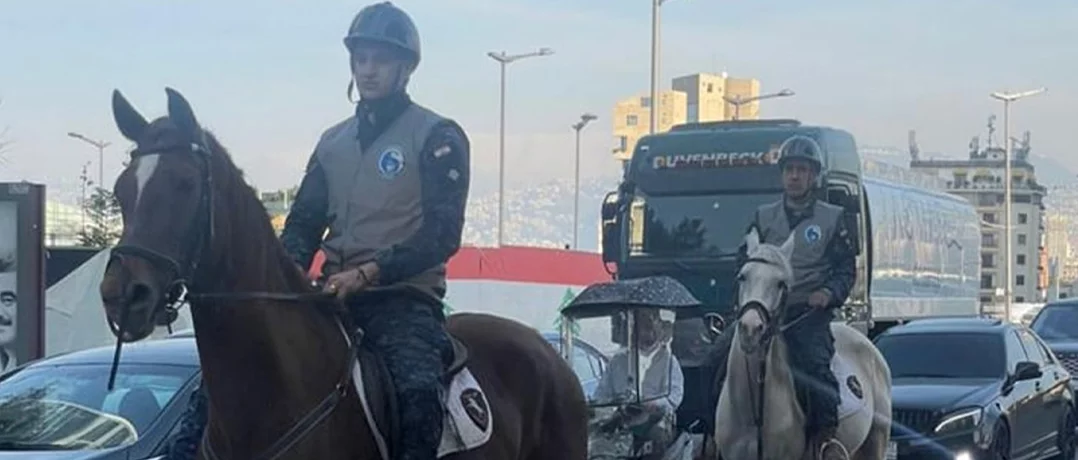
Passersby in downtown Beirut and other parts of the capital have noticed something unexpected: Lebanese police officers patrolling the streets on horseback. The image feels almost cinematic, part historical reenactment, part quiet reminder of how much daily life in Lebanon has shifted.
According to the Internal Security Forces (ISF), mounted patrols from the Horse Unit of the Mobile Forces were deployed in central Beirut as part of efforts to maintain security and public order. In a statement by the ISF General Directorate, the move was described as a practical step to enhance safety in busy areas. Citizens, the statement added, welcomed the initiative and expressed admiration for it, saying it helped reinforce their sense of security.
Mounted police are not new to Lebanon. They were once commonly used during parades, large gatherings, and in older city centers where narrow streets made vehicles impractical. Over time, patrol cars, motorcycles, and crowd-control vehicles replaced horses, aligning with modern policing methods. Their return today, however, reflects changing realities more than a symbolic revival.
Horses are especially effective in dense pedestrian areas and during public events. They allow officers to move where vehicles cannot, and their elevated position gives better visibility for crowd monitoring. In some cases, mounted patrols can also be less costly than maintaining vehicles, particularly as fuel and maintenance costs continue to strain public sector budgets.
What the return really says
Beyond logistics, the sight of mounted police carries a deeper symbolism. In a country where institutions have been forced to adapt with limited resources, even law enforcement is finding ways to work with what is available. The return to older methods mirrors a broader national pattern: when modern systems become harder to sustain, the past quietly re-enters the present.
For some residents, the horses feel calming, more approachable than armored vehicles and flashing sirens. For others, they are a subtle reminder of how fragile state resources have become. Either way, the mounted patrols have joined the evolving visual landscape of today’s Lebanon: resilient, improvised, and shaped as much by necessity as by tradition.
-
-

-
The Beiruter
-
