From lionfish to toxic pufferfish, invasive marine species are rapidly transforming Lebanon's Mediterranean waters, prompting scientists to call for stronger monitoring, public awareness and ecosystem protection.




From lionfish to toxic pufferfish, invasive marine species are rapidly transforming Lebanon's Mediterranean waters, prompting scientists to call for stronger monitoring, public awareness and ecosystem protection.

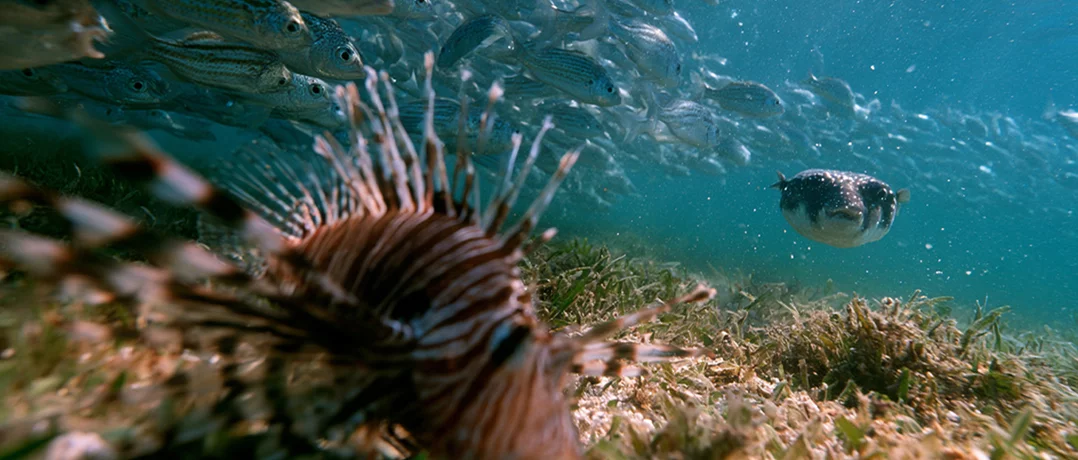
From venomous lionfish to toxic pufferfish, Lebanon's Mediterranean waters are undergoing a quiet transformation. Scientists say the challenge is no longer stopping every newcomer, but understanding how invasive species are reshaping marine ecosystems and preparing for what comes next.
For beachgoers, spotting a jellyfish or hearing warnings about poisonous fish may seem like isolated summer events. However, for Dr. Michel Bariche, marine biologist and Professor at American University of Beirut, they are signs of a much larger ecological shift taking place beneath the Mediterranean's surface. "A marine species is considered invasive when it arrives outside its natural range, becomes established, spreads, and causes ecological, economic, or social harm," Bariche explains. "Not every non-native species is invasive."
The main reason lies just south of the Mediterranean. According to Bariche, the Suez Canal remains the primary gateway through which Red Sea species enter the Mediterranean. But it is not the only pathway. "Maritime traffic, ballast water discharge, aquarium releases, aquaculture activities, and other human-mediated transfers can also contribute to the introduction of non-native species, depending on the species involved," he says.
Although climate change is often blamed for the spread of invasive species, Bariche makes an important distinction. "Climate change does not bring these species here," he says. "Warmer waters and environmental degradation make it easier for tropical species to survive, reproduce, and spread."
He summarizes the process simply: "The Suez Canal opens the door, while warming seas and habitat degradation in the eastern Mediterranean help many newcomers settle in." As Mediterranean waters become warmer and coastal habitats experience increasing environmental pressure, these species are finding conditions that allow them to establish themselves more successfully once they arrive.
Among the dozens of non-native marine species recorded in Lebanon, Bariche highlights rabbitfishes, the pufferfishes and the lionfish as the species causing the greatest concern.
Rabbitfishes have become particularly influential because of the way they transform underwater habitats. "They consume large amounts of algae, transforming rocky habitats and reducing food and shelter for native species," Bariche explains. The ecological consequences extend well beyond the loss of algae. Native fishes and countless other marine organisms depend on these habitats for food and protection, meaning changes at the bottom of the food web ripple throughout the ecosystem.
Among various species of pufferfishes, the silver-cheeked pufferfish presents an entirely different challenge. Besides competing with native predators and damaging fishing gear, the fish carries one of the world's most dangerous natural toxins."The silver-cheeked pufferfish is the most serious danger to seafood consumers because it contains tetrodotoxin, a fatal poison," Bariche says. "People are aware now that it must never be eaten, even after cooking." He points out that poisoning incidents, including fatal cases, have already been reported in Lebanon.
The Lionfish, meanwhile, is an efficient predators that feed heavily on small fish and crustaceans, placing additional pressure on native species already adapting to changing environmental conditions.
While these invasive species often generate alarming headlines, the risks they pose vary depending on who encounters them.
For swimmers, lionfish become dangerous only if their venomous spines are touched, while jellyfish can leave painful stings.
Fishers face a greater risk because they regularly remove these species from fishing nets. Despite its intimidating appearance, lionfish itself is not poisonous to eat. “Lionfish flesh, however, is edible when the venomous spines are removed," Bariche says.
The same cannot be said for the silver-cheeked pufferfish, whose toxin remains deadly regardless of how it is prepared.
Every summer, reports of jellyfish swarms spread quickly across social media, leaving many Lebanese wondering whether blooms are becoming more frequent. Bariche says the answer is not straightforward. "Jellyfish blooms are partly natural, as many species appear seasonally and their numbers can vary greatly from year to year," he explains.
However, some environmental changes are making conditions increasingly favourable for certain invasive jellyfish species."Warmer seawater, overfishing and pollution" all play a role, he says, while winds and sea currents can suddenly concentrate jellyfish close to shore, making blooms appear almost overnight.
Still, Bariche cautions against drawing firm conclusions. “No single factor explains every event, but the Mediterranean is becoming increasingly favourable to some jellyfish species," he says. He adds that scientists cannot say with certainty that jellyfish blooms are increasing every summer because they are "not consistently measured or monitored each year."
With many invasive species already firmly established, eliminating them entirely is no longer realistic. "It is no longer realistic to eliminate species that are already widespread," Bariche says. "But we can still slow new introductions, detect newcomers early, and reduce the damage caused by established species."
Rather than focusing solely on eradication, he believes Lebanon should invest in prevention, early detection, targeted management and protecting vulnerable marine habitats. His main recommendation is "a permanent national monitoring and rapid-response programme linking scientists, fishermen, divers, municipalities and government agencies," which he says would give Lebanon its best chance to detect new invasive species before they become impossible to control.
As Lebanon's marine environment continues to evolve, invasive species are becoming an increasingly visible part of life beneath the surface. While their spread cannot always be stopped, Dr. Michel Bariche believes their impacts can still be reduced through early detection, coordinated monitoring and greater public awareness. As the Mediterranean changes, understanding these shifts will be essential to protecting Lebanon's coastal ecosystems.