



44 years since the 1982 Israeli invasion, Lebanon still suffers from the very structural challenges of the past: a fragile state, presence of non-state armed actors (Hezbollah), and foreign military occupation (Israel).
A throwback to the 1982 invasion

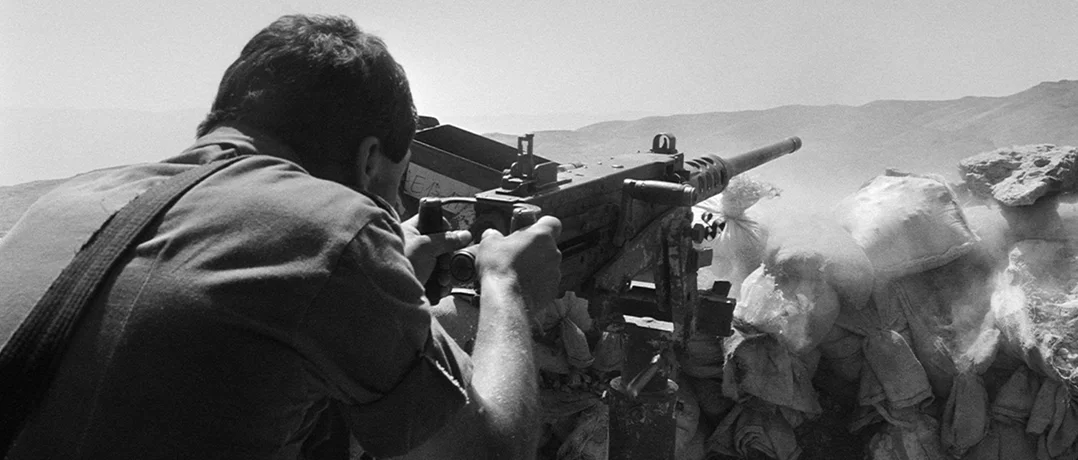
The Israeli invasion of Lebanon in 1982 marked a decisive turning point in the country’s modern history. Framed by Israel as “Operation Peace for Galilee,” the military intervention aimed to expel the Palestinian Liberation Organization (PLO) from Lebanese territory, reshape the balance of power in Beirut, and secure Israel’s northern frontier. Yet the war quickly escalated far beyond its initial objectives, drawing Lebanon deeper into destruction and prolonging its war.
At the center lies a recurring structural problem in Lebanon’s modern history: the interaction between a weak state, heavily armed non-state actors, and repeated foreign military interventions.
The 1982 invasion: Causes and how it happened
The immediate pretext for the 1982 invasion was an attempted assassination of Israel’s ambassador in London Shlomo Argov by a Palestinian faction (Abu Nidal Organization). However, the deeper causes were rooted in a broader strategic calculation by Israeli leadership, particularly under Prime Minister (PM) Menachem Begin and Defense Minister Ariel Sharon.
Since the 1969 Cairo Agreement, the PLO had transformed southern and western Lebanon into its primary operational base (in the so-called “Fatahland”), especially following its expulsion from Jordan in the aftermath of the 1970 Black September. From Lebanese territory, Palestinian factions launched cross-border attacks into northern Israel, prompting repeated Israeli retaliatory strikes and the 1978 Operation Litani (a more limited military intervention compared with the much larger invasion launched 4 years later). Israel’s leadership concluded that only a full-scale military operation could dismantle the PLO’s infrastructure and permanently alter the security environment along the Lebanese-Israeli frontier.
On 6 June 1982, Israel launched a massive ground, air, and naval invasion involving tens of thousands of troops. While initially presented as a limited advance of 40 kilometers, Israeli forces rapidly pushed far deeper, reaching Beirut within days. The escalation reflected a broader strategic ambition: not only to neutralize the PLO, but also to weaken Syrian influence in Lebanon (including striking Damascus’s deployed SAM missiles in the country) and secure a peace agreement with Beirut.
The war culminated in the siege of West Beirut, where Palestinian and Lebanese allied fighters and civilians endured months of bombardment. By August 1982, under a U.S.-brokered agreement, the PLO leadership, including Yasser Arafat, was evacuated to Tunisia, effectively ending its military presence in Lebanon.
The political aftermath: The defeat of the PLO and Lebanon’s fragmentation
The immediate outcome of the invasion was the removal of the PLO from Lebanon, which Israel viewed as a major strategic success. The organization’s leadership, fighters, and administrative structures were forced into exile, marking the end of Lebanon as the central hub of Palestinian armed operations.
However, this “victory” did not translate into lasting stability. Instead, it produced a power vacuum that further destabilized Lebanon’s already fractured political system; especially after the assassination of president-elect Bachir Gemayel in September 1982 and the withdrawal of the Multinational Force in Lebanon (MNF) from Lebanon following the 1983 attacks by Hezbollah.
One of the most significant long-term consequences of the invasion was the reconfiguration of armed “resistance” in Lebanon. The Israeli military presence in the south, initially justified as a security buffer, contributed to the rise of Hezbollah (among various key factors, particularly Iran’s influence and interference in the creation of the group, its ideology, and all forms of support; be it economic, diplomatic, or military), thus fundamentally reshaping Lebanon’s security dynamics till this very day.
A familiar pattern: Lessons not yet learned
A central and enduring debate in Lebanese political history concerns the role of non-state armed groups in provoking external intervention and deepening national instability. The experience of the PLO in the 1970s and early 1980s, and later the emergence of Hezbollah, illustrates this recurring pattern in different historical contexts.
In both cases, armed groups developed significant military capabilities outside the authority of the Lebanese state and became deeply embedded in regional conflicts and even foreign affiliation. The PLO’s operations against Israel from Lebanese territory contributed directly to Israel’s decision to invade in 1982. Similarly, Hezbollah’s military role, particularly its cross-border engagements with Israel and its affiliation to Tehran, has repeatedly placed Lebanon in the center of broader regional confrontations involving Israel and Iran; most recently being the 2023-2024 and the ongoing 2026 armed conflicts initiated by Hezbollah.
These dynamics demonstrate how non-state armed actors can undermine state sovereignty by effectively transforming Lebanese territory into a battleground where external powers pursue their rivalries and settle their disputes. The result is often catastrophic for Lebanon itself, which bears the brunt of military retaliation, infrastructure destruction, and civilian displacement; all while its sovereignty, security, and territorial integrity being severely compromised. Although Israeli actions have indeed violated Lebanese sovereignty, Hezbollah (much like the PLO) has continuously given Tel Aviv the needed pretext to intervene militarily in Lebanon; especially after its unilateral withdrawal in 2000, as it retained its arms and launched the aforementioned recent conflicts.
What remains consistent across decades is the structural vulnerability of Lebanon: when the state is weak and armed actors operate independently, external powers have repeatedly intervened militarily, with devastating consequences for Lebanese society.
Hence, breaking this cycle requires not only addressing the actions of non-state armed groups, but also ensuring respect for Lebanese sovereignty and building a state capable of asserting exclusive control over war and peace decisions.
-
-

-
The Beiruter
-
