



In Part I of its investigation, The Beiruter traces how Turkey’s local-level engagements addressed gaps left by the Lebanese state and rebuilt a shared affinity rooted in history, religion, and culture.
A Turkish revival in northern Lebanon
A Turkish revival in northern Lebanon
By Katharine Sorensen - Soraya Johnson | September 04, 2026

Reading time: 10 mins
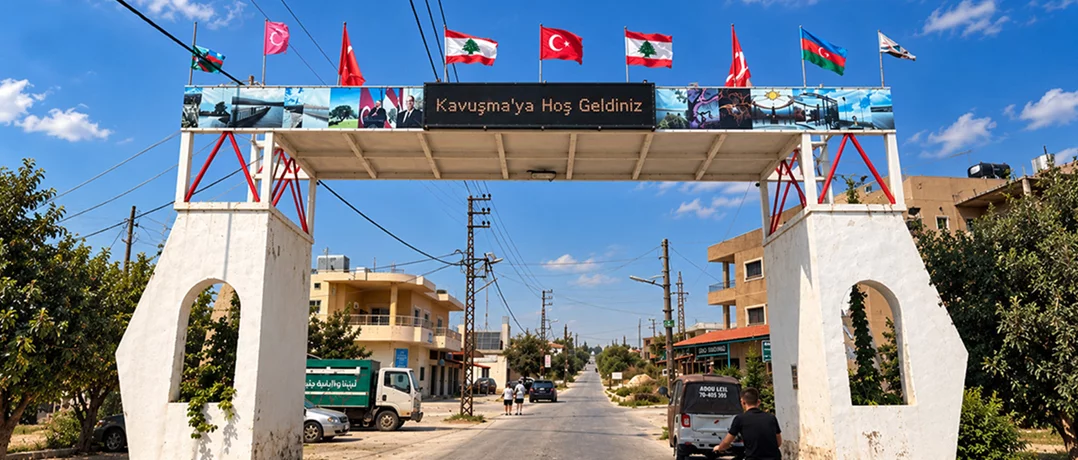
In the village of Kouachra, a 15-minute drive from Lebanon’s border with Syria, 251 olive trees stand across 5,000 square meters of land. Planted in neat rows in 2021, the trees cover a hillside plot at the edge of the village. A plaque beside the grove bears a striking name: the “15 July Martyrs Memorial Forest.” The date refers not to an event in Kouachra, nor to one that occurred anywhere in Lebanon. It marks “15 Temmuz” – the attempted July 15 coup against Turkish President Recep Tayyip Erdoğan’s government in 2016. 251 people were killed resisting it. One olive tree stands for each of them. The memorial forest is one of the more unusual markers of a Turkish presence that has taken root across parts of northern Lebanon. Rather than arriving through major investments or sweeping agreements with the central government, much of that relationship was built from below, as Turkish institutions worked with municipalities and other Lebanese partners on development assistance, heritage restoration, education, and cultural exchange. Many of those initiatives answered practical needs in communities where the Lebanese state had little money to spend. But their significance did not remain purely material: repeated contact with Turkish institutions gave new prominence to older connections rooted in Ottoman history, religion, and, in places such as Kouachra, Turkmen ancestry. “Our identity is Lebanese, but our origin is Turkish,” Kouachra Mayor Mohammad Abdullah Mohammad told The Beiruter. For this investigation, The Beiruter traveled through Tripoli and Akkar, interviewing public officials, residents, and representatives of Turkish institutions. It reviewed government records and policy studies, including election data that traces a striking rise in both the size of Lebanon’s registered Turkish electorate and support for Erdoğan. As the first installment of a two-part series, this article traces how relationships initially forged through municipal services, education, and economic opportunity became intertwined with older cultural and historical affinities, embedding Turkey more deeply in the public and social life of parts of northern Lebanon. Driving into Kouachra, visitors are greeted, quite literally, by a welcome arch bearing the marks of both Lebanon and Turkey. Lebanese, Turkish, and Azerbaijani flags flutter above it, while photographs of Turkish President Erdoğan and Lebanese President Joseph Aoun appear beside images of the surrounding landscape. “Kouachra welcomes you” scrolls across an electronic screen in Turkish (Kuvaşra’ya hoş geldiniz) and Arabic (كواشرة ترحب بكم). Farther into Kouachra, Lebanese and Turkish flags hang side by side from houses, while several homes have Turkish flags painted directly onto their exteriors. One could be forgiven, momentarily, for wondering which side of the Mediterranean they were on. Kouachra's roughly 4,500 residents are Lebanese Turkmen, part of a Turkic people whose communities extend across the Middle East. Older residents generally speak the village's Turkmen dialect, which has retained vocabulary from Ottoman Turkish, while younger generations are more likely to learn contemporary Turkish. “The Turkmen are well established,” Kouachra resident Mouin Achaoui said. “Our origins and our language have always been here.” On a tour of Kouachra with Mayor Mohammad and members of the municipal police, The Beiruter documented nearly two decades of Turkish-backed projects across the village. The earliest dated back to 2008, when the Turkish Foreign Ministry coordinated the construction of Kouachra’s first high school. Turkey’s political leadership began engaging directly with Kouachra, who welcomed their outreach and subsequent donations. Then-Turkish foreign minister Ahmet Davutoğlu visited in 2009, after which a public drinking fountain was erected in his mother’s memory as a gift to “our Turkmen brothers.” President Erdoğan himself made his own trip to the rural village the following year. TİKA projects only accelerated: a village water well and community hall were constructed in 2019, followed by the memorial forest in 2021, solar power for the water station and three new classrooms in 2022, municipal solar power in 2024, and a furnished guesthouse and solar power for the village hall in 2025. Seventy kilometers south in Tripoli, Lebanese officials and residents were also reaching out to Turkey. In 2004, before TİKA had entered Lebanon, Dr. Khaled Tadmori, a professor of architecture at the Lebanese University, was already drawing Turkish attention to the city's deteriorating Ottoman monuments. Preservation, however, required money. And Tripoli had endured decades of chronic underinvestment from the Lebanese state. “Turkey’s policy was to support projects through municipalities and civil society,” Tadmori said. TİKA began operating in Lebanon in 2006, with its permanent office opening in 2012, and heritage restoration became one of its most visible areas of work in Tripoli. Among the Ottoman-era projects restored include the Al-Tell Clock Tower, Al-Mansouri Great Mosque, Hamidiye Mosque in Mina, an Orthodox church in Aydamoun, the Hamidiye Fountain in Beirut's Sanayeh Garden, and even a former Ottoman military school that was converted to a high school in Beirut. After joining Tripoli's municipal council in 2004, Tadmori began building links with Turkish municipalities. Over his 21 years on the council, Tripoli signed five sister-city agreements in Turkey, with Konya, Bursa, Istanbul's Fatih district, Ankara's Keçiören district and Gaziantep, each coordinated through Lebanon’s Interior and Foreign Ministries. Turkish investments, concentrated in Lebanon’s Sunni-dominated north, multiplied beyond heritage preservation. In Tripoli, TİKA built three Lebanese University production studios in 2021, equipped its biotechnology research center in 2022, and installed solar power at the University of Tripoli. It also backed a delivery initiative employing 22 young people with electric motorcycles and a solar charging station, and in 2024 developed 17 acres of land belonging to the Tripoli Mufti's Directorate of Foundations to grow za'atar, thyme, sumac and strawberries. By 2022, Turkish Ambassador Ali Barış Ulusoy said TİKA had carried out 170 projects across Lebanon, spanning education, health, agriculture, employment, and public infrastructure. The agency declined a request from The Beiruter to discuss its work in Lebanon. As the scale and scope of that assistance grew, much of it remained focused on needs identified locally. In Kouachra, the municipality identifies projects requiring support and submits proposals to secure financing from organizations like TİKA and the United Nations Development Program. “The state itself doesn't have money,” Mohammad said. The value of investing where public resources are scarce had been identified in Turkish policy circles years earlier. Published by the Ankara-based Center for Middle Eastern Strategic Studies (ORSAM) in 2009, The Forgotten Turks: Turkmen Presence in Lebanon examined Turkey's engagement with Lebanese Turkmen communities and proposed ways to deepen it. “Lebanon, particularly its rural regions, suffers from limited municipal services,” the report said. North Lebanon spent roughly four centuries under Ottoman rule before the empire's collapse after World War I. By restoring Lebanon’s Ottoman heritage, Turkey did more than address a gap left by Lebanese underinvestment: it helped revive the memory of a mutual past connecting the two countries, fostering kinship, and familiarity. “They made us remember history,” said Mustafa Mawlawi, president of the Mawlawi Cultural Center in Tripoli. As those landmarks were rehabilitated, ties to modern Turkey also grew more prominent. A bilateral agreement signed in January 2010 allowed Lebanese passport holders to travel to Turkey visa-free. Tripolitans traveled for tourism, university, and business, while Mawlawi recalled people going for medical care and purchasing medicines that were cheaper or easier to obtain. Turkish-sponsored scholarships further deepened links between the Lebanese people and modern Turkey. According to Turkish government records, 34 Lebanese students received scholarships in 2021, 40 in 2022, and 37 in 2025–26, including five Turkmen recipients. Both Tadmori and Mohammad studied in Turkey on state-sponsored scholarships. Other initiatives brought Turkey directly to Lebanon. The Yunus Emre Institute opened its Beirut center in 2012 and now enrolls about 150 students each semester, representatives told The Beiruter. It also provides Turkish courses at Saint Joseph University and Beirut Arab University. The institute currently has five teachers across Lebanon, including three in Beirut, one in Aydamoun in Akkar since 2023, and a fifth who began teaching in Tripoli this year. In Kouachra, a teacher sent by the Turkish Embassy lives above the village hall. Mohammad said the Embassy has maintained a teacher in the village for roughly 15 years, with instructors on a two to three year rotation, to teach residents contemporary Turkish. Language exposure catalyzed already booming Turkish media consumption, with dubbed dramas like the Magnificent Century bringing Turkish culture and retellings of Ottoman history to households across Lebanon. From Beirut, the Yunus Emre Institute runs Turkish cinema screenings, cuisine workshops with the Turkish Embassy's chef, traditional ebru marbling courses, and cultural activities in schools. “The youth possess a love of their Turkish origin,” Mohammad said. “Everybody here loves Turkey from their heart.” Regional powers have long leveraged shared religious identities to entrench themselves within Lebanon’s sectarian communities. While both Saudi Arabia and Turkey are majority Sunni countries, Turkey’s relationship with Lebanon’s Sunni-dominated north also draws on Sufi traditions with deep histories in both nations. “Saudi Arabia invested a lot of money here, but its religious culture doesn’t fit as naturally,” Mawlawi explained. Turkey capitalizes on this connection through support for Sufi-specific heritage sites, such as TİKA’s restoration of Mawlawi Tekke, a 17th-century lodge associated with the Sufi order and founded around the teachings of Jalal al-Din Rumi. According to Mawlawi, Turkey’s religious outreach especially resonates with Lebanese Sunnis, a growing number of whom look toward Erdoğan as the leader best championing the Sunni Muslim world. “Turkey was not emotionally close to us. That changed with Erdoğan,” said Mawlawi. When Turkish citizens in Lebanon voted in Turkey’s first direct presidential election in 2014, 85.9 percent of valid ballots went to Erdoğan. Turkish Supreme Election Council (YSK) records reviewed by The Beiruter show that his support among voters in Lebanon only increased from there. Erdoğan received 94 percent of valid ballots cast in Lebanon in 2018, compared with 52.6 percent overall, and 95.4 percent in the first round of 2023, compared with 49.5 percent overall. Lebanon also stood out among Arab countries where Turkish citizens voted. Erdoğan's share in Lebanon exceeded those recorded in each of the three elections. In 2023, for example, his 95.4 percent share in Lebanon compared with 88.7 percent in Jordan, 76.2 percent in Egypt, 73.6 percent in Saudi Arabia, 61.8 percent in Qatar and 30.1 percent in the UAE. “Turkey was nothing before Erdoğan,” said Mohammad. The electorate behind those results was also growing. The number of Turkish citizens registered to vote in Lebanon rose from 3,425 in 2014 to 8,353 in 2023, an increase of 144 percent. Turkish election records do not identify who those voters are or how they obtained citizenship. But in August 2020, four days after the Beirut port explosion, then-Foreign Minister Mevlüt Çavuşoğlu publicly extended an offer to people of Turkish and Turkmen origin in Lebanon who did not already hold it. “We will grant Turkish citizenship to our brothers who say ‘I am Turkish, I am Turkmen,’ and express their desire to become a citizen,” he said during a visit to Beirut, adding that the instruction had come from Erdoğan. Through relatively small projects targeting investment gaps by the Lebanese state and heritage sites reviving shared histories, Turkey has managed to cultivate an outsized role in the hearts of northern Lebanese. “The amount of assistance provided by Turkey may not be large, but people respond to it very positively because they have affection toward Turkey,” Tadmori said. But affection is not the same as allegiance. “People here don't think of Lebanese and Turkish as two competing identities,” said Mohammad. Over two decades, however, Turkey has accumulated a valuable reservoir of influence in Lebanon through relationships with local institutions, the proliferation of Turkish culture and language, and the resurgence of historical ties. The fall of Bashar al-Assad in neighboring Syria in 2024 has given those relationships new significance. Turkey has emerged as one of the most influential external powers in Damascus, while Lebanon is looking to its northern ports, roads, and other infrastructure as possible gateways to Syria's reconstruction. How Ankara might convert the network of affinity it has spent two decades building in Lebanon into political, economic, and strategic influence in this new regional order is the subject of the second installment of this investigation.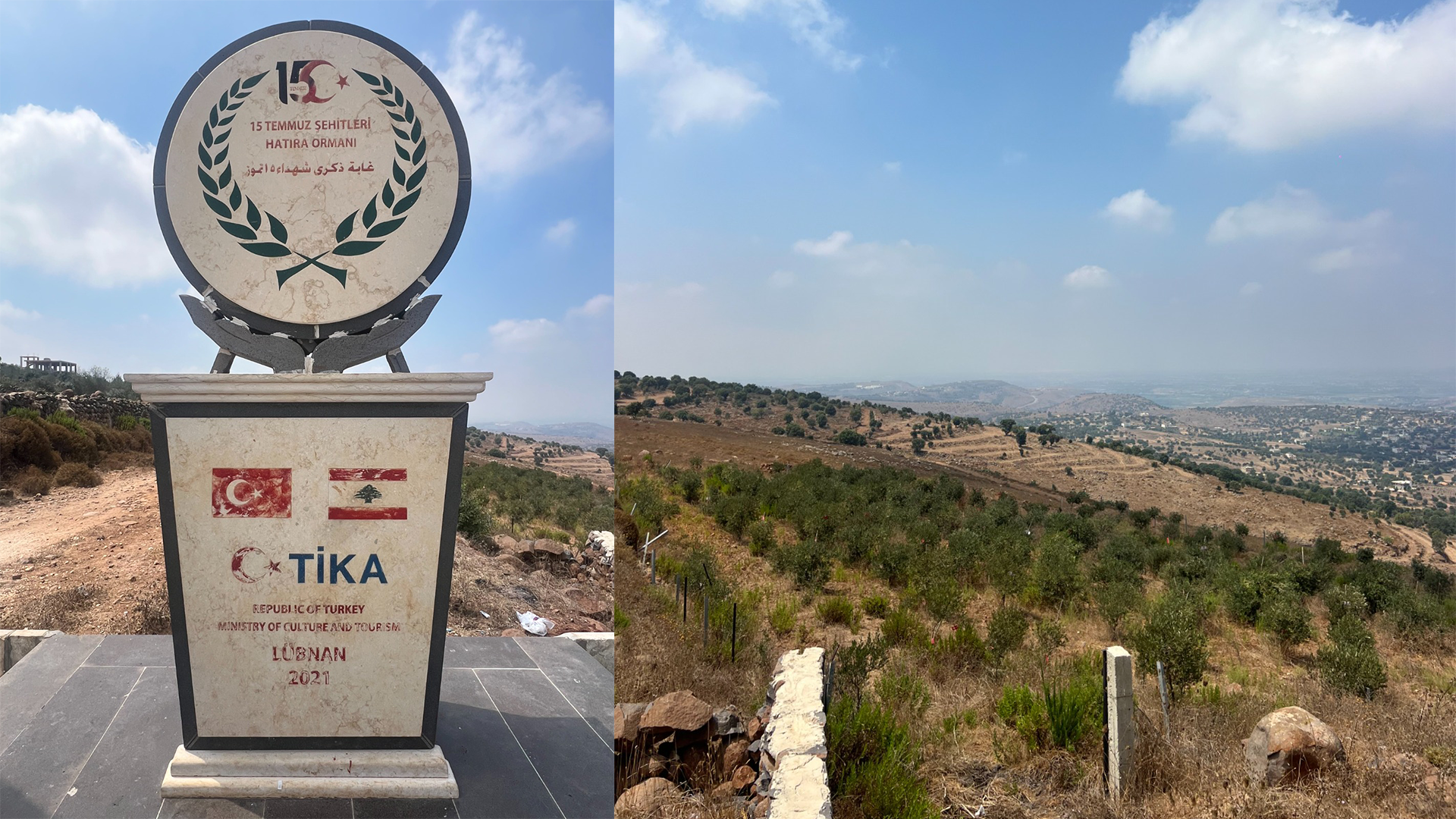 The 15 July Martyrs Memorial Forest. Source: The Beiruter.
There is love for Lebanon and love for Turkey.
Where the Lebanese state left a gap
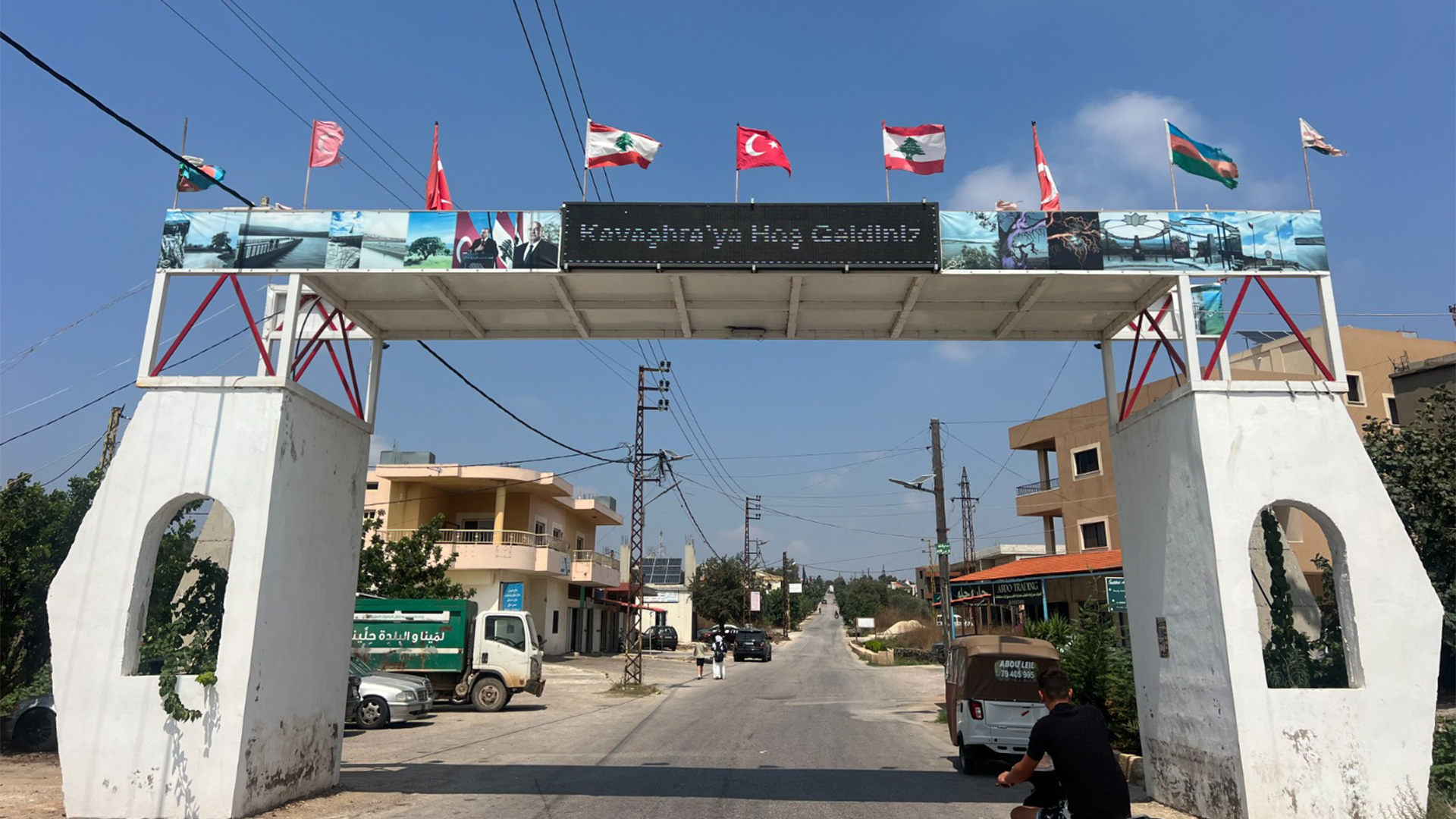 Lebanese, Turkish, and Azerbaijani flags fly above the welcome arch at the entrance to Kouachra. Source: The Beiruter.
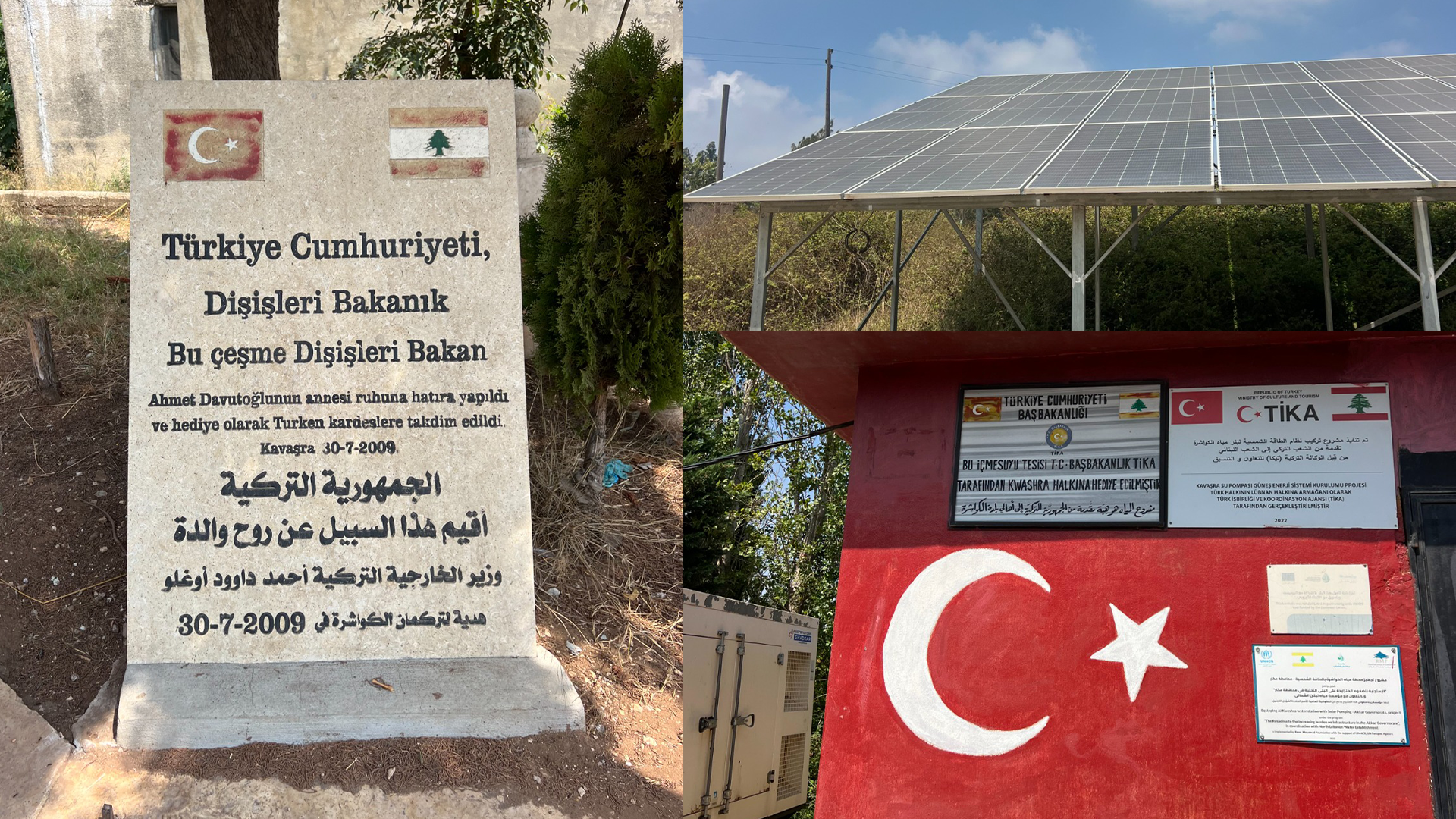 Turkish-backed projects in Kouachra include water infrastructure, solar power systems, and a fountain donated to the village in 2009. Source: The Beiruter.
We opened this channel with Turkey, on the basis that these monuments were connected to our shared history, and began asking for assistance.
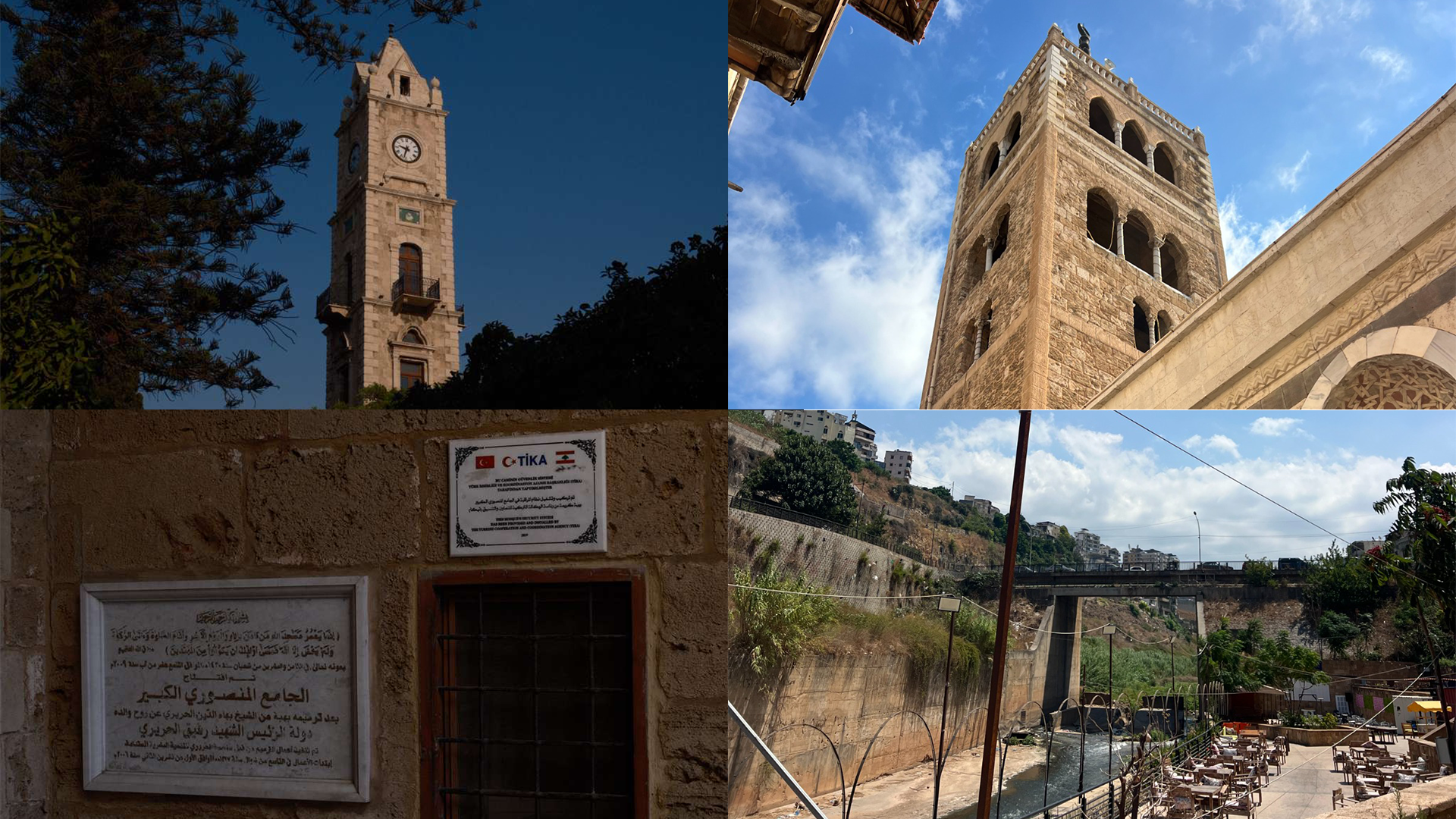 A Turkish flag and Ottoman-era landmarks in Tripoli, including the Hamidiye Clock Tower and Mansouri Great Mosque. Source: The Beiruter.
For that reason, small projects can produce large effects.
Historic roots to modern ties
Shared religion, growing political support
There is a strong Sufi heritage in northern Lebanon. Turkey’s Islam draws on Sufism, which is more compatible with the culture here.
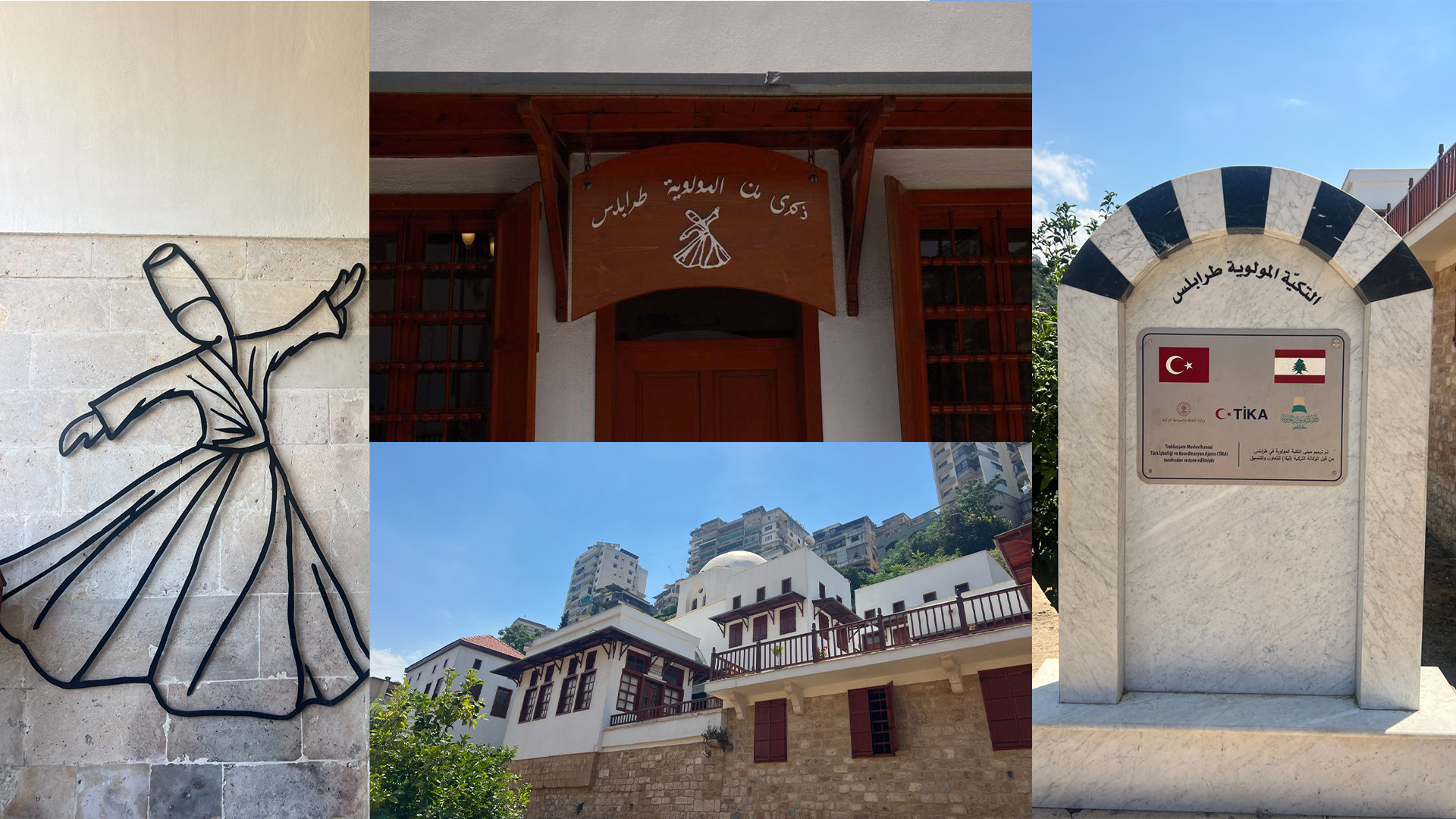 The restored Mawlawi Tekke in Tripoli, a 17th-century Sufi lodge renovated with support from TİKA. Source: The Beiruter.
The emotional connection developed gradually. Turkey has been building those feelings over time.
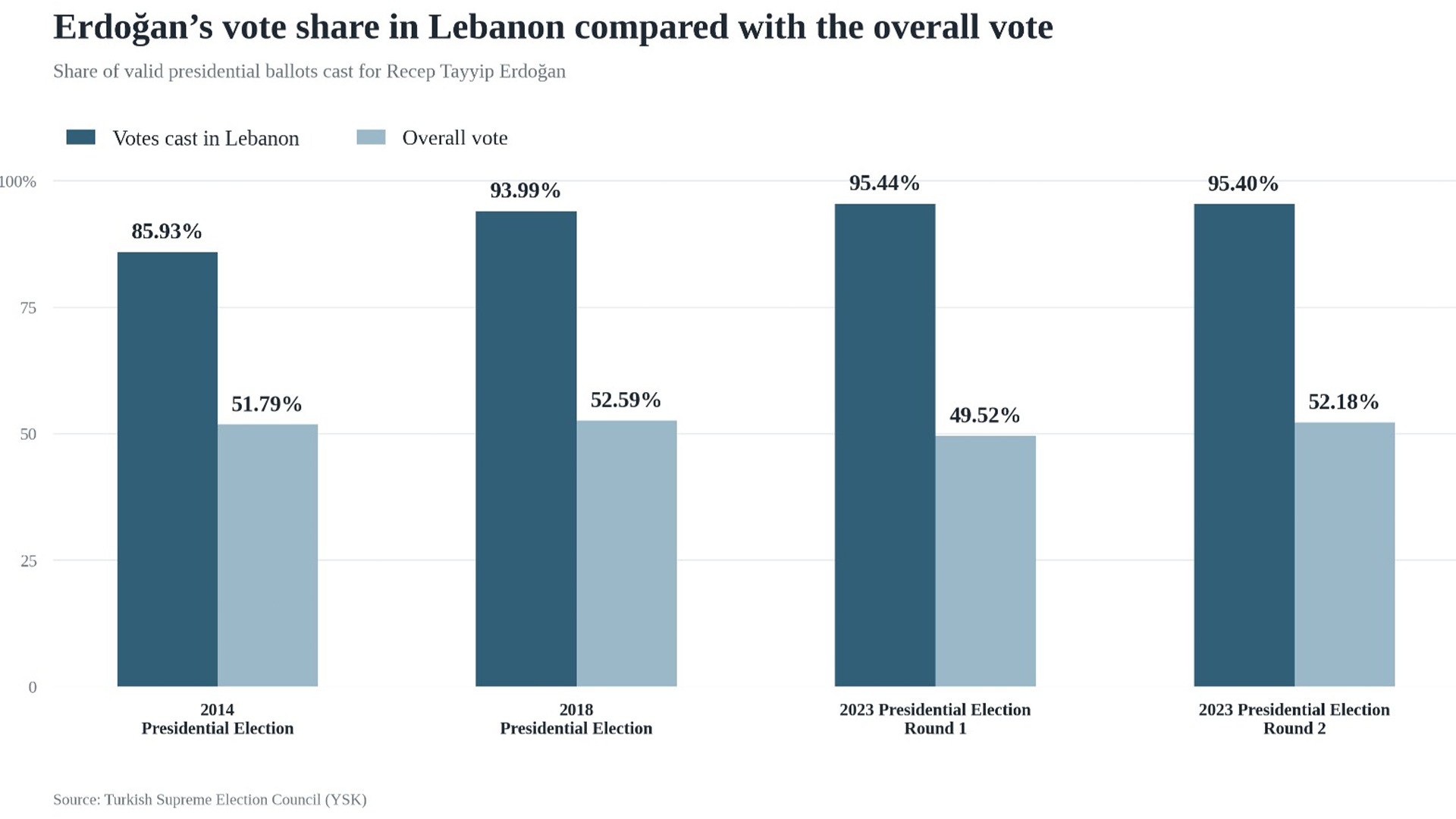 Erdoğan’s share of the presidential vote among ballots cast in Lebanon compared with the overall result. Source: Turkish Supreme Election Council (YSK) election results portal.
Who here doesn’t love Erdoğan?
Can affinity become opportunity?
We have never preferred Turkey over Lebanon, because our connection to Lebanon is different. Our land ties us to Lebanon.
-
-
-
Katharine SorensenReporterSpecializing in global affairs, technology and economics, with a focus on on-the-ground investigative reporting.
-
-
-
-
Soraya JohnsonJunior research/writer
Focusing on political analysis, economic trends, and investigative reporting.
-
