



Lebanon’s historic pottery village, fights to preserve its centuries-old craft as modern pressures and dwindling artisans threaten its survival.
A village made of clay

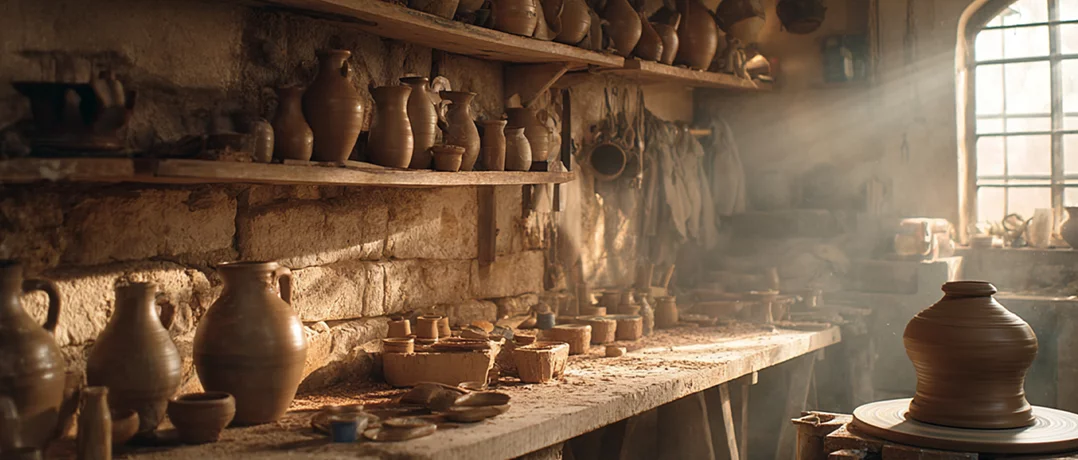
High in the hills of southeastern Lebanon sits a village whose very name carries the memory of mud and fire. Rachaya al-Foukhar (Rachaya of the Pottery) has shaped clay into daily life for centuries. Its signature water pitchers were once stacked on balconies, displayed at souks, and carried across the Levant as symbols of durability and Lebanese artisanship.
Lebanon’s pottery tradition is as old as its earliest settlements. Long before factories and imports reshaped consumer culture, local craftspeople fashioned the objects that anchored daily rituals: the jug that cooled water in summer, the pot that stewed lentils over a wood fire, the jar that preserved olives through winter. Pottery spread from coastal hubs like Tyre and Saida into the mountains, where each village developed its own style, technique, and relationship with clay. But nowhere did the craft take root as deeply as in Rachaya al-Foukhar.
A Village Built on Clay
For generations, families in Rachaya al-Foukhar worked in tandem with the earth. The hills surrounding the village contain a rich seam of reddish clay, the raw material that made the village famous across the region. Local craftspeople developed a distinctive method known as “Richaniyya”, a slow, bottom-up technique that demanded patience and precision across several days. Every detail from shaping to firing was done by hand, guided by the practiced rhythm of the potter’s wheel.
By the mid-20th century, pottery became the backbone of the local economy, a shared identity, and a source of pride. Families passed the craft from father to son, mother to daughter, each generation adding its own subtle fingerprint to pieces that were humble yet deeply rooted in Lebanese material culture.
A Tradition at a Crossroads
Lebanon’s civil war marked the first great rupture. Families fled and young people, once destined to inherit the craft, left in search of safer, more stable futures. After the war, the country changed and so did the market. Plastic replaced clay. Imported ceramics replaced handmade pitchers. What was once essential became decorative.
Despite the grim outlook, traces of resilience remain. Some potters continue working with traditional wood-fired ovens, refusing to give in to the fragility of the electric grid. Others experiment with modern designs or small-scale tourism, hoping to revive interest by connecting pottery to storytelling, heritage trails, and local workshops.
Around Lebanon, certain artisans have found success by blending old methods with new marketing strategies, but Rachaya al-Foukhar’s remote geography and the high cost of pottery production make this reinvention harder. Without investment, infrastructure, or a new generation of apprentices, the craft stands perilously close to extinction.
The Village Named After Its Craft
Rachaya al-Foukhar is a rare place where the craft and the land share the same name. Losing its pottery would be like erasing part of its geography, its memory, its meaning. For now, the remaining potters: aging, persistent, and proud, keep their wheels turning. Their clay-stained hands preserve a legacy that once shaped a region. The question is not whether Lebanon still has artisans capable of reviving its heritage. It is whether the country, amid crisis and change, will choose to value the hands that built it.
-
-

-
The Beiruter
-
