



Pope Leo XIV’s visit to Lebanon and Turkey brings a message of hope, unity, and renewed dialogue, centering youth voices and strengthening interfaith and national reconciliation during a time of crisis.
A visit of hope: Pope Leo XIV’s historic trip to Lebanon and Turkey
A visit of hope: Pope Leo XIV’s historic trip to Lebanon and Turkey
By Peter Chouayfati | December 02, 2025

Reading time: 5 min
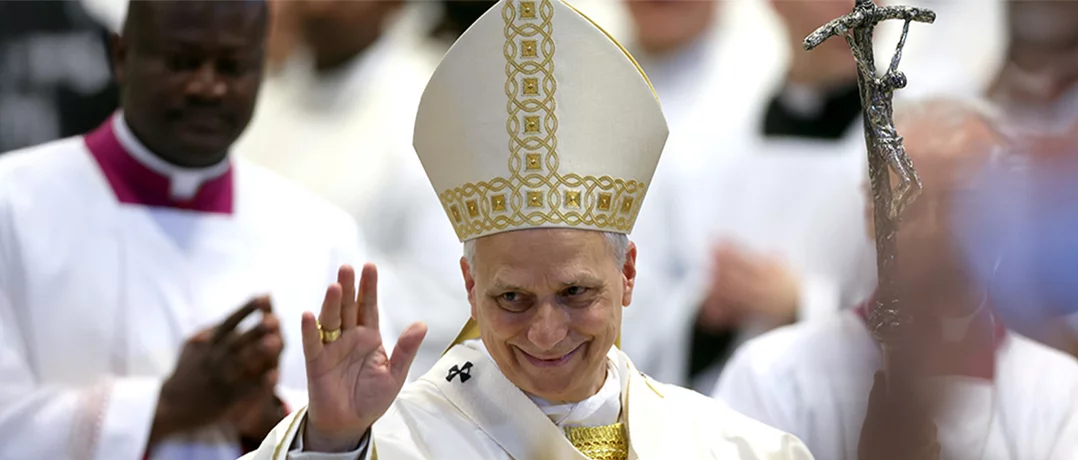
Lebanon witnesses a moment of historic significance as thousands of young people gather to meet His Holiness Pope Leo XIV, marking a visit that resonates far beyond the ceremonial. Arriving at a time when Lebanon grapples with the compounded effects of economic collapse, political stagnation, and the lingering scars of war, the Pope’s visit represents not merely a spiritual engagement but a deliberate effort to restore hope, dialogue, and collective purpose to a nation in crisis.
Preparations for the visit take nearly three months, coordinated meticulously by the National Committee for Youth Pastoral Care within the Lay Apostolate Council and the Patriarchal Maronite Youth Pastoral Office. Around seventy volunteers work across specialized committees, organizing logistics and programming to ensure that the encounter reflects Lebanon’s diversity and the aspirations of its youth. What begins as a plan to host 10,000 young people quickly expands, ultimately drawing approximately 12,000 participants, including visitors from Iraq, Jordan, and Syria. Among them are over 400 Syrians representing a broad spectrum of Christian denominations, Melkite, Roman Catholic, Armenian Catholic, Syriac Catholic, and Latin, underscoring Lebanon’s historical role as a crossroads for faiths and identities across the region.
This year’s program departs from traditional approaches. Instead of relying on a single voice to convey the concerns of Lebanese youth, organizers adopt a participatory process, collecting, translating, and submitting to the Vatican a wide array of questions, reflections, and personal testimonies from young people across Lebanon. These contributions form the foundation for the Pope’s dialogue with youth, ensuring that the discussion reflects lived realities rather than symbolic representation. The themes that emerge, youth migration, the lingering devastation of the Beirut Port explosion, ongoing impacts of regional conflict, and the fragile yet enduring commitment to coexistence, speak to the nation’s deepest wounds and aspirations.
For many Lebanese youth, hope has become scarce. Economic despair, political paralysis, and the erosion of public trust leave an entire generation uncertain about its future. Against this backdrop, Pope Leo’s visit assumes a significance that extends beyond religious symbolism. By centering young people in his engagement, the Pope sends a powerful message: their voices matter, their struggles are seen, and they have not been forgotten by the international community. Through his presence, he reminds the nation that peace, coexistence, and prosperity remain possible through unity, dignity, and shared purpose.
The Pope’s journey to Lebanon follows the beginning of his first foreign trip as the head of the Catholic Church, which also includes Turkey as a destination. Commemorating the 1,700th anniversary of the Council of Nicaea, the visit reflects both Pope Leo’s historical awareness and his commitment to interfaith dialogue. In Turkey, he meets with political and religious leaders, visits sites of historical significance, and addresses pressing global challenges. His itinerary includes the Ataturk Mausoleum in Ankara, where he leaves a message of peace and prosperity, as well as Istanbul’s Blue Mosque and the ancient city of Iznik, formerly Nicaea, where the Nicene Creed is formulated in 325 CE.
A key feature of Pope Leo’s Turkey visit is his meeting with Ecumenical Patriarch Bartholomew I, the spiritual leader of the worldwide Orthodox Christian community. The Orthodox Church, which splits from the Roman Catholic Church in the 1054 Great Schism, represents roughly 260 million Christians organized into national churches. By engaging in dialogue with Patriarch Bartholomew, Pope Leo reaffirms the Catholic Church’s commitment to ecumenical reconciliation, a theme that resonates deeply in Lebanon, where interfaith coexistence remains both fragile and essential.
Unlike some of his predecessors, Pope Leo does not visit Istanbul’s Hagia Sophia, a landmark historically symbolic of both religious and political tensions. His itinerary instead emphasizes dialogue, historical reflection, and symbolic gestures of unity, reflecting a more measured and deliberate approach to diplomacy. Across both Turkey and Lebanon, Pope Leo consistently highlights the importance of ethical leadership, human dignity, and collective responsibility.
In Lebanon, the Pope’s visit is particularly significant for the country’s Christian communities. While Christian groups in southern Lebanon lobby for a papal visit to areas affected by recent Israeli-Hezbollah conflicts, the Pope focuses on central and northern regions, addressing broader themes of peace, coexistence, and national renewal. The Christian population in Lebanon, while declining from around half of the population in 1932 to roughly one-third today, remains the largest proportion of Christians in any Arab country. Experts, including retired historian Habib Malik of the Lebanese American University, note that the vitality of Lebanon’s Christian communities serves as a stabilizing force for the country’s pluralistic society. By emphasizing free, rooted, and engaged communities, the Pope’s visit strengthens coexistence and collaboration across Lebanon’s diverse religious landscape.
Beyond Lebanon’s Christian population, Pope Leo’s presence sends a message to all youth navigating a period of profound uncertainty. Personal testimonies shared during the youth gathering highlight the cumulative effects of economic hardship, political corruption, and ongoing regional instability. Yet these stories also reflect resilience, solidarity, and a commitment to rebuild social trust. For many young people, meeting the Pope provides a rare spark of hope, a tangible affirmation that their struggles are seen and their aspirations valued.
The Pope’s broader messages during his Middle East visit extend to global concerns. He cautions against the destabilizing effects of ongoing conflicts, advocates for ethical approaches to technology and artificial intelligence, and highlights the importance of women’s roles in society. Criticizing the rise of consumerist economies that commodify human relationships, he emphasizes the cultivation of affection, connection, and collective engagement as essential to societal well-being.
Pope Leo’s approach to diplomacy in Lebanon and the broader region is characterized by quiet but firm advocacy. He consistently engages leaders through in-person dialogue, emphasizing constructive negotiation over public spectacle. This measured approach contrasts with that of his predecessor, Pope Francis, who often relies on public appeals and high-profile interventions. In Lebanon, the Pope’s emphasis on dialogue, coexistence, and national renewal demonstrates a deep understanding of the country’s complex political and religious realities and a commitment to fostering durable peace.
By beginning his pontificate with visits to Turkey and Lebanon, Pope Leo XIV signals a commitment to interfaith engagement, historical awareness, and ethical leadership. His presence in Lebanon, in particular, reminds the nation that faith, dialogue, and solidarity remain vital to rebuilding a country marked by decades of conflict and uncertainty. For the country’s youth, the Pope’s visit provides more than a spiritual encounter, it offers a renewed vision of hope, resilience, and the possibility of a better future.
In a region often defined by division and struggle, Pope Leo’s visit underscores the continuing relevance of the Catholic Church in promoting reconciliation, coexistence, and ethical leadership. By centering the concerns of young people and addressing the challenges facing Lebanon’s Christian communities, the Pope demonstrates that the Church’s role extends beyond the spiritual, engaging actively with the social, cultural, and political realities of the communities it serves. For a generation that has long navigated uncertainty and despair, Pope Leo’s visit represents a renewed affirmation of their value, their voices, and their potential to contribute to the future of Lebanon.
-
-

-
Peter ChouayfatiPolitical Analyst and Researcher
-
