



A year after Assad’s fall, HTS’s rise is reshaping Syria’s governance, regional alliances, and ties with Lebanon, while raising questions about the long-term direction of this new era.
A year since the fall of the Assad regime

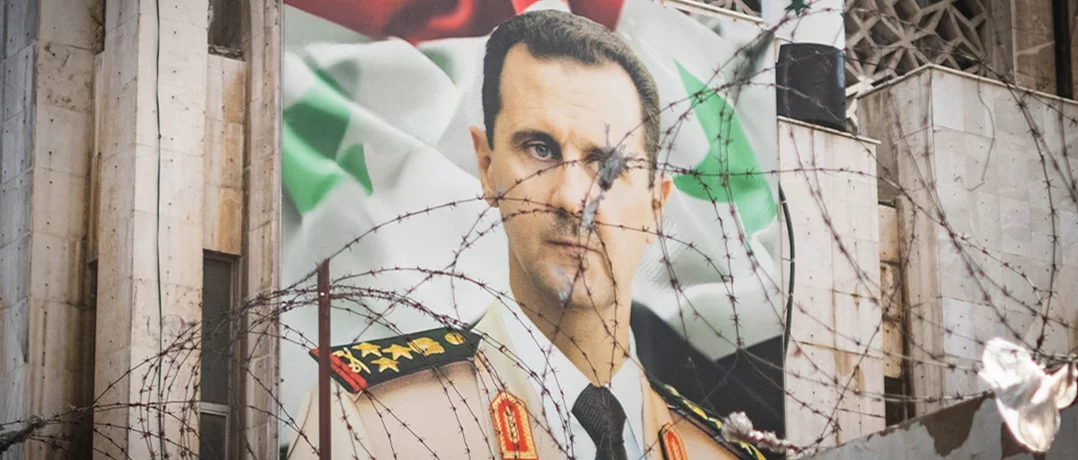
8 December 2024, a historic date to be remembered by Syrians and Lebanese alike. It is the day that the 5-decade rule of the Assad regime finally came to an end, bringing 8 million Syrians back to their homeland.
The aforementioned regime has had a devastating impact on both its local population, as well as on neighboring countries; most notably being Lebanon. However, as Hay’at Tahrir al-Sham (HTS), under the leadership of Ahmad al-Sharaa (previously known by his nom de guerre Abu Mohammad al-Jolani), advanced through a quick and decisive offensive and captured the capital, Damascus, national as well as regional dynamics shifted drastically.
The impact on the Syrian landscape
During the past 54 years, Syria was synonymous to the Assad regime. It was difficult to imagine the country in its absence, highlighting the extreme consolidation of power and authority in the hands of the Assad family. The excessive repression and crackdown further intensified as the civil war erupted in 2011, leading to the death of over half a million people.
With HTS in power today, many believe that a new dawn is approaching. While many fear a hardline Islamist rule in the country, this does not seem to be the case. Sharaa indeed noted that Syria differs drastically from Afghanistan, taking into consideration the diversity and heterogenous nature of the Syrian population. Therefore, a more moderate and mainstream Islamism seems most probable, which is what can be seen nowadays. Sharia law was not adopted, but rather Islamic jurisprudence as a source of legislation (similar to what was previously mentioned during the Assad regime’s 2012 Constitution), and no harsh and ultra-conservative policies were implemented. This phenomenon differs completely from the Salafi Islamist movements’ beliefs, aligning more towards the Muslim Brotherhood and its affiliates’ line of thinking.
Furthermore, terrorism has been a major concern for the new interim authorities. Various reports revealed that the former regime allowed terrorists to cross its border to Iraq to fight American troops and even relied on releasing terrorists from prison to join Islamist militias during the civil war. Contrarily, Sharaa’s Jabhat al-Nusra (JN) had formerly broken ties with ISIS, and Jabhat Fateh al-Sham (JFS) also distanced itself from al-Qaeda (AQ). While ruling Idlib in northwestern Syria, the two groups were even banned from operating in the region. This policy persisted with HTS’s rise to power, as the new interim authorities joined the global coalition against ISIS and terrorism. This also went hand in hand with its serious crackdown on drug trafficking, especially Captagon, which has proliferated during the ousted regime’s rule (the latter resorted to this illicit source of funding to secure its regime and clientelism system).
Despite some promising steps, one must not rush to proclaim that Syria has become a democratic country. On the contrary, Damascus seems to be heading towards authoritarianism, emphasizing the state’s wellbeing and security instead of the spread of democracy. This can be seen on several occasions, most notably centralizing power in the hands of the interim president, Ahmad al-Sharaa, and prolonging the transitional period to 5 years.
The impact on the Lebanese landscape
Lebanon, long impacted by its “brotherly” neighbor, has also witnessed significant reverberations due to the fall of the Assad regime. The country had been subject to exploitation, occupation and “guardianship” by the former regime, especially since its interference in Lebanese affairs (from 1976 until 2024). Today, however, the situation has drastically changed.
Firstly, once a staunch ally of Hezbollah and the “Axis of Resistance,” today’s Syria has shifted sides detrimentally. It has not only distanced itself from the aforementioned axis, but has also sought to seriously curb their influence and footprint in Syria and abroad. From here, the new interim authorities have expelled Iran and Hezbollah from its territories, as well as cut the logistical, economic and military bridge between the two (it is worth noting that Syria was previously viewed as the axis’s lifeline due to the centrality of its location). This has severely strained Hezbollah’s supply of essential resources (including Iranian funding and weaponry), as every now and then Syrian authorities confiscate trucks loaded with ammunition and resources meant for the Iranian-backed group. Such policies, alongside continued Israeli and international pressure, have curtailed Hezbollah influence (as well as its allies) both inside Lebanon and in the region as a whole.
Secondly, Lebanese-Syrian ties seem to be heading towards a healthy relationship. The former regime, influenced by the Baath Party’s beliefs, used to view Lebanon as a historic mistake made by colonial powers, emphasizing that the countries’ populations are one people in two states which need to be reunited (with Lebanon forming a new province in the aspired Greater Syria). This perspective does not seem to resonate in the new interim authorities’ line of thinking and rhetoric, as Sharaa continuously affirmed his respect for Lebanese sovereignty and independence. This could be seen by the ongoing efforts to resolve contentious matters between Beirut and Damascus, including border demarcation.
In conclusion, it is too soon to tell how the new Syria and its relations with Lebanon would unravel. However, based on the current situation and policies, there are indeed promising prospects. The question nevertheless remains: is it a true transformation that HTS’ Syria has undergone, or merely a pragmatic and temporary approach to garner the required regional and international aid until the group consolidates its power and hence reveals its true face?
-
-

-
The Beiruter
-
