

A fragile ceasefire between Afghanistan and Pakistan is unraveling after cross-border attacks and airstrikes in Kabul and along the Durand Line, raising fears of a wider regional confrontation.
Afghanistan-Pakistan drift into open war

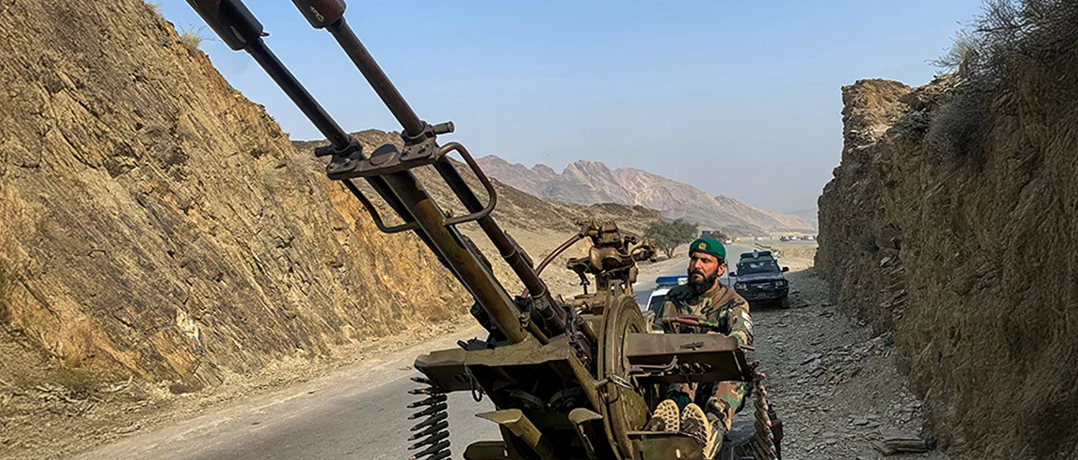
A fragile ceasefire between Afghanistan and Pakistan appeared close to collapse following a tense overnight escalation. Pakistani airstrikes targeted Kabul and additional Afghan provinces only hours after Afghan forces carried out cross-border operations inside Pakistan, raising fears of a renewed and wider confrontation.
Explosions echoed across the Afghan capital, while both governments issued sharply conflicting casualty figures and claims of battlefield gains. The rapid exchange of strikes has deepened fears of a broader confrontation along the disputed frontier known as the Durand Line, raising alarm among regional and international actors who are urging immediate de-escalation.
What happened?
The latest flare-up began when Afghanistan’s Taliban-led government announced it had launched “large-scale offensive operations” against Pakistani military installations along the Durand Line. According to Afghan officials, the assault was a retaliatory response to earlier Pakistani airstrikes that they said killed civilians in border areas. Kabul declared to have targeted military posts across several provinces and asserted that dozens of Pakistani soldiers had been killed or captured.
Islamabad rejected those assertions, describing the Afghan attack as unprovoked. Within hours, Pakistan carried out airstrikes in Kabul, Kandahar, and Paktia provinces, targeting what it described as Afghan military facilities and ammunition depots. Pakistani officials said the operations were aimed at degrading militant infrastructure and responding decisively to cross-border aggression.
The immediate trigger appears to have been a series of deadly incidents inside Pakistan in recent weeks, which Islamabad attributes to Afghan-based militants. After issuing diplomatic protests, Pakistan resorted to air power along the border, prompting Kabul’s retaliatory offensive. The rapid cycle of action and counteraction shattered the Qatar-mediated ceasefire that had tenuously held despite periodic skirmishes.
Complicating matters further are dramatically differing casualty figures. Afghan officials claimed dozens of Pakistani soldiers were killed and that military posts were overrun. Pakistan, in turn, reported far lower casualties on its side while claiming to have inflicted heavy losses on Afghan fighters. None of the figures have been independently verified, underscoring the fog of war and the propaganda dimension of the confrontation.
International reactions
The escalation has prompted swift international concern.
United Nations (UN) Secretary-General António Guterres, through his spokesperson, called on both sides to adhere to International Humanitarian Law (IHL) and prioritize the protection of civilians. The UN stressed the urgency of diplomatic engagement to prevent further deterioration.
Iranian Foreign Minister (FM) Abbas Araghchi offered to facilitate dialogue between Kabul and Islamabad, highlighting regional stability and good neighborly relations. Tehran’s involvement reflects broader regional anxieties about instability spilling across borders.
Russia also urged an immediate halt to cross-border attacks and encouraged diplomatic resolution. Moscow signaled readiness to support mediation efforts if both parties agree, highlighting concerns over growing volatility in Central and South Asia.
Within Pakistan, senior officials adopted a more confrontational tone. Minister of Defense Khawaja Asif declared that Pakistan was in “open war” with Afghanistan, stating that Islamabad’s patience had run out. Meanwhile, Prime Minister (PM) Shehbaz Sharif affirmed that Pakistan’s armed forces were fully capable of defending the country’s territorial integrity.
From Afghanistan’s side, former President Hamid Karzai called for unity in defending national sovereignty, while Taliban officials framed their actions as a legitimate response to violations of Afghan airspace.
The sharp rhetoric on both sides, combined with military action in urban areas such as Kabul, has heightened fears that the conflict could escalate beyond localized border clashes into sustained hostilities.
Historical background: A fraught border and deep distrust
Tensions between Afghanistan and Pakistan are deeply rooted in history. The 2,611-kilometer frontier separating the 2 countries, the Durand Line, was drawn in 1893 during British colonial rule. Afghanistan has never formally recognized it as an international border, making it a persistent source of political friction.
Relations deteriorated significantly after the Taliban returned to power in Kabul in 2021. While Islamabad initially maintained working ties with the new Afghan authorities, mutual suspicion soon resurfaced. The underlying driver of the aforementioned escalation lies in longstanding accusations by Pakistan that Afghanistan harbors militants from Tehreek-e-Taliban Pakistan (TTP), also known as the Pakistani Taliban. Islamabad blames the TTP for a surge in deadly attacks inside Pakistan, including suicide bombings targeting security forces and civilians. Afghan authorities have repeatedly denied providing sanctuary to such groups or allowing their territory to be used for attacks against Pakistan.
Cross-border airstrikes are not unprecedented. Previous Pakistani operations inside Afghanistan have drawn sharp condemnation from Kabul, especially when civilian casualties were reported. Likewise, Afghan forces have occasionally responded with artillery or ground assaults along contested sectors.
Efforts to stabilize relations through mediation by Qatar and Turkey led to temporary ceasefires and several rounds of talks. However, no comprehensive agreement addressing border security, militant safe havens, and mutual recognition has materialized. Each new attack inside Pakistan, and each retaliatory strike across the border, has eroded trust further.
The current escalation appears to be the most serious since the Taliban’s return to power, given the involvement of strikes in Kabul itself and the public declaration of “open war” by Pakistani officials. Without renewed diplomatic engagement and credible mechanisms to address mutual security concerns, particularly regarding militant groups operating along the frontier, the cycle of retaliation may deepen.
For now, the Durand Line remains not only a contested boundary but also a flashpoint threatening to push 2 uneasy neighbors towards sustained, protracted confrontation.
-
-

-
The Beiruter
-
