



With UNIFIL’s withdrawal looming, Europe may temporarily oversee southern Lebanon, while the ultimate goal remains full Lebanese Army control and sovereignty.
After UNIFIL will Europe take control of south Lebanon?
After UNIFIL will Europe take control of south Lebanon?
By Josiane Hajj Moussa | November 28, 2025

Reading time: 5 min
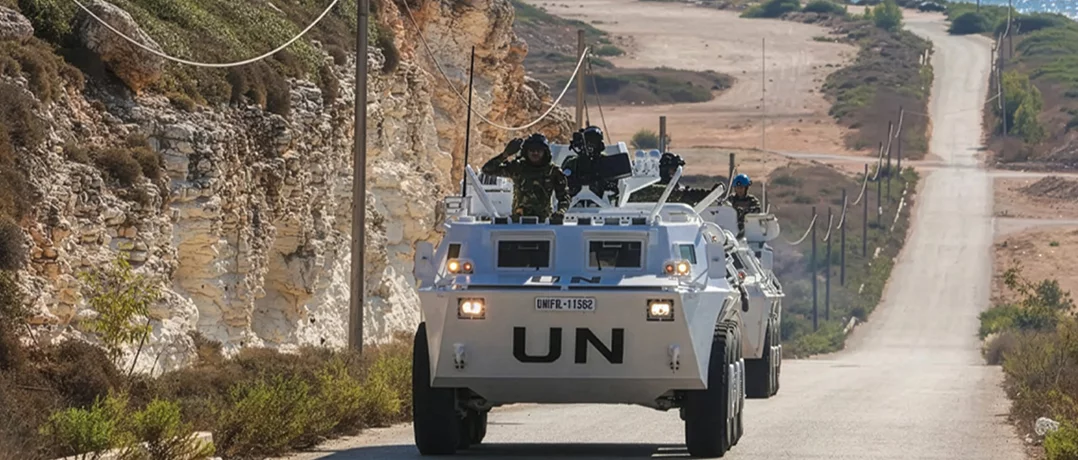
One of the most critical milestones facing Lebanon today is the implementation of UN Resolution 2790, which mandates the gradual reduction of UNIFIL personnel, withdrawal of equipment, dismantling of installations, and a phased budget reduction ultimately paving the way for a full withdrawal before the end of next year.
Ongoing diplomatic communication continues in parallel either to secure an exceptional extension of UNIFIL’s mandate, or to invoke a clause within the resolution that could justify the continued presence of a limited European international force with defined size and responsibilities, as determined by the UN Secretariat. This would fall under what the resolution referred to as: “future options for implementing Resolution 1701 after the UNIFIL withdrawal, including assistance in demining, monitoring the Blue Line, and enhancing support for redeploying the Lebanese Armed Forces south of the Litani River.”
It is within this framework that European envoys are now discussing with Lebanese officials the possibility of a European peacekeeping force temporarily overseeing security in the South until the Lebanese Army fully assumes responsibility. For now, these discussions remain exploratory no decisions have been made yet the possibility of UNIFIL withdrawing before an Israeli withdrawal remains on the table.
The European countries with the largest troop contributions notably France are engaged in discussions with US and Israeli officials, attempting to convince them to maintain a Blue Helmets presence in the South, even under a modified format. The French position shared by Italy, Spain, and Germany argues that the Lebanese Army is not currently able to replace the international force operationally.
Diplomatic sources reveal that the European proposal involves replacing UNIFIL with a European or jointly international monitoring and support force after the end of its mandate. Many observers link this approach to evolving strategic developments in the region particularly the unresolved question:2
Is Lebanon being excluded from the regional “peace framework,” or is it scheduled to re-enter it later under harsher terms?
UN Security Council Resolution 2790 which renewed UNIFIL’s mandate until the end of 2026 for the final time was not welcomed by European governments, especially France, Italy, Spain, and Germany. These governments reluctantly accepted the US-Israeli position on Lebanon, and the broader American decision to scale back financial commitments to UN operations in order to avoid confrontation with Washington.
According to Lebanese and European diplomatic and military sources, several European governments have begun seeking alternative ways to maintain a military presence in Lebanon independently of UNIFIL. These include potential bilateral agreements with the Lebanese state and army in varying formats some similar to or extending Italy’s existing Military Technical Committee for Lebanon (MTC4L) or even forming a UNIFIL-like mission composed exclusively of European states.
From a European strategic perspective, military presence in Lebanon represents a geopolitical asset a lever of influence in the Mediterranean and West Asian corridors. Historically, Lebanon has been an arena of European strategic rivalry and more recently, a low-risk operational space enabling European militaries to gain real conflict-zone proximity and field experience without the heavy casualties associated with active war.
Europeans also view current Lebanese dynamics including the reduced influence of Hezbollah in formal government and its lowered direct military visibility as factors that make a long-term European security role more acceptable domestically and regionally. They also perceive broad Lebanese preference for a European balancing presence to counter the sharper U.S. approach.
Italy, in particular, appears to be positioning itself to play a leading role supported by increased military budgets and expanding defense interests. Last year, it signed a bilateral defense cooperation agreement with Lebanon, building on its previous sponsorship of the Rome Conference in support of the Lebanese Armed Forces, and is now working to expand the technical committee’s operational role south of the Litani.
Sources familiar with the southern file and UNIFIL warn that if Israeli occupation persists and a buffer zone becomes permanently entrenched by next year, the withdrawal of UNIFIL without an international buffer force documenting Israeli violations would create a dangerous reality: the Lebanese Army would face direct exposure to Israeli forces acting only as an observer to continued occupation.
It is possible that international pragmatism grounded in paragraph 10 of Resolution 2790 could reopen negotiations to maintain UNIFIL in a reduced format rather than replace it entirely with a European or American-led force.
The same sources add: Before full Israeli withdrawal, the dismantling of the buffer zone, and final disarmament in accordance with Resolution 1701 there will be no withdrawal of UNIFIL. The resolution’s final extension allows this option.
The strategic objective, however, remains unchanged: strengthening the Lebanese Army in manpower, logistics, and financing to eventually assume full control in the South after an Israeli withdrawal, without any foreign military presence.
In the end, the post-UNIFIL phase is not merely a procedural transition or a technical adjustment it is a defining political and security crossroads for Lebanon. The ongoing debate between an exceptional extension of the mandate, the creation of a modified European force, or a full withdrawal before the implementation of Resolution 1701 reveals one essential truth: Lebanon is no longer asking what comes after UNIFIL, but rather a deeper question what role should the state, the army, and sovereignty play in the South and within the evolving regional order?
What is clear is that the road ahead is neither simple nor risk-free. Any abrupt shift or uncalculated withdrawal risks creating a dangerous security vacuum, exposing the Lebanese Army to direct confrontation with Israeli forces at a moment where deterrence, infrastructure, and political conditions remain incomplete. Yet relying indefinitely on international presence without a national strategy only prolongs dependency and postpones decisive choices.
Lebanon now stands before a rare and strategic opportunity: to redefine its security architecture in the South through a realistic, phased, and sovereign approach one that preserves stability without surrendering authority, and prevents both chaos and external substitution. If the international presence was once a necessity, the long-term objective must remain clear: a capable national army, stable borders, and sovereignty that is not open to negotiation.
The unanswered question now rests not with the UN, nor with Europe but with Lebanon’s own leadrship
Does Lebanon have the will, the vision, and the courage to turn this moment from a looming challenge into a strategic turning point?
-
-

-
Josiane Hajj MoussaReporter
-
