AI is rapidly reshaping digital violence against women, making abuse more sophisticated, widespread, and harder to regulate or escape.




AI is rapidly reshaping digital violence against women, making abuse more sophisticated, widespread, and harder to regulate or escape.

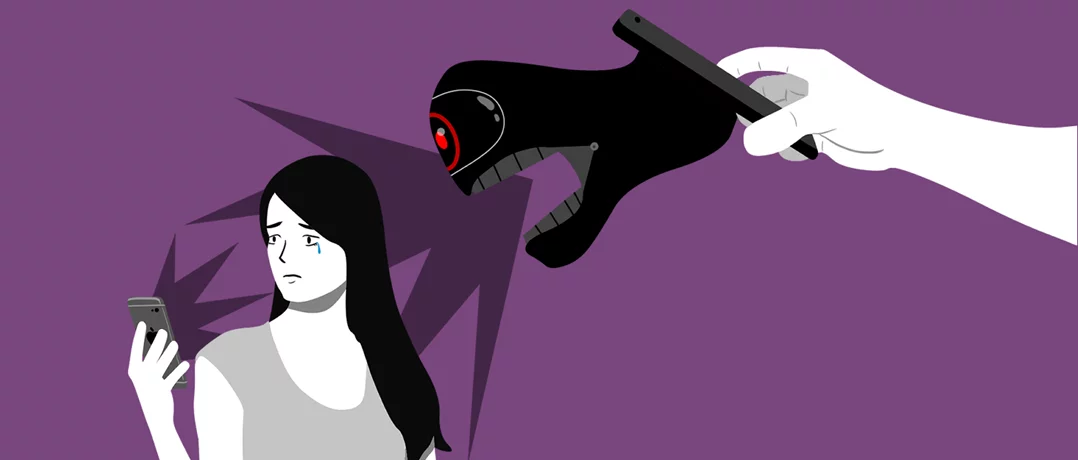
For millions of women worldwide, particularly those who work in public-facing roles, the digital space has become a minefield where the same technologies that amplify their reach are increasingly weaponized against them.
A new report from UN Women makes this reality impossible to ignore. It documents how the rapid advancement of artificial intelligence tools is not only expanding the scope of digital violence against women, but fundamentally changing its character, making abuse more sophisticated, more scalable, and harder to escape.
The report identifies three forces driving the escalation of digital violence. The first is AI itself. Tools that can generate convincing synthetic media, deepfakes, voice clones, algorithmically altered images, have moved from the fringe to the mainstream. What once required significant technical skill and resources can now be executed in minutes by anyone with a smartphone and a grudge. The barrier to harm has collapsed.
The second accelerant is anonymity. Digital platforms have long struggled, and largely failed, to impose meaningful accountability on their users. Harassers operate behind layers of pseudonymity, throwaway accounts, and jurisdictional complexity that make identification and prosecution difficult. AI-generated content adds another layer of deniability: when an abusive image or message is algorithmically produced, attributing it to a specific individual becomes even harder.
The third accelerant is the near-total absence of effective law. Fewer than 40 percent of countries worldwide have legislation that specifically protects women from online harassment or digital stalking. That means the majority of women targeted in the digital sphere are navigating their ordeal without any meaningful legal recourse. Reporting abuse to authorities often goes nowhere. Reporting it to platforms is only marginally better.
The UN Women report draws on testimony from more than 1,500 women, and the findings are stark. A significant portion reported having been subjected to deepfake content, fabricated images or videos designed to humiliate, discredit, or sexually exploit them. A larger share received unsolicited sexual messages. Others discovered that private photographs had been published without their consent, in some cases by partners, in others by strangers who had obtained them through hacking or social engineering.
The women most affected are those who are most visible: journalists, content creators, activists, and public figures. Their professional presence online makes them both more reachable and more valuable as targets. The goal of the abuse is often not simply to harm the individual, but to deter others, to signal that women who speak publicly will pay a price for doing so.
The psychological toll documented in the report is extensive. Among journalists and media workers surveyed, a meaningful share have received clinical diagnoses of anxiety, depression, or post-traumatic stress disorder as a direct result of online abuse. These are occupational injuries that go largely unacknowledged by employers, platforms, and legal systems alike.
The behavioral consequences are equally serious. Many women who have experienced digital violence respond by retreating. They self-censor on social media, avoid covering certain topics in their professional work, or withdraw from public life entirely. This represents a net loss for public discourse, perspectives erased not through argument but through intimidation. When abuse forces women offline, it distorts the information environment for everyone.
The legal gap is particularly acute across the Middle East and North Africa. While several Gulf states have enacted cybercrime legislation, the provisions are inconsistently applied and often poorly equipped to handle AI-generated content. Lebanon, Jordan, and Egypt have patchwork protections at best. The result is a region where women who experience digital violence frequently have no viable path to justice and, in some cases, face additional stigma for speaking about the abuse publicly.
What the UN Women report ultimately demands is a rethinking of how digital safety is framed. This is not a peripheral issue. It sits at the intersection of technology governance, gender equality, and freedom of expression. As AI tools grow more powerful and more accessible, the window to establish meaningful protections is narrowing. The question is whether governments, platforms, and international bodies will act before the harm becomes even harder to reverse.

