



AI is transforming the economics of the world's most profitable technology companies as the enormous cost of computing requires levels of physical investment once unusual for the technology industry.
AI is breaking Big Tech’s cash machine

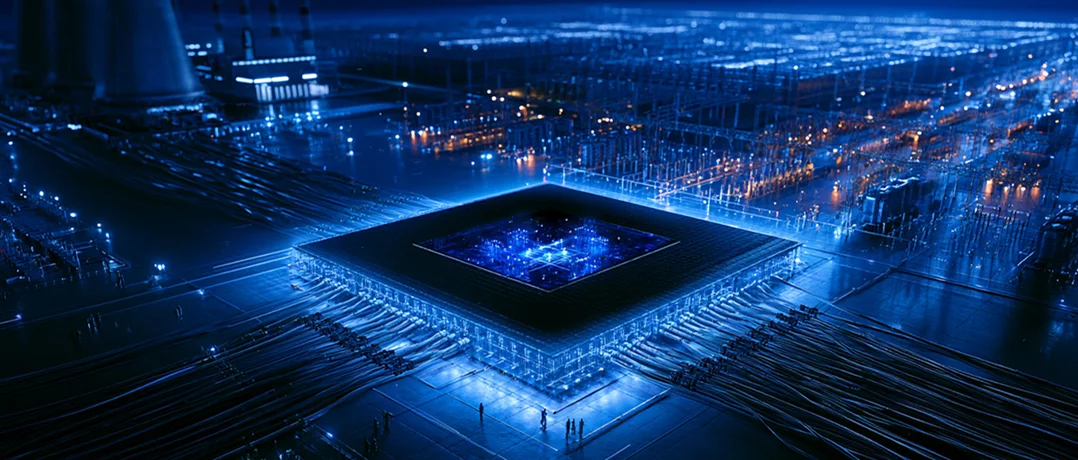
The world's largest technology companies are beginning to spend like industrial giants. Morgan Stanley estimates that roughly $2.9 trillion will be spent globally on data centers through 2028, as the race to build artificial intelligence demands vast quantities of chips, servers, electricity, and physical infrastructure. This surge in spending marks a striking departure from the economics that made Big Tech so profitable. Google, Meta, Microsoft and other technology companies built businesses that could reach billions of people without requiring physical investment to rise at the same pace. Once software had been developed, serving another user was comparatively inexpensive, allowing enormous amounts of cash to accumulate. AI is changing that equation. Expanding an AI service requires companies to continually add computing capacity, tying growth more closely to physical investment. Some of the most expensive equipment must also be replaced relatively frequently. As a result, companies that dominated an unusually asset-light era of technology are becoming some of the world's largest investors in physical infrastructure. Were Big Tech's extraordinary levels of free cash flow a permanent feature of the industry, or a product of the software era that AI is now bringing to an end? The extraordinary spending underway is rooted in a basic difference between conventional software and AI. A social network or search engine can add users without building a new physical facility for each increase in demand. Generative AI, by contrast, requires substantial computing resources both to train models and respond to users. The consequences of that shift are already visible in the amount of cash technology companies have left after paying for new infrastructure. Meta generated $31.86 billion in cash from its business during the second quarter of 2026, but spent $31.08 billion on capital investments, according to its second-quarter earnings release. That left the company with just $784 million in free cash flow, or the cash remaining after spending on the investments needed to maintain and expand its business. A year earlier, that figure stood at $8.55 billion. Alphabet's spending has accelerated just as dramatically. During the first six months of 2026, Google's parent company spent $80.6 billion on capital expenditures, more than double the $39.6 billion it spent during the same period in 2025. Even after the current wave of data centers has been built, maintaining the computing power inside them could require substantial continuing investment. The buildings themselves can remain productive for decades, but some of their most expensive equipment has a much shorter useful life. Microsoft offered an unusually clear indication of the difference in its April 2026 earnings call. The company spent $31.9 billion on capital expenditures during the quarter, with roughly two-thirds going toward what it described as “short-lived assets,” primarily graphics processing units and central processing units, the chips responsible for carrying out the computing work inside its data centers. The remaining third went toward longer-lived assets expected to generate revenue for 15 years or more. Microsoft expects to invest roughly $190 billion in capital expenditures during calendar 2026. The shorter lifespan of the chips powering AI therefore creates a recurring expense that differs considerably from building a data center once and using it for decades. Microsoft is already balancing new capacity against what it calls ‘end of life server replacement.’ A June 2026 Goldman Sachs Research analysis shows how significantly those replacement cycles can affect AI investment. Data center buildings are generally depreciated over about 20 years and power infrastructure over 25 years or longer, while AI chips operate on much shorter cycles. Extending the assumed life of AI chips from four years to six years significantly reduces estimates of cumulative investment because fewer rounds of replacement are required. The scale of investment is particularly striking because these companies remain extraordinarily profitable. Microsoft's revenue reached $82.9 billion in its latest quarter, while its cloud business generated $54.5 billion and its AI business surpassed an annual revenue rate of $37 billion. Demand for Microsoft's cloud services continues to exceed the computing capacity it has available. Yet converting those profits into surplus cash is becoming more difficult as investment rises. Microsoft generated $46.7 billion in operating cash during the quarter, but retained $15.8 billion in free cash flow after capital spending. Big Tech is hardly financially weak. Microsoft, Alphabet and Meta remain immensely profitable businesses capable of supporting spending that few companies could contemplate. But AI is forcing them to devote a far greater share of the money they generate to the physical machinery required for future growth. Today's spending may not represent a permanent deterioration in Big Tech's economics. The industry could simply be passing through an expensive construction phase before AI revenues catch up. Microsoft already offers evidence for that argument. Revenue from its AI business is now being generated at a pace that would exceed $37 billion annually, more than double the rate a year earlier. The company says rising demand and improving efficiency give it confidence in the returns from its investments. Its latest chips and software are also allowing it to process more AI requests with the same amount of computing power, potentially lowering the cost of serving each user over time. If those improvements continue, today's spending could finance another highly profitable generation of technology businesses. If they do not, the economics of Big Tech may have changed more fundamentally. The companies that mastered the software era are not running out of money. They are spending far more of it to compete in the AI era. The industry built its extraordinary profitability on the ability to grow without matching that growth dollar for dollar with physical investment. AI is now testing how much of that advantage can survive when computing itself becomes one of the industry's largest expenses.When software becomes infrastructure
The replacement problem
What happens to the cash machine
Building the next cash machine
-
-

-
The Beiruter
-
