

The collapse of Syria’s al-Hol camp raises concerns over extremist resurgence and regional security instability after mass escapes.
Al-Hol’s collapse: A renewed threat of a breeding cradle
Al-Hol’s collapse: A renewed threat of a breeding cradle
By The Beiruter | February 26, 2026

Reading time: 5 min
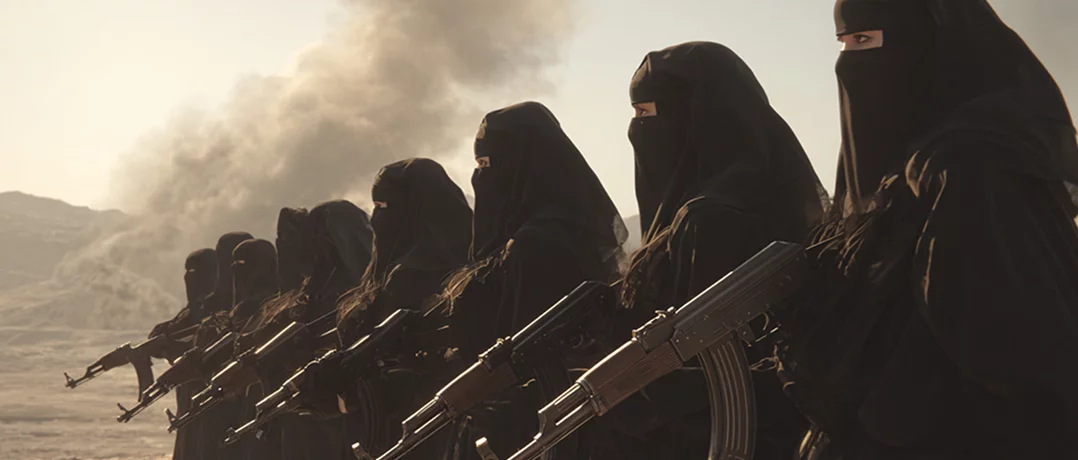
Syria has confirmed that a “mass escape” took place at the notorious al-Hol camp in the country’s northeast, following the transfer of control from the Kurdish-led Syrian Democratic Forces (SDF) to government forces in January 2026.
The facility, long associated with the detention of women and children linked to the Islamic State (IS), previously referred to as the Islamic State in Iraq and Syria (ISIS), has now been emptied after thousands fled during and after the takeover. The collapse of al-Hol has thus triggered urgent security and humanitarian concerns in Syria and beyond.
How the camp collapsed
The unraveling of al-Hol began during intense clashes between Syrian government forces and the SDF, which had guarded and administered the camp for nearly a decade with US support. On 21 January 2026, government troops took control of the facility amid a broader offensive in northeast Syria. Damascus later accused the SDF of abandoning the camp without coordination, while the Kurdish-led force said it had been compelled to redeploy to defend nearby urban centers.
According to Ministry of Interior spokesperson Noureddine al-Baba, the chaos of the takeover led to “mass escape” as internal berms and checkpoints were opened. Authorities later discovered at least 133 breaches along the camp’s 17-kilometer perimeter fencing. Some residents reportedly fled during active fighting, while others slipped away in the chaos and confusion that followed.
It remains unclear how many individuals escaped. The camp held approximately 23,500 people on the eve of the government takeover. While Syrian officials say efforts are underway to locate those suspected of criminal involvement, the sheer scale of the collapse has complicated tracking and accountability.
Damascus has since closed the camp, transferring hundreds of residents to the Akhtarin camp in Aleppo province, which officials say is more accessible to aid agencies and state institutions. Others have been repatriated to Iraq, with American assistance. Yet thousands remain unaccounted for, and their whereabouts are unknown.
Regional security at risk
The escape from al-Hol has reignited fears of extremist resurgence at a time when Syria remains fragmented and politically fragile. Although IS was territorially defeated in 2019, the group has maintained sleeper cells across parts of Syria and Iraq; which was evident through the various sporadic attacks perpetrated by the group in Syria (the latest being against 4 government security personnel). The sudden release or disappearance of thousands of individuals with alleged ties to the group could offer an opportunity for reorganization or mobilization.
Security analysts have long warned that al-Hol was more than a detention site; it was also a potential incubator for radicalization. Some women inside the camp were described as deeply committed to IS ideology, while children (many born during the group’s rule) grew up in isolated and often degrading conditions. Experts fear that extremist networks could exploit the chaos to recruit from among escapees, particularly those lacking support systems.
An internal European Union (EU) memo has reportedly raised concerns that militant groups may capitalize on the situation to strengthen recruitment efforts, especially among foreign nationals whose legal status remains unclear. Approximately 6,500 residents of al-Hol were third-country nationals from over 40 countries.
For Syria’s government, the collapse of camp security presents an immediate test of capacity. Damascus does not yet exercise complete control across all of the country’s territory, and its ability to monitor and detain suspects is limited by operational and resource constraints. The situation is further complicated by shifting international dynamics, including the gradual reduction of US military involvement in Syria; which, in of itself, might indirectly contribute to extremist groups to fill the political vacuum left behind.
If not carefully managed, the fallout from al-Hol’s collapse could reverberate beyond Syria’s borders, affecting neighboring Iraq, Lebanon, Jordan, and potentially the West as well.
Al-Hol’s troubled legacy
Al-Hol emerged as a symbol of IS’s downfall after the group’s territorial defeat in 2019. At its peak, the camp housed around 73,000 people (mostly women and children) linked to IS fighters. Over time, that number declined to roughly 23,500 as some countries repatriated citizens.
The majority of residents were Syrians and Iraqis, but thousands came from abroad. Despite their association with IS members, most were never formally charged with crimes. Instead, they lived in prolonged de facto detention under tight security.
Conditions in the camp were widely criticized. Humanitarian agencies reported inadequate sanitation, limited medical services, and insufficient educational opportunities for children. These hardships, combined with ideological indoctrination among some residents, fueled concerns that the camp was breeding further extremism and radicalization rather than containing it or achieving the required rehabilitation. Today, al-Hol stands empty; a stark transformation for what was once Syria’s largest detention facility for IS-linked families.
In conclusion, the collapse of al-Hol camp marks a critical juncture in Syria’s post-IS trajectory. Without coordinated international engagement, transparent management, and effective rehabilitation and reintegration programs, the escape from al-Hol risks becoming more than a localized crisis. It could evolve into a broader regional challenge; one that tests Syria’s capacity to stabilize its territory and the international community’s commitment to preventing the resurgence of violent extremism.
-
-

-
The Beiruter
-
