



Through Al-Qorne Al-Bayda, writer and director Yehya Jaber and
actress Maria Douaihy take audiences inside the traditions, beliefs and stories
of Zgharta and Ehden. Through one actress and multiple female characters, the
play explores the women, customs and social realities that shaped the region
while bringing its collective memories to the stage.
Al Qorne Al Bayda: A look inside Zgharta’s traditions
Al Qorne Al Bayda: A look inside Zgharta’s traditions
By Yara Saliba | October 05, 2026

Reading time: 5 min
One woman. Many characters. Many stories.
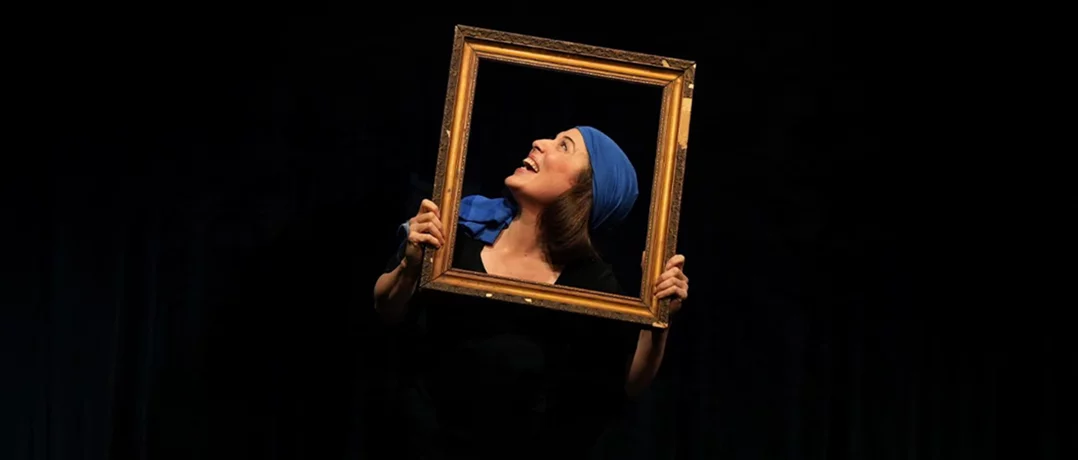
This is what writer and director Yehya Jaber brings to the stage in Al-Qorne Al-Bayda, a one-woman performance led by actress Maria Douaihy, who transforms herself into several women, each carrying a different story, personality and struggle.
Set around the 1950s, the play takes audiences into the world of Zgharta and Ehden, two closely connected communities in northern Lebanon, with Zgharta traditionally serving as the winter home and Ehden as the summer home. Through characters including Rize, Youssefieh, Teresa, Labibe and several others, Maria moves between voices, bodies and experiences while Jaber explores the customs, traditions and social structures of the region.
The production has travelled across Lebanon, with performances in Zgharta, Ehden, Beirut, Tripoli, Jbeil and Saida. In 2026, Maria was also awarded Best Actress in a Leading Role at the Monot Awards for her performance.
But Al-Qurne Al-Bayda is not simply a play about a region. At its heart is a question of who gets remembered and who gets left out when a community tells its history.
Where the idea began
During his interview with The Beiruter, Jaber explained that Al-Qorne Al-Bayda is part of his 15-year exploration of Lebanese regions and communities. He has previously created works inspired by Beirut, the South, Baalbek and other Lebanese communities, approaching them through sociological, anthropological and psychological perspectives.
Zgharta and Ehden were a natural continuation, but they are also deeply personal to him. Jaber lived there for a period of time and developed a strong connection with the region and its people, particularly its Maronite community. “I wanted to work on Zgharta and Ehden because they mean a great deal to me as a region that is very rich in terms of its dramatic material,” Jaber says.
The title itself was born from his imagination. Al-Qorne Al-Bayda was conceived as a world rising above Qornet Al-Sawda, Lebanon’s highest mountain. Rather than simply reproducing history, Jaber wanted to create his own theatrical world, blending real cultural memory with invented characters and stories.
The minimalist stage keeps the focus on Maria. Rather than an elaborate set, Jaber uses a handful of objects that transform throughout the performance. “Scenography should serve the performance,” he says, with a single framed panel becoming a church, a window, a house or paintings.
A culture told through traditions
Much of the play is built around the traditions and beliefs of Zgharta and Ehden, bringing the audience into a world where faith, family, food and folklore are intertwined.
Saint Anthony appears as a central figure in the community's traditions. The play portrays women who struggled to have children praying to him and turning a casserole upside down as part of the ritual. His importance is also reflected in the many variations of his name found throughout the community Anthony, Antoine, Antonio, Tonino and others.
Women turn to Saint Memma when they hope to get married, while Youssef Bek Karam, a revered hero of Ehden and Zgharta, is called upon when something is lost.
The play also connects the name Ehden to Eden, the paradise described in the Bible, while presenting a local story about the origins of Zgharta. According to the version told in the play, Ehden was the original settlement, before an Ottoman-era encounter eventually led to land being granted on the coast, where the name Zigorit is said to have evolved into Zgharta.
Food becomes another way of telling this cultural story. Kibbeh, one of Zgharta’s best-known traditions, is tied to a time when preparing and taking it to the oven was considered women's work. The play captures this through Jamil, a husband who takes kibbeh to the bakery instead of his wife and is mocked by the community a humorous glimpse at gender roles that have since evolved.
The women history left behind
“Women are the foundation of my theatrical work,” he says, describing the women of Zgharta and Ehden as “unknown soldiers” whose influence was not always visible in political leadership, literature or the arts, but who played essential roles in family, land, work and society.
Rather than presenting the region as a picturesque destination, Jaber wanted to explore the women behind its traditions their relationships with marriage, family, religion, love and the expectations placed upon them.
Maria, from the region, immersed herself in the characters by spending time with older women from Zgharta, observing their movements, listening to their dialect and studying their mannerisms. Each character developed her own voice and physicality. Her favorite is Labibe, a woman who refuses to pretend she loves her husband simply because society expects her to. “At some point, that love can end, and no one dares to say it,” Maria explains. “She was the one who said it.”
The play looks at a time when women's choices were far more restricted, but Jaber does not see that reality as entirely confined to the past. He believes women have made significant progress and are now present in political, social, cultural and economic life, while acknowledging that some expectations and structures remain.
A different side of Zgharta
The play's reception was perhaps its greatest test. Jaber refused to soften the harsher aspects of the community for the sake of comfort, yet audiences in Zgharta and Ehden embraced the production. Some spectators had never attended theatre before.
For audiences outside the region, the play offered a glimpse into a community they may not know. For those from Zgharta and Ehden, it offered recognition.
Dornaihy says she hopes people leave with a fuller image of the community, beyond the stereotypes surrounding it. For Jaber, theatre can become a kind of confession a place where a community looks honestly at itself.
And perhaps that is what makes Al-Qorne Al-Bayda linger after the curtain falls: it does not simply ask audiences to look at Zgharta's past. It asks them to look at the people who lived it especially the women whose stories were too often left in the shadows.
-
-

-
Yara SalibaJunior Writer/Translator
-
