



Lebanon has called an exceptional parliamentary session in early March 2026, prompting debate over whether it will facilitate electoral reforms or open the door to postponing parliamentary elections.
An exceptional parliamentary session: Postpone or save the elections?
An exceptional parliamentary session: Postpone or save the elections?
By The Beiruter | February 28, 2026

Reading time: 4 min
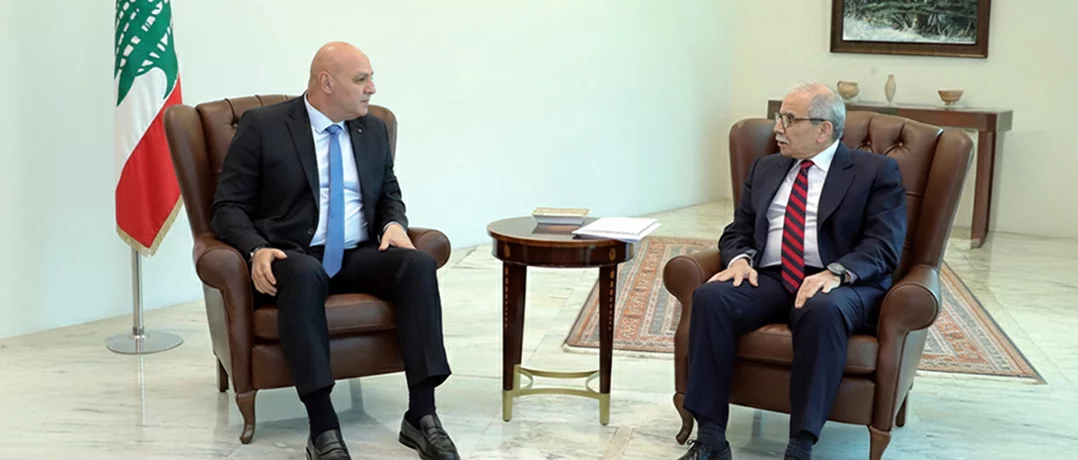
Lebanese President Joseph Aoun and Prime Minister (PM) Nawaf Salam signed a decree calling for an exceptional session of the Lebanese Parliament, set to run from 2 March to 16 March 2026. The decree, issued under Article 33 of the Lebanese Constitution and following the Prime Minister’s proposal, allows Parliament to review all referred and forthcoming draft laws, as well as any proposals the Parliament Bureau decides to submit to the General Assembly.
The timing of this session, immediately after the expiration of a previous extraordinary session on 26 February 2026, has raised questions about its purpose. Is this purely a constitutional procedure, or could it be a maneuver to either safeguard or postpone the upcoming parliamentary elections?
Constitutional mechanisms and political interpretations
Lebanon’s Constitution empowers the President, with the Prime Minister’s agreement, to convene Parliament in extraordinary session. The back-to-back scheduling of exceptional sessions has prompted political observers to consider whether there is a tacit understanding between President Aoun and Speaker of Parliament Nabih Berri.
Such a session could serve as a framework for political negotiation over the elections. Theoretically, Parliament could introduce a government draft law or parliamentary proposal to extend its term, thereby postponing elections. However, the scale of any delay (whether a brief technical postponement or a longer-term extension) remains uncertain.
For now, no official proposal to postpone elections has been presented. Yet the mere existence of an active parliamentary session creates the institutional possibility for discussions about electoral timing, fueling speculation about Lebanon’s democratic trajectory.
On the other hand, frozen draft laws regarding amending the current 2017 electoral law, including one sent by a number of Members of Parliament (MPs) as well as one sent by the Council of Ministers, could be given an opportunity to make its way to adoption. Given that certain provisions seem to be inapplicable, and in order to ensure expatriates’ voting for all 128 representatives from abroad, amendments must be made. The exceptional session could thus provide a window for such objective; should political will and concessions exist.
Presidential determination: Elections must proceed
Despite speculation, informed sources stressed that President Aoun has taken a firm stance: constitutional deadlines are final and non-negotiable. Respecting these deadlines is seen as essential to restoring confidence both domestically and internationally.
The President views timely elections as crucial to the rotation of power and renewal of popular legitimacy. Any deviation from the electoral calendar risks deepening Lebanon’s political and institutional uncertainty.
Government readiness and electoral framework
Marking one year since the government gained parliamentary confidence, Prime Minister Nawaf Salam described his cabinet as a “foundational government” tasked with stabilizing Lebanon; including upholding constitutional deadlines (such as the municipal and parliamentary elections). While achievements have not fully met public expectations, he highlighted progress in halting institutional collapse, restoring state authority, and advancing accountability.
Salam stressed that elections would take place under the current law, noting existing ambiguities in implementing District 16 for expatriates. The government formed a committee to address technical challenges and briefed Parliament accordingly. Until legislative clarity is provided, the District 16 will remain suspended, but the voting rights of Lebanese abroad remain protected under Article 111 of the current law.
Importantly, the Prime Minister dismissed any suggestion of foreign interference: “No foreign ambassador can impose elections on us or prevent them,” he stated. Lebanon’s constitutional process, he stressed, is sovereign.
Indications point to elections on schedule
The Minister of Interior and Municipalities Ahmad al-Hajjar has signaled that the probability of holding elections on time has increased, with 30 candidates registered as of the previous evening. Administrative and logistical preparations are underway, and voters have been officially called without accounting for the suspended District 16.
Should Parliament act to clarify or adjust electoral rules, the government has pledged to consider these measures within the legal framework. For now, indications suggest that the exceptional session may facilitate legislative review without interfering with the scheduled electoral timetable. Indeed, while speculation persists, the positions of both President Aoun and Prime Minister Salam suggest a commitment to constitutional regularity.
The session’s ultimate impact on Lebanon’s electoral process will unfold in the coming weeks. If institutional norms are respected, the Parliament’s activation could strengthen electoral readiness. Conversely, any political maneuvering to extend its term would test the resilience of Lebanon’s democratic framework.
-
-

-
The Beiruter
-
