



Beirut Art Days transformed the city into a vibrant celebration of resilience, bringing together artists, galleries, and audiences through exhibitions that explored identity, healing, belonging, and the enduring power of culture.
An occasion for celebration: Beirut Art Days concludes
An occasion for celebration: Beirut Art Days concludes
By Soraya Johnson | July 04, 2026

Reading time: 4 min
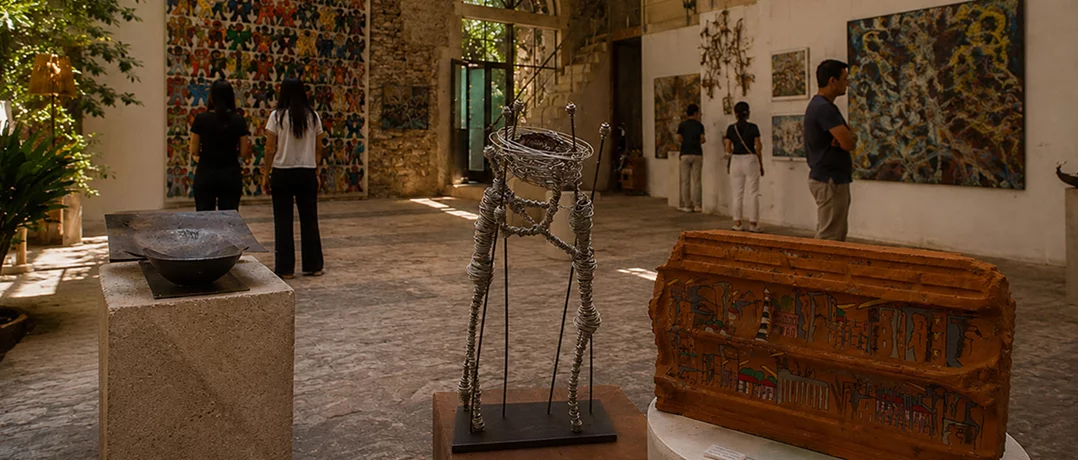
Beirut Art Days proved that the city’s creativity is alive and flourishing. From June 24 to 27, bustling exhibitions showcased the art scene’s vast diversity and centered joy, providing a much anticipated respite during times of war.
A sampling of exhibits
The theme of Galerie Tanit’s exhibit Poetic Landscapes emerged from gallery co-founder Nalia Kettaneh-Kunigk's desire to “give the people an occasion to smile and enjoy” the land’s beauty. Artworks ranged from paintings, ceramic sculpture, photography, videos, and even a red bench that seemed to unfurl into the gallery hall. Nalia felt the show fulfilled its mission: “people came out of the exhibit quite happy,” she recalled.
When selecting the twelve women artists whose work would be shown at Arthaus, Artists of Beirut co-founder Yara Jahchan centered a question that resonated for many Lebanese: with so many leaving and returning to their country, as families sprawl across the globe, how do individuals find belonging? Each artist featured in All The Places We Belong approached this question differently: photographer Helen Serhan found belonging everywhere, pointing her camera at the bits of otherwise foreign countries that she found a connection with. Cynthia Odsi’s work was a testament to the unique sense of belonging she felt in Lebanon, despite having lived in France most of her adult life. One of her iron-wrapped sculptures featured figures holding up blossoms from a cedar tree. “Even if there’s a lot of divisions here, the one thing we get united around is the cedar, as it represents our country,” she explained.
While curating Rebirth Beirut’s Collective exhibition - 5th Edition, Project Manager Samar Hawa chose artists across mediums, cultures, and ages, mirroring Beirut’s rich diversity. Samar saw art as critical to telling Beirut’s story, capturing experiences of both war and peace. For example, Lara Youakim’s acrylic paintings used terracotta roof tiles as a canvas, which were salvaged from homes destroyed in the 2020 blast. Like many Beiruters, she made beauty out of hardship.
Dima Youssef Rbeiz has made art since her youth, when her mother first taught her cross stitching to distract from bombings while they waited in shelters. In her first ever solo exhibition, [IN]SEAM, Dima showcases her quilts, which stitch together haphazardly joined materials into unified works of art. A guiding principle of Dima’s work was to reuse what others see as waste. “I see beauty and potential in the discarded,” she explains. Fabric scraps were sourced from old Lebanese textile factories and even her father’s ‘70s neckties; stickers she found on packaging became incorporated parts of a whole. The fostering of community was central to the showing, with viewers invited to taste homemade ice cream and fresh breads as they stood before the tapestries.
A joyful reception
“People in Beirut, they love to live, they love art - they’re full of pizzazz. People have been craving to get out of the house and see beautiful things,” Samar explained. People’s enthusiasm resulted in many partaking in Beirut Art Days, with atmospheres across openings brimming with energy.
The mission of artists is fundamental to inspiring joy and sharing the stories of Lebanese. Nalia recounted how everyone in the art world “is doing their part to contribute to keeping the cultural life of the country alive, through music, dance, pottery, whatever. It’s very important because culture is the texture of a country.”
The enthusiasm for Beirut Art Days translated into sales, which is critical for the continued flourishing of Beirut’s art community. Nalia credited Beirut Art Days as helping rekindle the spotlight on Lebanese artists, helping foreigners reengage with buying the works.
“There’s always lots of demand,” Yara explained. “With each struggle - the explosion, the financial crisis, now war - there’s some who doubt our ability to put an exhibit together at all. But we always do, and people always come."
Art Days provided Beiruters the opportunity to reengage with their city, building community around the celebration of beauty. Dima, for whom art once operated as a therapy during her childhood of cross stitching in bomb bunkers, hoped her work would allow viewers to release stress as well. Mira Hawa, a consultant for Dima’s exhibit, remembered how one guest, gazing up at Dima’s colorful tapestries, just smiled and said, “I can breathe here.”
-
-
-
Soraya JohnsonJunior research/writer
Focusing on political analysis, economic trends, and investigative reporting.
-
