



As US-Iran tensions rise, this analysis revisits Washington’s history of regime change in Iran from the 1953 CIA-backed coup to the 1979 revolution and examines why renewed calls for intervention risk repeating destabilizing mistakes.
An overview of the United States and regime change in Iran
An overview of the United States and regime change in Iran
By Peter Chouayfati | January 27, 2026

Reading time: 5 min
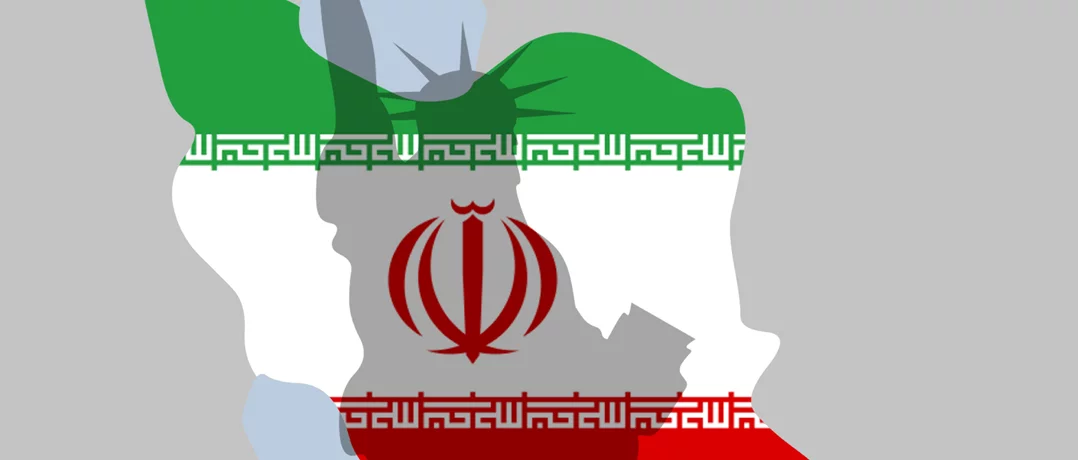
The recent escalation in tensions between the United States and Iran has revived an all-too-familiar question in Washington: regime change. As talk of military strikes and political pressure once again dominates headlines, history looms heavily over the present. For Iran, American involvement in regime change is not a hypothetical fear but a lived historical experience, one that continues to shape Iranian politics, regional dynamics, and deep-seated mistrust toward the United States. Understanding the U.S. role in Iran’s past regime changes is essential to grasp why contemporary calls for intervention are not only dangerous, but profoundly destabilizing.
The first CIA coup
The modern story of U.S.-engineered regime change in Iran begins in 1953, when the Central Intelligence Agency orchestrated the overthrow of Iran’s first democratically elected prime minister, Mohammad Mossadegh. Mossadegh had risen to power on a nationalist platform that resonated deeply with Iranian public sentiment, particularly his promise to nationalize Iran’s oil industry, which had long been dominated by the British-owned Anglo-Iranian Oil Company (later BP). For Iranians, nationalization was not merely a question of asserting sovereignty, but it was also about economic justice amidst Britain’s exploitation.
For Britain and the United States, however, Mossadegh represented a threat—not only to Western economic interests, but to the broader postwar global order. According to Stevenson (2025) with CBC News, the early Cold War context conflated nationalist movements in the Global South with communism. Although Mossadegh was not a communist, U.S. and British intelligence portrayed him as susceptible to Soviet influence, a framing that proved decisive in justifying intervention.
Reuhsen (1993) writes that Operation Ajax, carried out jointly by the CIA and Britain’s MI6, relied on propaganda campaigns, bribery of politicians, clerics, and journalists, and the orchestration of street protests to manufacture instability. After an initial failure, the coup succeeded on August 19, 1953. Mossadegh was arrested, tried for treason, and confined to house arrest until his death. The CIA later described the coup as “an American project from beginning to end,” marking its first successful regime-change operation abroad.
Installing the Shah and securing American interests
In Mossadegh’s place, the United States reinstalled Mohammad Reza Shah Pahlavi as Iran’s absolute monarch. Western media at the time framed this outcome as a victory for “stability” and “reason,” revealing a colonial mindset that equated sovereignty with irresponsibility when exercised by postcolonial states. As The New York Times bluntly warned in 1954, Iran’s fate was meant to serve as an “object lesson” to other resource-rich nations tempted by “fanatical nationalism.”
The Shah quickly became one of Washington’s most reliable Cold War allies. In exchange for American support, Iran signed over significant portions of its oil industry to U.S. companies, while massive military and economic aid flowed into the country. To maintaininternal control, the U.S. helped establish and train SAVAK, Iran’s notorious secret police, which became synonymous with surveillance, torture, and political repression. The CIA, alongside Israel’s Mossad, played a direct role in building SAVAK’s institutional capacity.
While the Shah’s regime delivered stability favourable to U.S. strategic interests, it did so at the cost of political legitimacy. Repression hollowed out civil society, silenced secular opposition, and drove dissent into mosques and religious networks paving the way for revolutionary mobilization.
The road to 1979
By the late 1970s, the Shah’s authoritarianism, corruption, and perceived subservience to the United States had alienated large segments of Iranian society. Crucially, anti-Americanism became a unifying ideological force across diverse opposition groups. The memory of the 1953 coup was not an abstract historical grievance but a central pillar of revolutionary consciousness. As many Iranians saw it, the United States had not merely supported tyranny but imposed it.
Contrary to popular narratives, the United States did not directly engineer the 1979 Islamic Revolution. However, declassified documents reveal that Washington played a far more complex and ambiguous role than official accounts long suggested. As the Shah’s position became increasingly untenable, the Carter administration hedged its bets. While publicly affirming support for the monarchy, U.S. officials quietly explored alternatives to prevent civil war and avoid a communist takeover.
In early 1979, U.S. diplomats and intelligence officials engaged in secret communications with representatives of Ayatollah Ruhollah Khomeini, who was then in exile in France. Khomeini signalled that he was not inherently hostile to American interests, promising continued oil exports and distancing himself from the Soviet Union.
This tacit flexibility proved disastrous. U.S. officials misread Khomeini’s intentions, underestimating his revolutionary ambitions and overestimating the influence of moderates within his circle. While Washington sought compromise, Khomeini pursued decisive victory. Once in power, he swiftly dismantled the military hierarchy, eliminated secular and leftist allies, and consolidated authority under an Islamic Republic defined by militant anti-Americanism.
Khomeini designates “The Great Satan”
The legacy of U.S. intervention was central to the ideological identity of the new regime. The 1953 coup, combined with decades of American backing for the Shah, provided the moral and political justification for viewing the United States as the “Great Satan.” This framing resonated powerfully during the 1979–1981 U.S. embassy hostage crisis, which revolutionaries explicitly justified as a pre-emptive defence against another CIA-backed coup.
Although the United States did not create the Islamic Republic, its earlier actions played a decisive structural and symbolic role in making such an outcome possible. Regime change in 1953 delegitimized liberal nationalism, discredited secular governance, and taught a generation of Iranians that foreign powers would not tolerate genuine sovereignty. The result was a revolution defined less by ideology than by resistance to external domination.
Are lessons being learned?
Today, calls for regime change in Iran mirror the earlier episodes. Officials in Washington now frame Iran as a threat not because of communism, but due to concerns over terrorism and nuclear development. Yet the underlying logic remains strikingly similar: the belief that coercive external intervention can reshape Iran’s internal political order without catastrophic consequences.
Historian Mohamad Tavakoli-Targhi, professor of Near and Middle Eastern civilizations at the University of Toronto, warns that another attempt to forcibly remake Iran would likely produce even greater regional chaos. Far from weakening the regime, external pressure tends to consolidate internal support by reviving memories of foreign interference.
The cost of repeating history
The history of U.S. involvement in Iran demonstrates that regime change is not a neutral policy tool but a deeply destabilizing force with long-term consequences. The 1953 coup did not bring democracy or lasting stability; it produced authoritarianism, revolution, and enduring hostility. The miscalculations of 1979 further entrenched mutual mistrust and radicalized bilateral relations.
As tensions once again escalate, history offers a clear warning. Overthrowing governments from the outside rarely produces the outcomes its architects intend. As Venezuela’s turnaround was described as a success by the US, will the momentum built cause the US to neglect the consequences of Iranian regime change. The international norm being created is a dangerous one. If the US pushes for regime change, the sovereignty and protection for small states is completely at the hands of major powers, marking another blow to international law.
-
-

-
Peter ChouayfatiPolitical Analyst and Researcher
-
