A newly discovered archaeological site in Achrafieh-Rmeil may reveal an industrial quarter of ancient Roman Berytus, expanding the city’s known historical footprint.




A newly discovered archaeological site in Achrafieh-Rmeil may reveal an industrial quarter of ancient Roman Berytus, expanding the city’s known historical footprint.

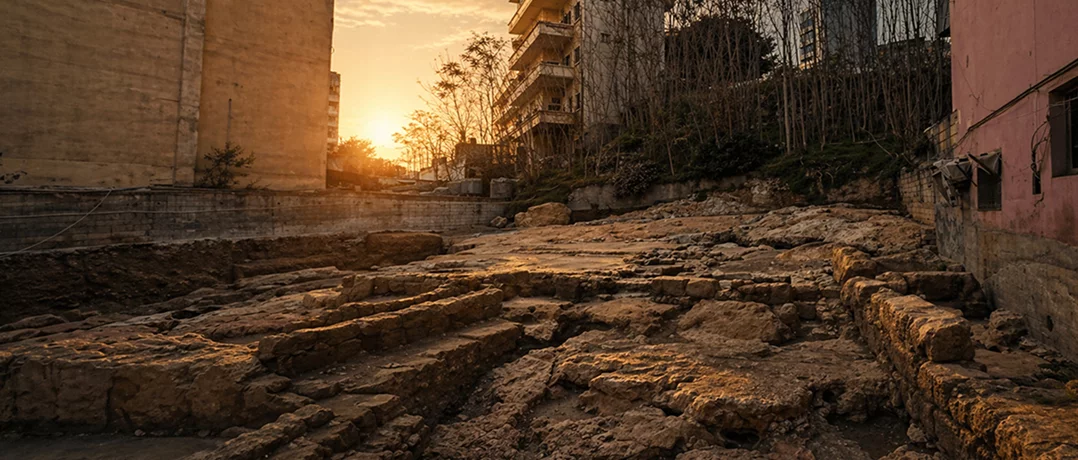
Beneath the pavements of one of Beirut's most storied neighborhoods, history has once again broken through. A new archaeological site has been discovered in Achrafieh-Rmeil, potentially dating back to the Roman era and pointing to the existence of an industrial quarter on the eastern fringes of ancient Berytus, a find that could meaningfully expand our understanding of the city's Roman footprint. Excavations are currently underway on property No. 1074 in Rmeil, and the Directorate General of Antiquities (DGA) has confirmed its direct involvement.
In an exclusive statement to The Beiruter, the Ministry of Culture said: "All archaeological works being carried out on property No. 1074 in Rmeil, where it was reported that a new archaeological discovery has been made, are being conducted under its supervision and monitoring." The statement signals that authorities are treating the site with the seriousness it warrants, ensuring that any findings are properly documented and preserved.
The discovery is particularly compelling given what historians already know about Roman Berytus. Known in antiquity as Colonia Julia Augusta Felix Berytus, the city was considered the most Roman city in the eastern provinces of the Roman Empire, and became the seat of a famous school of law in the third century AD, earning it the enduring title “Berytus Nutrix Legum”, "Beirut, Mother of Laws." Yet for all its civic grandeur, the full spatial extent of Roman Berytus has never been completely mapped.
Until now, most Roman-era archaeological discoveries in Beirut have been concentrated in the downtown core. Excavations in the city center have uncovered public baths, colonnaded streets, a circus, theatre, and residential and commercial quarters. The Rmeil site, however, sits to the east of that traditional center, in a neighborhood that includes the Rmeil quarter and shows traces of human activity dating back to the Neolithic era. If the industrial quarter hypothesis is confirmed, it would suggest that Roman Berytus extended further into what is now Achrafieh than previously documented, pushing the known urban boundaries of the ancient city eastward.
Industrial quarters in Roman cities were typically located on the periphery, away from civic and residential centers, and housed workshops, kilns, storage facilities, and craft production. Their discovery can reveal much about a city's economy, trade networks, and daily working life , dimensions of ancient Beirut that remain relatively underexplored compared to its monumental architecture and legal legacy.
Achrafieh contains a high concentration of Beirut's Ottoman and French Mandate-era architectural heritage, making urban excavations there particularly delicate. Every construction project risks uncovering layered history, and this latest find is a reminder of how much still lies beneath the surface of a city that has been continuously inhabited for over 5,000 years.
The DGA's active oversight of the Rmeil site is an encouraging sign. As excavations progress, archaeologists will be working to date the finds more precisely and determine the nature of the industrial activity that may have taken place there, potentially adding a vital new chapter to the long and layered story of Roman Beirut.

