



Passionate collectors explore how antiques preserve history, craftsmanship and personal memories while turning a fascination with old objects into a lifelong pursuit.
Antiques… traces of the lives that came before us
Antiques… traces of the lives that came before us
By The Beiruter | October 15, 2026

Reading time: 4 min
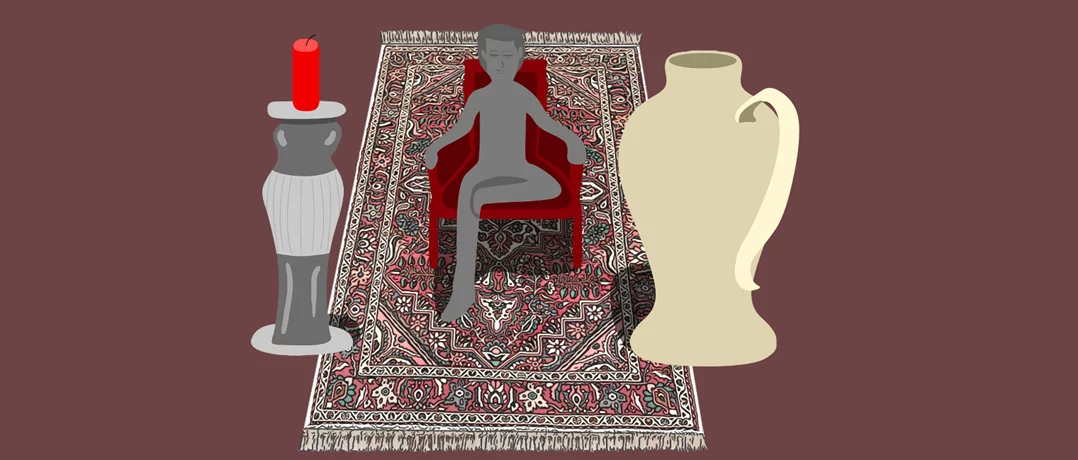
A worn wooden table, a brass lamp or a cabinet with its original fittings can preserve details of another era, revealing the artistry, habits and tastes of those who once owned it. For some, these objects are simply old furniture. For others, they are a lifelong source of curiosity, inviting questions about their origins, construction and journey through time. Lebanese collectors’ stories reveal how an interest rooted in childhood can develop into a deeper appreciation of history, technique and the stories held within everyday things.
Shannon Khoueiry: Learning from a grandmother’s house
Shannon’s education began in her grandmother’s home, a place of heavy wooden cabinets, darkened mirrors, glass-fronted porcelain and lamps that cast a distinctive evening glow. “I was collecting long before I understood what collecting meant,” she recalled. While other children chased new toys, she opened drawers and asked why one chair differed in shape from the rest.
At about 12, she asked her grandmother why she never replaced her older pieces. The answer stayed with her, a good thing does not lose its worth simply because it ages. The turning point arrived in her twenties, when she inherited a wooden chest, a mirror and a small table. The chest was dark and cumbersome, yet she noticed the joinery, the wear around the handles and the way hands had altered the color of the wood.
“I would not say I became a collector simply because I inherited a few objects,” she explained. “I became one because I wanted to understand and keep them treasured.”
Her first purchase, in 1988, was a brass table lamp from a dealer. It was imperfect and far from valuable, but its curved stem won her over. She moved it around a side table five or six times before she was content. “One good piece can be enough,” she noted. Today she favors wooden furniture, lamps and mirrors, valuing the marks that reveal use and repair. She had the inherited chest restored, but cautiously. “A good restoration should preserve the object’s identity, not erase its history,” she stressed.
Every year, she travels to Lyon and Megève in France, scouting for pieces that catch her eye and add something distinctive to her collection. These trips have become part of her collecting routine, allowing her to discover objects she might never encounter at home. Over time, her house has become a destination in its own right, with friends visiting as much to admire its contents as to spend time with her. They often describe it as a museum, though she prefers a space where every object can be appreciated up close, without losing the warmth of a lived-in home.
She rejected the idea that antiques belong behind ropes. “If someone walks into my house and feels that they cannot sit down, touch anything or open a drawer, then I have failed to create the kind of home I want,” she remarked. Even now, she is tempted by a well-proportioned lamp or a small cabinet with original hardware. She no longer buys simply because something is old. “I am looking for a piece that has something to teach me,” she explained. “The best purchases are often the ones that leave you asking questions after you bring them home.”
Nabil Bou Melhem: A Collector Trained by Curiosity
Nabil’s interest also began in childhood, though it centered on mechanics. Old clocks, radios and lamps drew him in.
“I was interested in things that had a mechanism, a history or a detail that made them different from everything else around them,” he explained.
Without money to buy, he developed the habit of looking and questioned owners about objects in their homes. Often, they had no idea where the pieces came from. “An object could sit in the corner of a room for years without anybody asking who had made it,” he observed.
The internet turned that curiosity into discipline. He browsed photographs of vintage furniture and lighting, then noticed recurring shapes, joints and hinges. “At some point, browsing became research, and research became a habit,” he recounted.
The research also taught him caution. “An attractive photograph and a confident description do not prove that an object is authentic,” he warned. He now requests measurements and condition reports, and he consults specialists for significant purchases.
His first serious purchase, around the late 1990s, was a vintage desk lamp, chosen for its practical design and sound proportions. Ownership taught him about weight, finish and evidence of earlier repair.
He judges the construction of an item. “I sometimes find myself looking at the underside of a table while everybody else is admiring the room,” he admitted. “That is probably when my family knows I have found something interesting.”
He is candid about mistakes. Early on, he overlooked flaws in pieces that excited him. “The decision to buy should be rational enough to survive the excitement,” he cautioned. Nor does he treat antiques as an investment. “For me, the greatest return is the pleasure of understanding what I own,” he stated.
His latest find was a small cabinet discovered through an online listing. The photographs drew him in, but construction sealed the decision, attractive proportions, original-looking hardware and details worth a closer look. He still checked its condition, likely period and restoration history before buying. “The discovery might take a few minutes, but understanding what you have discovered can take much longer,” he reflected.
Antiques offer a window into the past, connecting us to those who came before us and protecting the traces of their lives that we choose to carry forward.
-
-

-
The Beiruter
-
