



Speaking to The Beiruter, Dr. Nayef Khaled Al-Waqaa analyzes how President Aoun’s Riyadh invitation represents a strategic opportunity for Lebanon and Saudi Arabia.
Aoun’s Riyadh invitation reinforces Lebanon-Saudi relations
Aoun’s Riyadh invitation reinforces Lebanon-Saudi relations
By The Beiruter | July 21, 2026

Reading time: 6 min
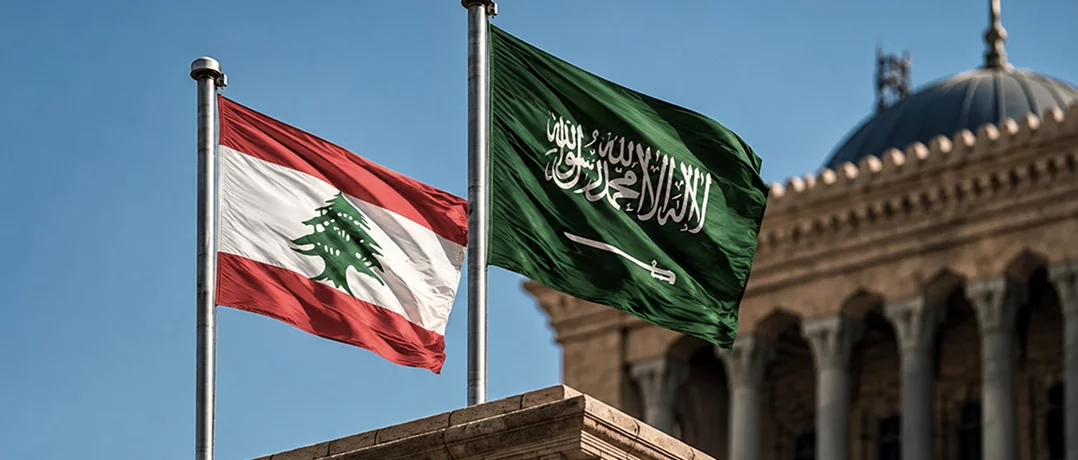
Saudi Crown Prince and Prime Minister (PM) Mohammed bin Salman’s invitation to Lebanese President Joseph Aoun to visit Riyadh signals a new phase in relations between the two countries, reflecting renewed Saudi engagement with Beirut.
During a recent phone call, the two leaders reviewed the latest developments in Lebanon and the wider Middle East, discussed efforts to strengthen regional security and stability, and reaffirmed the importance of cooperation between their two countries. The Crown Prince also reiterated Riyadh’s support for Lebanon’s sovereignty, territorial integrity, and the priorities set by the Lebanese government.
In this context, Saudi consultant and academic Dr. Nayef Khaled Al-Waqaa described the invitation as a strategic message reaffirming Saudi Arabia’s enduring commitment to Lebanon and its determination to support the country's return to stability, sovereignty, and its broader Arab environment.
An invitation that reflects strategic commitment
Al-Waqaa, told The Beiruter that the invitation extended to President Aoun should not be viewed merely as a diplomatic courtesy but rather as a reaffirmation of Saudi Arabia’s long-standing relationship with Lebanon.
The invitation to President Joseph Aoun reaffirms the depth of Saudi-Lebanese relations and reflects the Kingdom’s continued commitment to Lebanon’s sovereignty, security, and stability.
He noted that the Middle East is experiencing an exceptionally sensitive period marked by complex regional challenges, making close coordination between Arab states increasingly important. Considering this, he argued that the invitation demonstrates Saudi Arabia’s continued commitment to seeing Lebanon emerge as a sovereign, secure, and politically stable state.
He highlighted that “Saudi Arabia has consistently supported Lebanon throughout its modern history, including during periods of severe political instability and economic hardship.
“The Kingdom’s assistance has never been limited to financial support alone but has also included diplomatic engagement aimed at preserving Lebanon’s unity and constitutional legitimacy” he said adding that the Kingdom has maintained its commitment despite the country’s recurring crises.
The Taif Agreement remains one of the clearest examples of Saudi Arabia’s historic contribution to Lebanon.
Supporting state institutions and sovereignty
A central theme of Al-Waqaa’s analysis is Saudi Arabia’s focus on strengthening the Lebanese state itself rather than supporting individual political factions.
He argued that Riyadh continues to engage with all Lebanese who believe in the country’s unity, constitutional legitimacy, presidency, armed forces, and security institutions. According to him, Saudi Arabia remains open to cooperation with all segments of Lebanese society that support state institutions while rejecting groups that seek to involve Lebanon in regional conflicts or undermine its sovereignty.
In this context, Al-Waqaa welcomed the political direction adopted by President Aoun and the current Lebanese government, describing it as a clearer commitment to reinforcing state authority and ensuring that decisions concerning national security remain within the framework of legitimate institutions.
The current direction adopted by President Aoun and the Lebanese government is appreciated because it reinforces state authority and rejects the duality of armed decision-making.
He suggested that these developments have contributed to restoring confidence between Beirut and Riyadh, creating conditions for deeper political dialogue and broader cooperation in the coming period.
The anticipated visit to Riyadh
Al-Waqaa stressed that Lebanon’s political, economic, and security challenges cannot be addressed separately. In his assessment, meaningful recovery requires progress across all three sectors simultaneously.
Lebanon’s political, economic, and security challenges are interconnected. None of these files can be addressed in isolation.
Lebanon continues to experience one of the world’s worst financial crises in modern history, while institutional weakness and political uncertainty have discouraged investment and slowed economic reforms. According to Al-Waqaa, sustainable economic recovery depends upon strengthening political stability, restoring public confidence in state institutions, and improving the overall security environment.
He believes these interconnected issues are likely to feature prominently during President Aoun’s anticipated visit to Riyadh. Discussions, he suggested, are expected to extend well beyond symbolic diplomacy to include economic cooperation, investment opportunities, development assistance, and support for Lebanon’s reform agenda.
The discussions are expected to be comprehensive, addressing Lebanon's challenges directly while supporting reforms that strengthen the Lebanese state.
The improving political relationship also raises expectations regarding trade. A gradual reopening of Saudi and wider Gulf markets to Lebanese exports would provide much-needed foreign currency revenues for producers who have struggled since losing access to one of their largest regional markets. Such progress could also encourage renewed Gulf investment across sectors ranging from agriculture and industry to tourism and infrastructure.
A changing regional environment creates new opportunities
Al-Waqaa believes broader regional developments have created favorable conditions for Lebanon to strengthen its ties with the Arab world.
He argued that several regional actors that previously contributed to instability have seen their influence diminish, while changing geopolitical realities have created greater opportunities for Arab states to cooperate in promoting regional stability. In his assessment, these developments provide Lebanon with a historic opportunity to reinforce state authority, consolidate national sovereignty, and pursue a foreign policy rooted in its Arab identity.
He also expressed optimism that closer Saudi-Lebanese cooperation could facilitate Lebanon’s reintegration into its traditional Arab environment while helping restore commercial ties with Saudi Arabia and the wider Gulf Cooperation Council (GCC).
Saudi Arabia wants to see a strong, united, and economically prosperous Lebanon fully reintegrated into its Arab environment.
For Al-Waqaa, this moment represents more than a diplomatic breakthrough. It offers Lebanon the opportunity to leave behind decades of recurring instability, conflict, and political division by strengthening its institutions and rebuilding strategic partnerships with its Arab neighbors.
A historic relationship undergoing renewal
Relations between Lebanon and Saudi Arabia have historically been among the strongest in the Arab world. For decades, the Kingdom has played an influential political, diplomatic, and economic role in Lebanon, supporting successive governments, investing in the Lebanese economy, and serving as a destination for hundreds of thousands of Lebanese expatriates.
Before 2021, Saudi Arabia ranked among Lebanon’s most important export markets, importing approximately $240 million worth of Lebanese products annually, particularly agricultural produce, food industries, and manufactured goods. The Kingdom also represented an important source of tourism, investment, and remittances that supported Lebanon’s economy.
However, Saudi Arabia suspended Lebanese imports in 2021 over repeated Captagon smuggling attempts and growing concerns about Hezbollah’s dominance over Lebanon’s political and security decision-making. With Hezbollah’s influence significantly diminished and President Joseph Aoun and the government reasserting state authority, exports have recently been revived as bilateral relations continue to normalize.
Therefore, the latest conversation and the invitation extended by Crown Prince Mohammed bin Salman signal what many see as the beginning of a new and promising phase in Saudi-Lebanese relations.
-
-

-
The Beiruter
-
