



New research shows apocalyptic thinking is more widespread than assumed, influencing how people interpret global risks and whether they believe those risks can be prevented.
Apocalyptic thinking isn’t fringe anymore

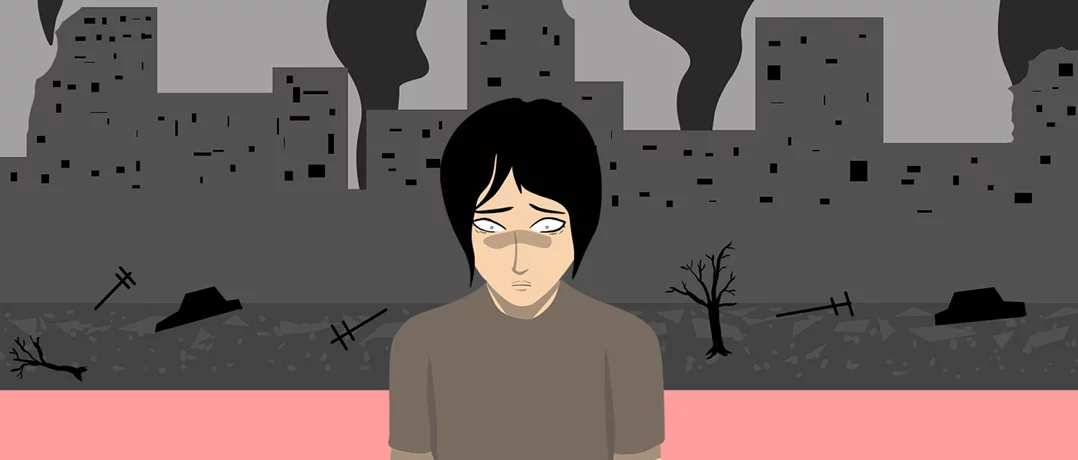
Apocalyptic thinking is no longer confined to the margins. New research from the University of British Columbia suggests it is both widespread and structured in ways that influence how people make sense of global threats.
The study, based on surveys of more than 3,400 people in the United States and Canada, finds that nearly one-third of Americans believe the world will end within their lifetime. But prevalence is only part of the story. As lead author Dr. Matthew I. Billet explains, “these ‘end of world’ beliefs aren’t just fringe ideas—they actually act as a central lens through which people view major global threats.” From climate change and pandemics to nuclear conflict and emerging technologies, these beliefs determine not only how risks are understood, but how they are responded to.
Imagining the end
Apocalyptic thinking is not a single, uniform belief. The research identifies five key dimensions that shape how people imagine the end of the world: perceived closeness (how soon it might occur), anthropogenic causality (whether humans will cause it), theogenic causality (whether divine forces will), personal control, and emotional valence (whether the outcome is ultimately seen as good or catastrophic).
These distinctions matter. As Billet explains, “This research moves beyond asking ‘if’ people believe the world is ending to asking ‘how’ they believe it will happen… These beliefs independently drive real-world attitudes toward global risks.” Rather than a vague sense of doom, apocalyptic belief operates as a coherent worldview, influencing how people assign causality, responsibility, and agency in moments of crisis.
From belief to action
The study’s most consequential finding is that these narratives translate directly into how people assess risk and respond to it.
Participants were asked to evaluate a range of global threats identified by the World Economic Forum, including economic, environmental, geopolitical, societal, and technological risks. Their responses varied sharply depending on how they understood the “end of the world.”
Those who believed the end is near and driven by human activity were more likely to perceive higher levels of risk and support stronger policy interventions, particularly in areas such as climate change and global security. This group tends to interpret current crises as evidence of escalation, reinforcing the urgency of action.
By contrast, those who believed the outcome is controlled by divine forces were significantly less likely to support preventive measures, reflecting a sense that events are predetermined rather than shaped by human decision-making.
As Billet notes, “Different narratives people believe about the end of the world can lead to very different responses to societal issues.” The same threat, whether environmental collapse or geopolitical conflict, can be interpreted as either urgent and solvable or inevitable and beyond intervention.
Importantly, the study also finds that these patterns cut across religious and non-religious groups. While beliefs differ in content and intensity, respondents broadly agree on one point: humans play some role in shaping the future. What diverges is whether that role is seen as decisive or limited and whether intervention is viewed as meaningful or futile.
A world that increasingly feels unstable
These belief systems are emerging within a global environment defined by intensifying risks.
The World Economic Forum’s Global Risks Report 2026, based on more than 1,300 expert responses, identifies a near-term outlook dominated by armed conflict, geoeconomic confrontation, misinformation, and societal polarization. Over a longer horizon, extreme weather events, biodiversity loss, and ecosystem collapse rank as the most severe threats.
Crucially, the report emphasizes that these risks are no longer isolated. They are increasingly “interconnected and compounding,” meaning disruptions in one domain, such as conflict, can trigger cascading effects across economic systems, supply chains, and political stability. This systemic framing reinforces a perception of the world as operating under continuous strain rather than discrete shocks.
That perception is reflected in public opinion data. The Edelman Trust Barometer 2026, which surveys more than 30,000 respondents across 28 countries, finds that 61 percent of people report a moderate or high sense of grievance, rooted in the belief that institutions are failing to deliver for them. At the same time, roughly two-thirds of respondents express concern that leaders are unable to manage major societal challenges, from economic instability to conflict.
Trust remains fragmented across institutions, government, business, media, and NGOs, with no single actor seen as fully capable of responding to systemic threats. This erosion of confidence contributes to a broader sense that crises are outpacing the institutions designed to manage them.
From fringe narrative to mainstream framework
As these findings suggest, apocalyptic thinking is no longer peripheral but increasingly embedded in how people interpret an uncertain world. Against a backdrop of converging risks and declining confidence in institutions, these beliefs shape whether crises are seen as challenges to confront or signals of inevitable decline.
The result is not just a difference in outlook, but in response, one that can influence everything from policy support to public behavior. In that sense, how people imagine the end may matter as much as the risks themselves.
-
-

-
The Beiruter
-
