



Lebanon’s disarmament plan enters a critical second phase as the army seeks more time amid political opposition, Hezbollah’s resistance, and continued Israeli military pressure, testing the state’s ability to assert authority over weapons.
Army moves forward with phase 2 of disarmament plan
Army moves forward with phase 2 of disarmament plan
By The Beiruter | February 17, 2026

Reading time: 3 min
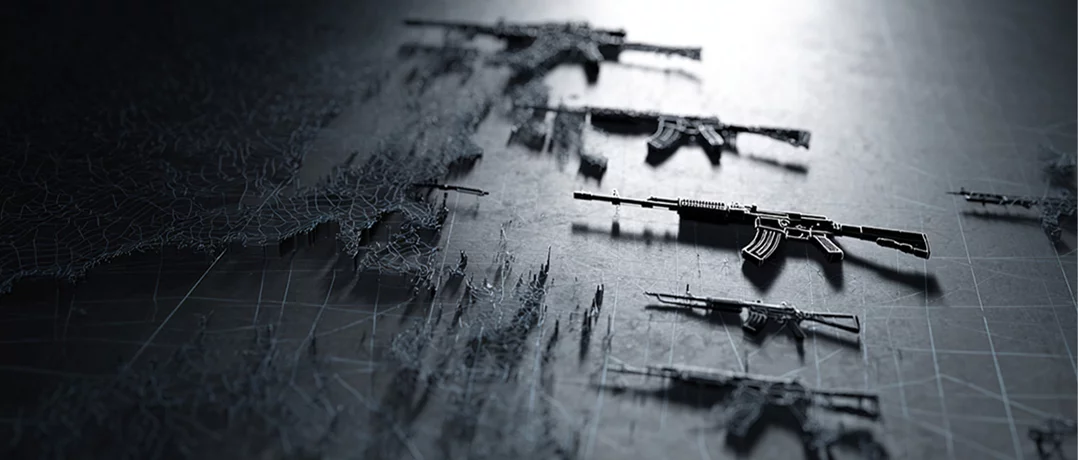
Lebanon’s efforts to consolidate state authority over weapons entered a sensitive new phase after Rodolphe Haykal, commander of the Lebanese Armed Forces (LAF), requested a 4 to 8 month extension to implement the second stage of the country’s disarmament plan. The request was presented during a Cabinet meeting at Baabda Presidential Palace, marking a critical juncture in Lebanon’s ongoing attempt to place all arms under state control.
The disarmament plan forms part of Lebanon’s broader post-conflict stabilization strategy following a destructive confrontation between Israel and Hezbollah. Lebanese authorities have committed to gradually expanding the state’s exclusive authority over weapons, a longstanding demand by international partners and domestic political factions.
Government signals expanded role in ceasefire monitoring
Prime Minister Nawaf Salam reinforced the government’s commitment to strengthening state oversight, announcing Lebanon’s readiness to expand its participation in ceasefire monitoring mechanisms. The move signals Beirut’s intention to increase coordination with international and regional actors overseeing the fragile ceasefire reached in November 2024.
The first phase of the disarmament initiative, completed earlier this year, focused on areas south of the Litani River extending to the Israeli border. Military officials described the phase as largely successful, though challenges remain in ensuring sustained security presence and preventing rearmament.
The second phase will shift attention to the territory between the Litani River and the Awali River, a region closer to Lebanon’s political and economic heartland. Officials consider this stage significantly more complex, given the area’s population density, political sensitivities, and historical security arrangements.
Haykal indicated that despite earlier pledges to formally present the second phase in February, the process had already begun operationally through preliminary deployments and security measures north of the Litani River. The timeline extension, he explained, reflects both logistical realities and complex field conditions facing the army as it expands its operational footprint.
Political opposition and Hezbollah’s response
The government’s efforts to move forward with disarmament have drawn sharp criticism from Hezbollah, which remains a dominant political and military actor in Lebanon. During the Cabinet session, Hezbollah’s Secretary-General Sheikh Naim Qassem delivered a televised address opposing the policy, describing the government’s focus on restricting weapons as a dangerous concession that serves Israeli strategic objectives.
Qassem argued that the disarmament push weakens Lebanon’s defensive posture and blamed government decisions for what he characterized as continued Israeli military pressure. Hezbollah has consistently rejected calls to relinquish its arsenal, particularly in areas north of the Litani River, framing its weapons as essential for national defense.
Despite rhetorical opposition, observers noted the relative calm among Hezbollah-affiliated ministers during the Cabinet session, suggesting possible political calculations or ongoing negotiations behind the scenes.
Security constraints and Israeli military pressure
Implementation of the disarmament plan is further complicated by ongoing Israeli military activity. Israel has maintained periodic airstrikes inside Lebanese territory, citing concerns over Hezbollah’s alleged rearmament efforts. Israeli forces also continue to hold positions in several strategic locations in southern Lebanon, arguing that such deployments are necessary for border security.
Government officials argue that continued hostilities limit the army’s ability to fully deploy forces and secure contested zones. Information Minister Paul Morcos acknowledged these constraints during a press conference, stating that while the government has endorsed the army’s roadmap, the timeline remains dependent on operational capabilities, available resources, and evolving security conditions on the ground.
International support and strategic calculations
Lebanon’s leadership is actively seeking international support to facilitate the disarmament process and strengthen the military’s operational capacity. President Joseph Aoun has urged foreign partners, particularly the United States (US), to pressure Israel to halt military operations and withdraw from occupied Lebanese territories.
The president has also stressed the need for expanded military assistance to enable the LAF to deploy effectively across national territory. Diplomatic preparations are underway for international conferences aimed at mobilizing financial and logistical backing for Lebanon’s security institutions.
Additionally, the army’s coordination with the United Nations Interim Force in Lebanon (UNIFIL) remains central to monitoring ceasefire compliance and reducing the risk of renewed large-scale conflict.
In conclusion, Lebanon’s disarmament initiative represents one of the most consequential state-building efforts in recent decades. While the LAF has demonstrated progress in the first phase, the second stage introduces heightened political, logistical, and security challenges that justify the requested timeline extension. Balancing internal political divisions, Hezbollah’s entrenched military presence, and ongoing Israeli military pressure will test the government’s ability to assert state authority while maintaining national stability. The success of this initiative will likely depend not only on domestic consensus but also on sustained international support and regional de-escalation, making the coming months decisive for Lebanon’s security and sovereignty trajectory.
-
-

-
The Beiruter
-
