


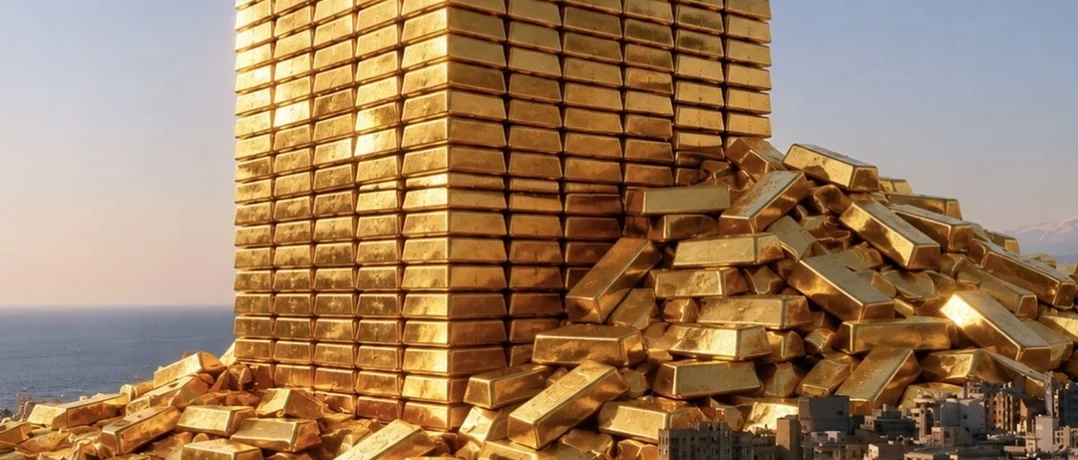
As central banks worldwide rush to accumulate gold, Lebanon’s 287 tonnes remain largely untapped amid the country’s prolonged financial crisis.
As 2026 draws to a close, what is Lebanon’s gold worth?
As 2026 draws to a close, what is Lebanon’s gold worth?
By Katharine Sorensen | November 12, 2026

Reading time: 6 min
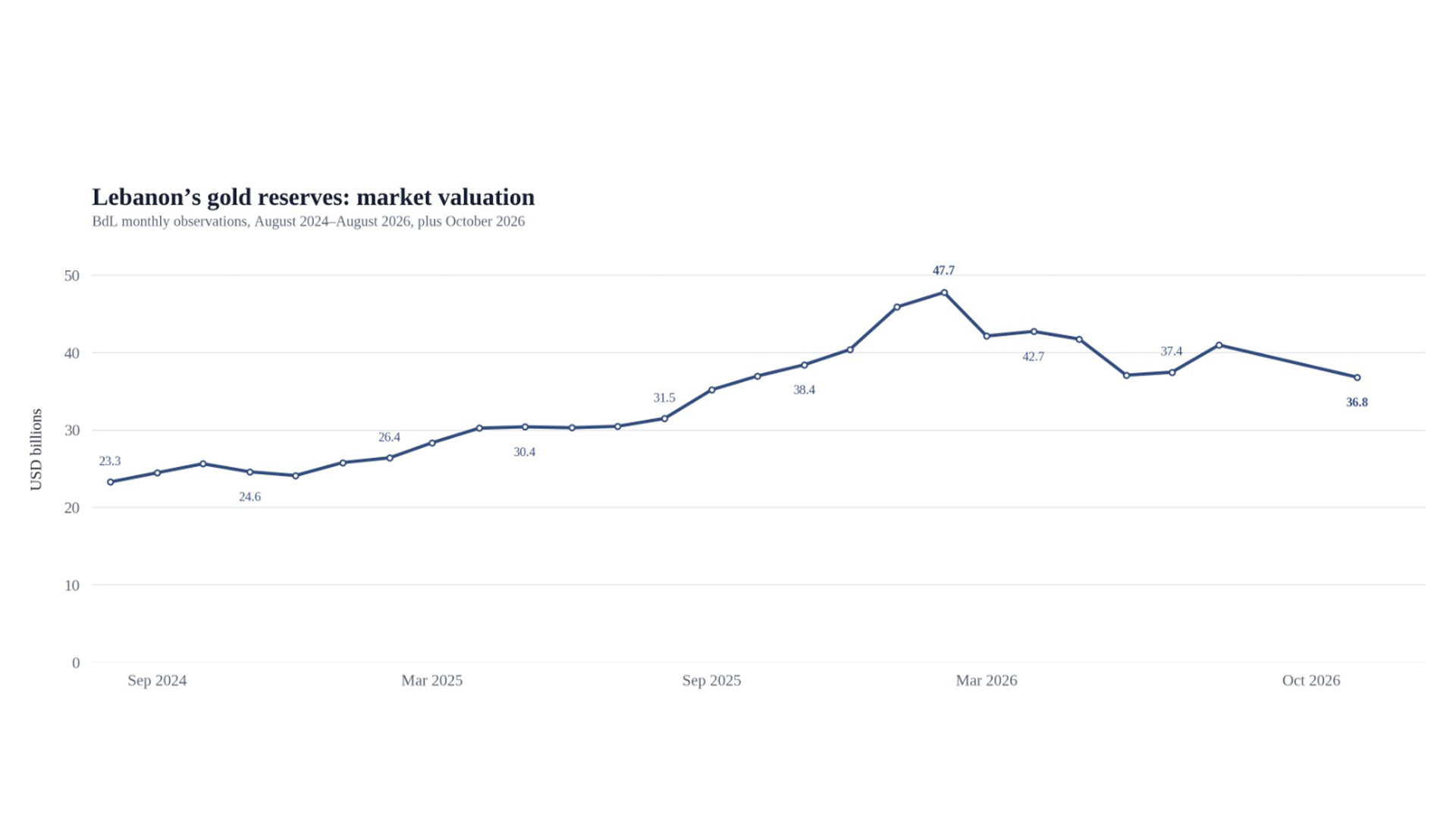
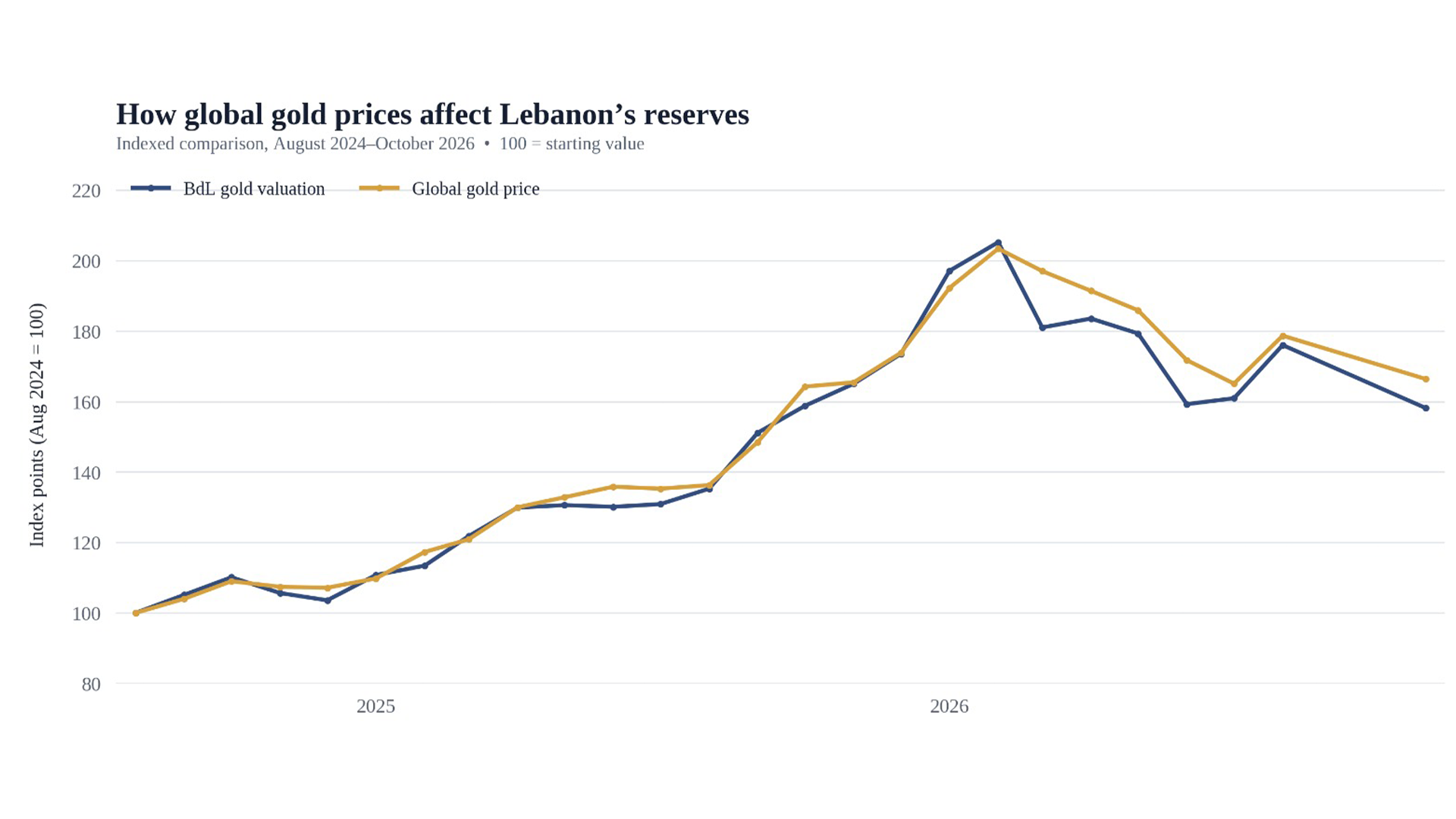
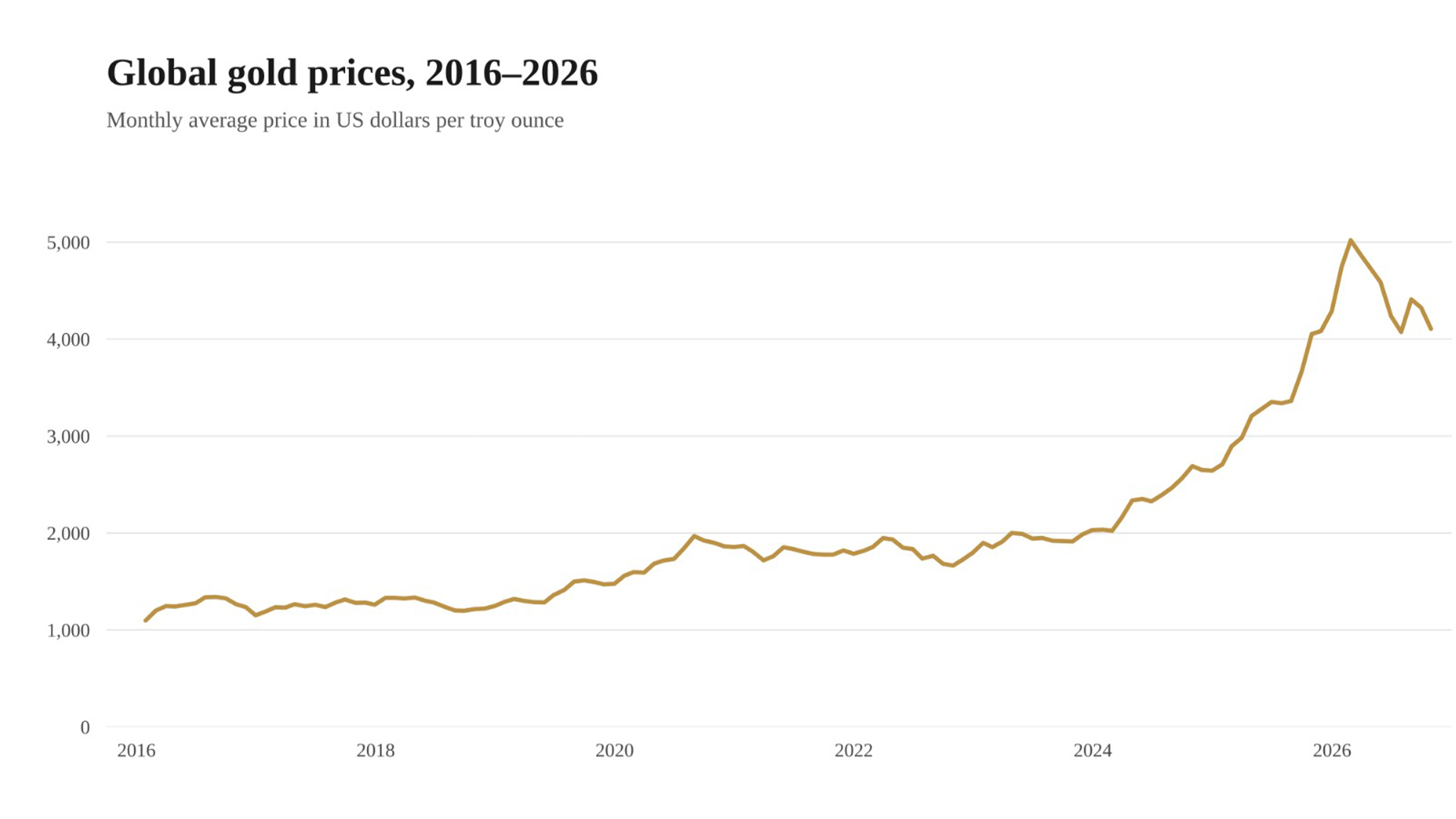
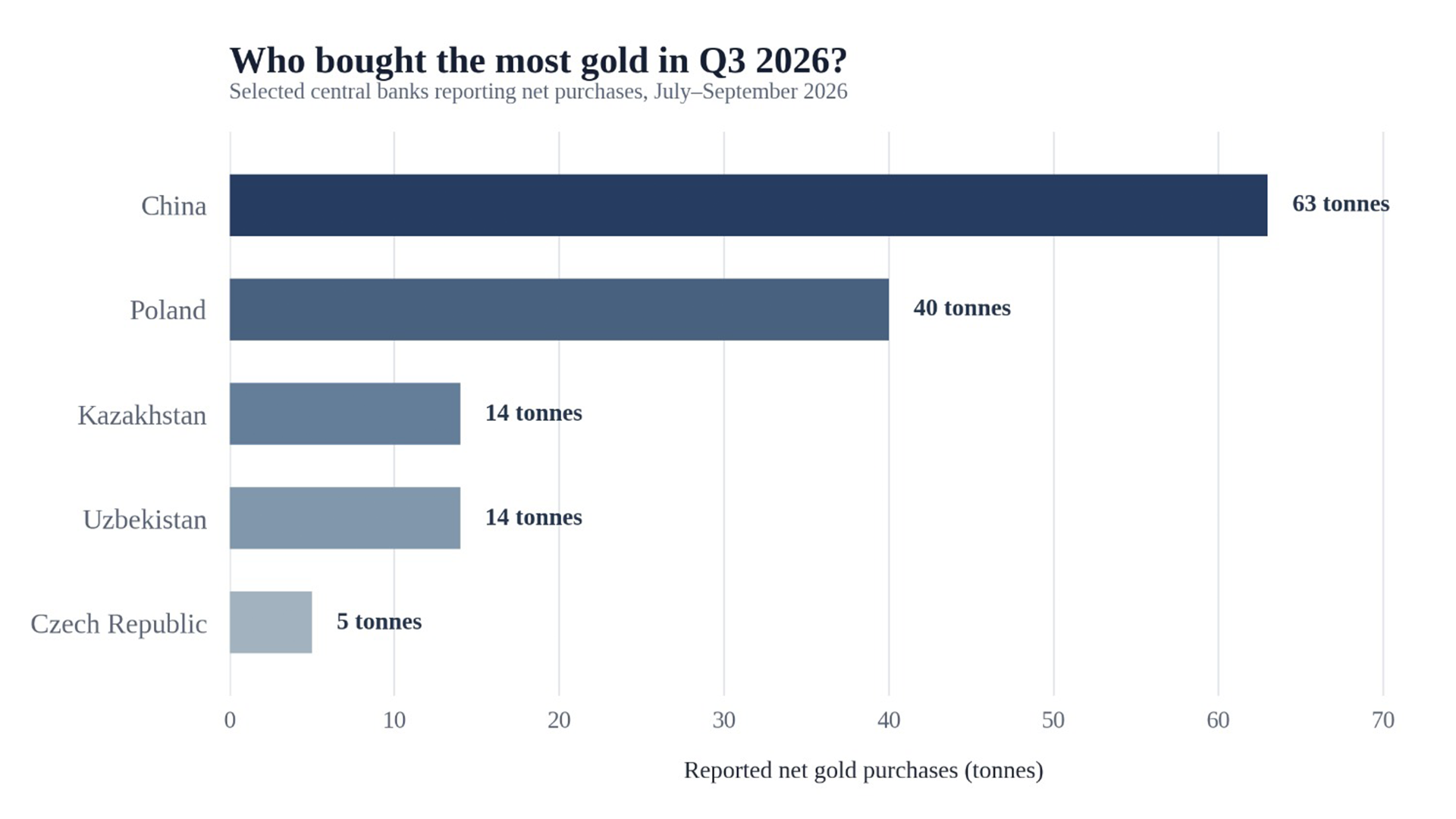
Lebanon possesses one of the Arab world’s largest gold reserves, yet the value of this national fortune has fluctuated by billions of dollars in 2026 without the country buying or selling significant quantities of the precious metal. At the end of October, Banque du Liban (BdL) valued its approximately 287 tonnes of gold at $36.8 billion, down from $47.75 billion in February, a decline of nearly 23% in eight months, according to the central bank’s official balance-sheet. The volatility comes amid a global shift toward gold as central banks seek protection against geopolitical instability, inflation and financial uncertainty, heightened by the war in Iran. According to the World Gold Council, central banks purchased an estimated 675 tonnes during the first nine months of 2026, 6% more than during the corresponding period in 2025. Lebanon, however, occupies an unusual position in this international movement. Its reserves were largely accumulated more than half a century ago, and their rising market value has done little to resolve a banking crisis that began in 2019. As governments elsewhere acquire gold to strengthen their financial defenses, Lebanon faces a different dilemma. Its reserves constitute an enormous national asset, but legal restrictions and unresolved banking losses limit their potential contribution to economic recovery. Lebanon’s relationship with gold began shortly after its independence in 1943, when the precious metal underpinned the international monetary system. The country’s first recorded acquisition, approximately 1.5 tonnes, occurred in 1948, one year after Lebanon joined the International Monetary Fund. Purchases accelerated during the late 1960s and early 1970s under Elias Sarkis, then governor of Banque du Liban. By 1971, Lebanon had accumulated approximately 9.21 million troy ounces, equivalent to around 287 tonnes, according to an April 2026 report by former Deputy Prime Minister Saade Chami. The timing coincided with a turning point in international monetary history. In August 1971, the United States suspended the dollar’s convertibility into gold, ending the Bretton Woods system established in 1944. Lebanon subsequently ceased accumulating gold but retained its holdings, leaving the value of its reserves largely dependent on movements in international gold prices rather than new purchases. As gold prices rose, so did the value of Lebanon's reserves. BdL’s December 2025 Macroeconomic Review recorded a 68% increase, from $24.1 billion at the end of 2024 to $40.4 billion a year later. Yet this appreciation also left the reserves vulnerable to fluctuations in international markets. When global gold prices reversed course in October 2026, the value of Lebanon's holdings declined by approximately $1.56 billion during the second half of the month alone, falling from $38.36 billion to $36.8 billion, according to BdL's official figures. Lebanon’s gold reserves reached $47.75 billion in February 2026 before declining to $36.8 billion in October. (Source: Banque du Liban) These fluctuations carry considerable weight on BdL’s balance sheet. Gold accounted for approximately 41% of the central bank's total assets at the end of 2025, compared with 18% in February 2023. Its growing share has made the bank's reported financial position more sensitive to international gold prices, even as the reserves remain unavailable to meet immediate foreign-currency obligations or repay depositors. Lebanon’s gold valuation closely tracks international gold prices. (Sources: Banque du Liban and World Gold Council) Lebanon’s experience contrasts with a sustained international effort to accumulate physical gold, as governments diversify reserves amid geopolitical tensions, inflation, and currency uncertainty. Global gold prices rose sharply between 2016 and 2026. (Source: World Gold Council) According to the World Gold Council's June 2026 Central Bank Gold Reserves Survey, central banks purchased approximately 1,000 tonnes annually over the preceding four years, twice the previous decade's average. Demand remained strong throughout 2026. In its November Gold Demand Trends report, the World Gold Council estimated that central banks acquired 321 tonnes during the third quarter alone, an increase of 42% compared with the same period in 2025. The accumulation has not been evenly distributed. China and Poland accounted for 104 tonnes of reported net purchases during the third quarter, approximately 86% of the purchases disclosed by individual central banks. China's central bank added 63 tonnes, while Poland purchased another 40 tonnes. Kazakhstan and Uzbekistan each acquired approximately 14 tonnes during the quarter. China and Poland led reported central-bank gold purchases in Q3 2026. (Source: World Gold Council) The motivations behind this accumulation go beyond expectations of higher prices. In the World Gold Council's June 2026 survey of 76 central banks, 90% of respondents holding gold identified its performance during crises as relevant to their reserve-management decisions, while 84% cited its role as a long-term store of value and 82% its usefulness in diversifying portfolios. Geopolitical considerations have also gained prominence. Among central banks in emerging and developing economies, 95% identified geopolitical instability as relevant to reserve-management decisions, compared with 67% in advanced economies. Meanwhile, nearly three-quarters of respondents expected the dollar's share of global reserves to decline over five years, while 89% anticipated rising central-bank gold holdings over the next 12 months. Nevertheless, the attraction of gold does not eliminate its risks. Unlike government bonds, physical gold generates no interest income, and its price can decline sharply during periods of market turbulence. Its value as a reserve asset therefore depends not only on long-term appreciation but also on how it fits within a central bank's wider portfolio and its capacity to meet immediate financial obligations. For Lebanon, these considerations are particularly consequential. Other countries are purchasing gold as part of deliberate reserve-management strategies, while Lebanon's holdings are principally a historical asset whose market value changes independently of domestic economic policy. Despite the considerable value of Lebanon’s gold, its potential role in resolving the country’s financial crisis remains uncertain, particularly given the central bank’s more limited foreign-currency resources and the continued restrictions on depositors’ access to their savings. At the end of October 2026, BdL reported approximately $11.47 billion in liquid foreign reserve assets, down from $11.87 billion a year earlier and equivalent to less than one-third of the value of its gold. Unlike these foreign assets, however, Lebanon’s gold reserves are subject to strict legal restrictions that limit their use in addressing the financial crisis. Lebanon’s gold is subject to particularly strict legal protections. Law No. 42, enacted in 1986, prohibits the disposal of BdL's gold without parliamentary authorization, protecting the national asset from depletion. Consequently, the reserves cannot simply be sold or pledged at the central bank's discretion to finance public expenditure, support commercial banks or compensate depositors. Any such proposal would require legislative action and raise difficult questions about the allocation of financial losses. More fundamentally, gold cannot substitute for a comprehensive settlement of the financial sector's losses. Even a substantial increase in the reserves’ market value does not automatically restore commercial-bank solvency, release frozen deposits, or provide the government with additional spending capacity. Lebanon’s gold therefore presents an unusual paradox. While central banks elsewhere accumulate gold against future uncertainty, Lebanon already possesses substantial reserves whose use remains restricted by law. Their appreciation offers a measure of financial protection, but international price fluctuations demonstrate how quickly that value can change. For Lebanon, the significance of its gold ultimately depends less on the latest market valuation than on the financial and institutional arrangements governing its use. A country can possess tens of billions of dollars in precious metal and still lack the liquidity, banking stability, and public confidence required for a durable economic recovery.A national fortune accumulated decades ago
Why central banks are buying gold
Can gold protect Lebanon’s economy?
-
-

-
Katharine SorensenReporterSpecializing in global affairs, technology and economics, with a focus on on-the-ground investigative reporting.
-
