Lebanon’s southern front has become a regional operations hub, with Iranian officers and Hezbollah jointly managing military actions, raising strategic and sovereignty concerns.




Lebanon’s southern front has become a regional operations hub, with Iranian officers and Hezbollah jointly managing military actions, raising strategic and sovereignty concerns.

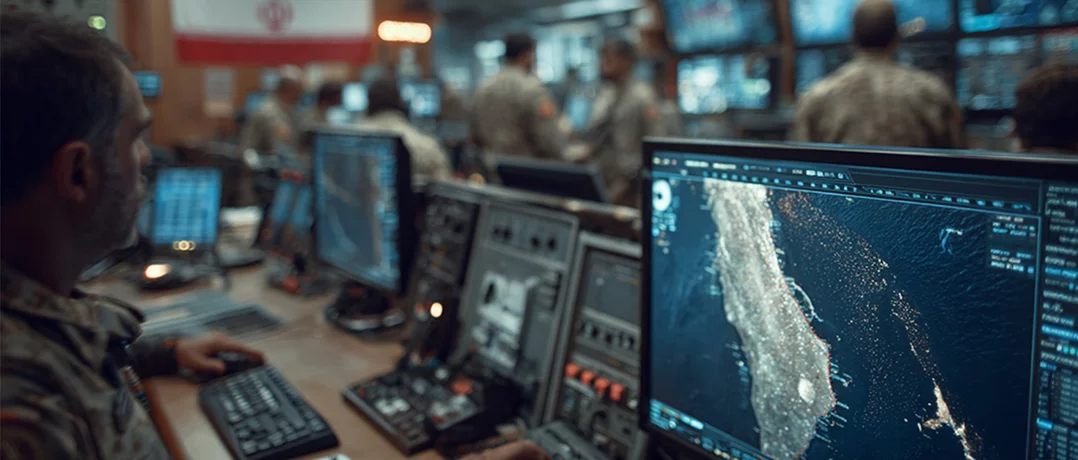
At a highly complex regional moment, Lebanon’s southern front is no longer managed under the logic of limited support or according to traditional rules of engagement. What is unfolding goes beyond political backing or military assistance into a different phase defined by a cross-border operations room run from Lebanese territory under the supervision of Iranian officers alongside Hezbollah leaders.
This shift reflects not only military escalation but also a qualitative change in the structure of decision-making, effectively turning Lebanon into a platform for regional military management with wide-ranging implications that go beyond narrow domestic calculations.
Informed sources told Nidaa Al-Watan of a notable development in the mechanism managing operations launched from southern Lebanon toward Israel. According to these accounts, cooperation between Hezbollah and Iran’s Islamic Revolutionary Guard Corps has moved from the level of political coordination and information exchange to a joint operations room with a direct regional dimension.
The arrangement goes beyond the distribution of logistical or advisory roles. It now includes integrated field management covering operational planning, target selection and the regulation of escalation, reflecting an advanced level of integration between Lebanese and Iranian decision-making on the southern front.
Information indicates that officers from the Revolutionary Guard, particularly from the Quds Force, are playing key roles in managing the battle in direct coordination with Hezbollah’s leadership. Their role goes beyond technical consultation to active participation in joint operations rooms and involvement in planning and coordination among different units.
This reality effectively turns the Lebanese arena into part of an interconnected regional command structure in which levels of decision-making overlap between domestic and external actors, making the southern front a link in a broader operational network extending beyond Lebanon’s borders.
Sources confirm that the operations room does not include only Hezbollah cadres but also commanders from the Revolutionary Guard within what is known as the military coordination axis. This structure enhances the integration of decision-making and raises the level of operational readiness.
The arrangement reflects an unprecedented degree of direct connection with the Iranian leadership and reinforces the reality that the southern front is no longer managed by a purely Lebanese decision but has become part of a complex regional equation.
In this context, the assassination of Iranian General Reza Khazai in Beirut’s southern suburbs, alongside the targeting of an Iranian diplomat close to decision-making circles in the Revolutionary Guard inside a hotel in Hazmieh, marked a pivotal moment in the escalation.
According to available information, Khazai was responsible for overseeing Hezbollah’s military buildup on behalf of the Quds Force and held a leadership position within what is known as the “Lebanon Corps.” Informed sources believe that targeting him was part of an effort to strike the link between Tehran and the field operations room in Lebanon, indicating a shift from targeting military infrastructure to targeting the minds responsible for managing it.
Lebanese sovereign sources noted that targeting figures of this level cannot be viewed as a limited tactical development but carries clear strategic implications. According to this reading, the confrontation is no longer confined to launch platforms or weapons depots but has expanded to include leaders responsible for planning and management, meaning Israel is treating the Iranian presence in Lebanon as a direct operational role rather than merely a rear support function.
Domestically, these developments open profound questions about the nature of military decisions taken from Lebanese territory and the limits of Iran’s role in managing a battle that extends beyond the traditional framework of engagement.
Intersecting information suggests that the front is no longer governed solely by Hezbollah’s decision but has become part of a regional operations network in which military calculations intersect with political messaging, using the Lebanese arena within a broader deterrence equation.
With the battle being managed from inside Lebanon with the participation of Iranian officers, field decisions become tied to a regional rhythm that surpasses domestic priorities, exposing the country to the consequences of decisions that may not fully stem from its own national calculations.
Observers believe that targeting Iranian commanders on Lebanese soil places Lebanon at the heart of the confrontation between Iran and Israel, carrying the risk of sliding toward a broader conflict. When Beirut’s southern suburbs and Hazmieh become arenas for targeting Quds Force leaders, the message extends beyond the Lebanese arena to Tehran itself.
Accordingly, the situation is no longer merely a border escalation or a passing round of violence. It represents a redrawing of the military decision-making equation in Lebanon and the consolidation of a reality in which the southern front becomes part of a regional architecture of conflict.
This phase may not be limited to another round of escalation, but could shape Lebanon’s political and security trajectory for many years to come.

