



Lebanon’s Eid Al Saydeh celebrations blend faith, homecoming, food, and village traditions, bringing communities together around the country’s many Marian shrines.
August 15 a day of faith and tradition

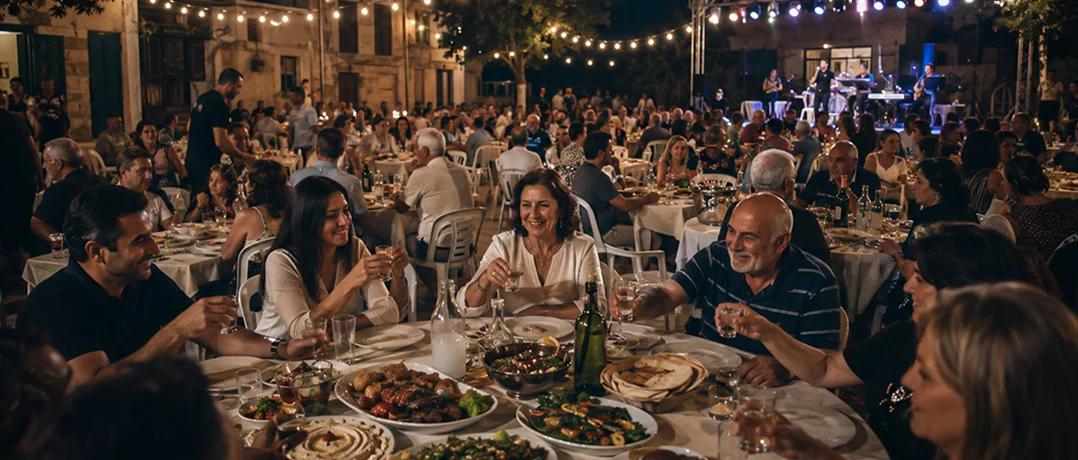
Every August 15, Lebanon pauses for one of its most cherished religious holidays, Eid Al Saydeh, the Feast of the Assumption of the Virgin Mary. Unlike many religious observances that divide, this one unites the country.
For Roman Catholics, Maronites, and other Western Christians, the Assumption marks the moment Mary, "Mother of God", was taken up body and soul into heavenly glory at the end of her earthly life, a belief the Catholic Church formally declared as dogma under Pope Pius XII. Eastern and Greek Orthodox Christians mark the same date differently, observing what they call the Dormition of the Theotokos, the belief that Mary's spirit rose to heaven while her body remains buried in Jerusalem.
A landscape of shrines
Much of what makes Eid Al Saydeh distinctly Lebanese is geography, the country is dense with Marian shrines, each with its own local legend, and each drawing its own pilgrimage on this day. In Maghdouche, near Sidon, tradition holds that the Virgin Mary waited in a hillside cave, later named Mantara, "the Awaiting", while Jesus preached in the city below. Emperor Constantine's mother, Saint Hélène, is said to have transformed the cave into a sanctuary, a tower that later collapsed in a 6th-century earthquake and was eventually rebuilt by King Louis IX. A shepherd rediscovered the cave in 1726 along with a centuries-old Byzantine icon of Mary, and it has drawn pilgrims from every Lebanese sect ever since.
In Zahle, a very different kind of shrine crowns the hill of Tel Chiha, a ten-meter bronze statue of the Virgin atop a 54-meter tower, with an elevator carrying pilgrims up for panoramic views of the Bekaa Valley. On the northern coast, Anfeh's Our Lady of Al-Natour Monastery, built by Crusaders over Byzantine ruins, and the nearby Our Lady of the Wind Church, considered by some historians the oldest church in the Middle East, both draw regional crowds. Hamatoura, tucked into the mountains near Kousba, holds a special mass at its rock-hewn "Church of the Dormition." And in Jezzine, festivities center on the shrine of Our Lady of the Waterfall.
How villages celebrate
Village celebrations follow a familiar rhythm but each carries its own character. In Bhamdoun, whose central square is even nicknamed "Sahat Eddayaa" after its Saydeh church, the town's population multiplies as Beirut families return for the day; a night mass is followed by communal cooking beneath the church terrace, and the town's signature crunchy pastry, tamrieyh, is made only for this occasion. Deir el Qamar, in the Chouf, turns the feast into a broader showcase of regional crafts, homemade jams and syrups, orange blossom water, and olive oil. The twin mountain towns of Faraya and Faqra fill with concerts, dance performances, and handicraft exhibitions. In Beirut itself, the small church on Makhoul Street in Ras Beirut holds special services followed by festive meals and neighborhood fireworks.
Further north, in the Qadisha Valley region, the mountain town of Bsharre turns the feast into an occasion for homecoming as much as devotion, with mass at the town's churches drawing residents down from summer chalets and diaspora families back for the season, before the celebration spills into the town's restaurants and cafés overlooking the valley. A short drive away, Ehden marks the period with its own blend of faith and festivity, the town's Saydet el Hosn shrine, "Our Lady of the Fortress," draws pilgrims, while the broader August calendar is filled out by the Ehdeniyat International Festival, which layers concerts, film, theater, and craft exhibitions onto the town's summer season. Nearby Qannoubine and the monastic communities scattered through the Qadisha Valley's cliffs hold their own observances, with hermitages and rock-cut chapels drawing smaller processions of pilgrims on foot.
In the Bekaa Valley, Deir el Ahmar, a Maronite town near Baalbek whose very name means "the red monastery", marks the feast across eight historic churches, including Our Lady of the Tower, built atop the ruins of a temple to Jupiter. Its most distinctive addition to the day is modern rather than ancient, the Couvent Rouge winery, established to support local farmers, hosts an annual sunrise gathering on its rooftop overlooking the Bekaa to greet the feast day. A short distance away, the sanctuary of Saydet Beshwat, associated with reported miracles attributed to the Lady of Beshwat, draws thousands of visitors from multiple faiths during the same period, echoing the shared devotion seen at Maghdouche and Harissa.
What ties these celebrations together, despite their differences, is the sense of a village turning outward and inward at once, outward to welcome returning family and curious visitors, and inward to the church at its center, where the actual feast, the mass, the procession, the candlelight, still anchors everything else.
The taste of the feast
Across nearly every celebration, one dish appears without fail, hreeseh, a hearty broth of boiled wheat simmered with lamb or beef and bone cutlets. Considered symbolic of life's basic essentials, wheat, water, and meat, hreeseh has become the feast's signature comfort food, with families and villages each claiming their own perfecting touch.
A living tradition
What has changed least about Eid Al Saydeh is its role as a homecoming. Diaspora families plan their summer visits around it, mountain villages swell with returning relatives, and festivals, which pairs its religious finale with nights of concerts and food stalls, have grown around the feast without displacing its spiritual core. Eid Al Saydeh remains one of the few moments each year when nearly all of Lebanon looks toward the same hillside shrines.
-
-

-
The Beiruter
-
