



As Lebanon’s back-to-school costs soar, families face thousands of dollars in supplies, transportation and tuition while teachers remain underpaid and schools struggle to collect fees.
Back to school, but at what price?

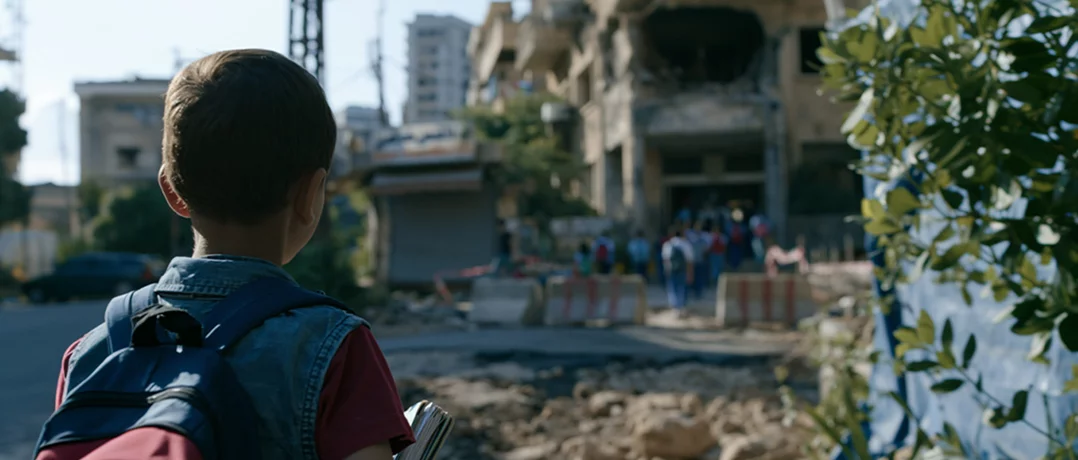
For Lebanese families, September no longer begins with choosing a schoolbag. It begins with a calculator.
Stationery, books, uniforms, schoolbags and transportation now represent a sizeable annual expense before parents even begin paying tuition. Add private-school fees, which are heading higher at many institutions, and the back-to-school season has become one of the most financially demanding moments of the year for households whose incomes have yet to fully recover from Lebanon's economic collapse.
But Lebanon's education crisis is not simply a story about parents paying more.
Parents say they are struggling to afford school. Teachers say their salaries have still not returned to pre-2019 levels. Schools say they are unable to collect all the tuition they charge.
In the middle sits the Lebanese family, facing three separate bills: preparing a child for school, transporting that child to school, and finally paying for the education itself.
The first bill: Up to $800 just to get ready
Before tuition and transportation enter the equation, families must first equip their children for the academic year.
The Beiruter conducted an approximate calculation of the cost of preparing one student for school in Lebanon.
Around $150 can go toward stationery, notebooks and other school supplies.
A schoolbag, lunch box and bottles can add another $70 to $150.
Uniforms, shoes and sportswear cost approximately $100 to $200.
Books can add another $150 to $300, depending on the student's grade and school.
This brings the back-to-school shopping bill alone to approximately $470 to $800 per child.
For a family with two children, that represents between $940 and $1,600.
For three children, the bill rises to approximately $1,410 to $2,400.
And this is only the cost of getting children ready for school. It does not include transportation, and it does not include tuition.
The second bill: Getting to school
Transportation represents another significant annual expense for Lebanese families.
Depending on the school, distance and area, school transportation can cost approximately $600 to $1,000 per child per year.
For a household with two children, transportation alone could therefore cost between $1,200 and $2,000 annually.
For a family with three children, it could reach between $1,800 and $3,000.
A family can spend $470 to $800 simply to equip one child for school, and another $600 to $1,000 to transport that child throughout the academic year.
Neither figure represents the cost of education itself.
That comes next.
The third and biggest bill: Tuition
Private-school administrations have already begun preparing parents for higher tuition fees, according to Lama Tawil, President of the Union of Parents' Committees in Private Schools.
“School administrations have started informing parents about increases in tuition fees,” Tawil tells The Beiruter.
According to her, increases in private schools range between $350 and $500, while in some schools they can reach as much as $2,000.
She says there is currently no private-school tuition in Lebanon below $3,500 per child.
That tuition bill is entirely separate from books, stationery, uniforms, bags and transportation.
What does that mean compared with wages?
The scale of the burden becomes clearer when back-to-school costs are compared with Lebanese salaries.
Lebanon's official minimum wage in the private sector stands at LL28 million per month, effective since August 1, 2025, under Decree No. 699.
At an exchange rate of approximately LL89,500 to the US dollar, that is equivalent to roughly $313 per month.
Even the $470 to $800 needed simply to equip one child therefore represents roughly one and a half to more than two and a half months of minimum-wage income.
Transportation of $600 to $1,000 per year represents roughly another two to more than three months of minimum-wage income. Then comes tuition.
The comparison highlights one of the deepest distortions in Lebanon's post-crisis economy: many costs have returned to dollar-based levels, while a large share of incomes have not.
Parents pay more. What about teachers?
Rising tuition naturally raises another question: if parents are paying more, how much of those increases is reaching teachers?
Not enough, according to Nehme Mahfoud, head of Lebanon's Private School Teachers' Syndicate.
“Teachers' and educators' salaries have not returned to where they were before the economic crisis in 2019, particularly with the inflation in prices we are witnessing,” Mahfoud tells The Beiruter.
He says there are significant disparities in salaries between schools.
According to Mahfoud, 30% to 40% of teachers in Lebanon's private-school sector receive between $300 and $400 per month.
That means a significant portion of private-school teachers earn salaries close to Lebanon's official minimum wage, even as parents are paying thousands of dollars per child in tuition.
Mahfoud directly questions that imbalance.
“With school tuition increasing, we ask where the money and the increases are going,” he says.
He calls on parents to raise their voices and question school administrations, and says parents' committees must take action.
At the same time, Mahfoud stresses that teachers are taking Lebanon's circumstances into consideration.
They recognize the country's difficult economic situation, as well as the war and its repercussions, and therefore deal with each school separately, according to its situation and circumstances.
But his criticism of some school owners is blunt.
“Unfortunately, some school owners have gone too far,” Mahfoud says.
Why can private-school tuition keep rising?
Mahfoud points to another structural problem: the weakness of Lebanon's public education system.
He argues that private-school tuition has increased because Lebanon lacks a public-school system of sufficient quality to genuinely compete with private education.
Had such competition existed, he says, it would have contributed to lowering private-school tuition.
The argument touches on one of the central economic problems in Lebanon's education system.
For many families, private education may technically be a choice. But if public schools are not perceived as a viable alternative, families have little bargaining power when private-school fees increase.
Without a strong public competitor, there is also less pressure on private institutions to contain their prices.
Parents ask: Where is the money going?
For Tawil, the issue goes beyond the amount parents are being asked to pay. It extends to how private-school budgets are calculated and monitored.
She says there is no adequate oversight of school budgets.
Lebanon's current legal framework is based on Law No. 515, issued on June 6, 1996, which governs the oversight of private-school budgets and the determination of school tuition.
But according to Tawil, the law contains a significant loophole: there is no mechanism for holding violators accountable.
A new law that would allow stronger oversight of school budgets has not been passed.
As a result, she says, there is no clear picture of “what enters and where the money leaves schools.”
Tawil also says there is no adequate oversight of the compensation fund.
She alleges that the number of teachers is inflated in some schools in order to increase tuition fees.
According to Tawil, some private schools generate what she describes as enormous annual profits ranging between $300,000 and $1 million.
She also accuses the Ministry of Education of favoring schools and failing to properly scrutinize their budgets.
And the consequences can directly affect students.
According to Tawil, some school administrations withhold children's final grades when parents fail to pay tuition fees.
She also says that political parties have quotas for students in some schools, adding another political dimension to a sector already struggling with financial and regulatory problems.
$370 million for private education
Another figure raised by Tawil illustrates what she considers a contradiction in Lebanon's education policy.
According to her, approximately $370 million is paid in education grants to public-sector employees to place their children in private schools.
She questions why these funds are being used to finance private-school education rather than being directed toward strengthening public education.
The question has wider economic implications.
If significant public resources are used to subsidize attendance at private institutions while public education remains too weak to provide meaningful competition, Lebanon risks reinforcing the very imbalance that contributes to rising private-school costs.
Catholic schools: No unified tuition increase yet
Private-school administrations, however, describe a more complicated financial reality.
Father Youssef Nasr, Secretary-General of Catholic Schools in Lebanon, tells The Beiruter that as of now there is no consensus among all Catholic educational institutions on a specific percentage increase in tuition fees.
Several factors, he says, must be considered before any increase is decided.
These include Lebanon's current circumstances, the repercussions of the war and its continuation in some areas, as well as the country's economic and social conditions.
All of these, he says, are factors that require careful consideration before determining tuition for the coming academic year.
Schools are collecting only 60% to 70%
One of the most important considerations for schools is not only how much tuition they charge, but how much they actually collect.
According to Nasr, the collection rate for the previous academic year's tuition remains low, at only 60% to 70% of the total amount due.
He describes this as a fundamental factor that must be taken into consideration before any decision is made to raise tuition.
In other words, the tuition listed by a school does not necessarily represent the amount the institution ultimately receives.
This adds another layer to Lebanon's education equation.
Parents say they cannot afford the fees.
Schools say they are not collecting all of them.
And teachers say their salaries remain far below where they stood before the crisis.
Teachers have not returned to pre-2019 salaries
Nasr agrees that teachers' wages remain a major unresolved problem.
“We are aware that we have not returned to the salaries and wages of teachers and educators before 2019, particularly amid inflation of 30% to 40%, in addition to the higher cost of living and rising transportation allowances,” he says.
For Nasr, any discussion of tuition increases must therefore balance three equally important factors:
parents' ability to pay, schools' needs and circumstances, and teachers' needs and rights.
He compares these three components to a triangle whose sides are equal in importance.
That triangle captures Lebanon's education dilemma.
The price of September
Behind every back-to-school bill is a family doing the math: how far can the household budget be stretched to cover another school year?
For many Lebanese families, the real cost goes beyond what appears on receipts. It is felt in priorities rearranged, plans put on hold and choices made to ensure their children can return to the classroom.
In a country where education has always been the investment parents refuse to compromise on, the rising cost of another school year is putting that commitment to the test and raising a difficult question: how much longer can families afford it?
-
-

-
Jessica HabchyJournalist
Focusing on economy and social affairs.
-
