

Bank Audi’s latest Quarterly Economic Report examines how the resurgence of conflict disrupted Lebanon’s early-2026 economic recovery, highlighting rising inflation, weakening demand, declining financial inflows, and contrasting economic outlooks under ceasefire and prolonged-war scenarios.
Bank Audi’s quarterly report says Lebanon’s Economic momentum interrupted
Bank Audi’s quarterly report says Lebanon’s Economic momentum interrupted
July 17, 2026

Reading time: 5 min
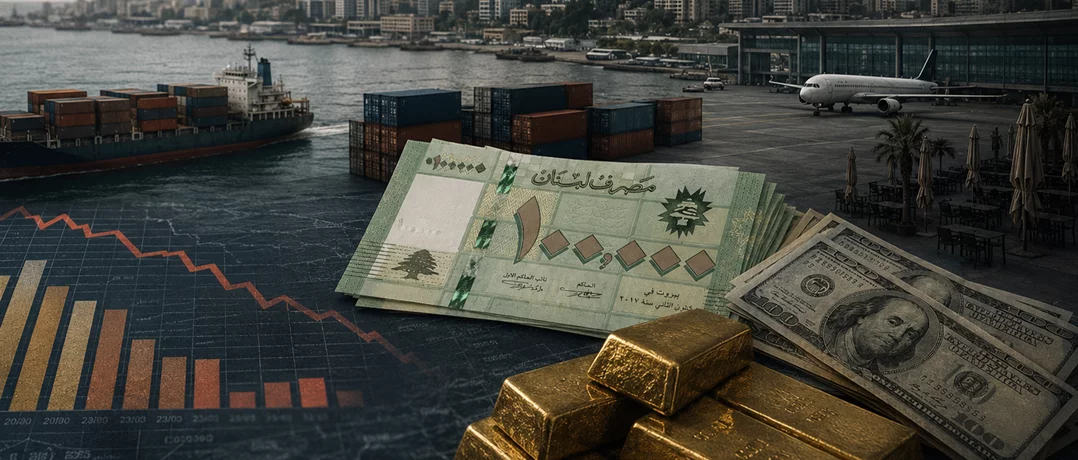
In its new Quarterly Economic report on Lebanon entitled “From Recovery to Retrenchment: Lebanon’s Economic momentum interrupted”, Bank Audi says the Lebanese economy has been under the adverse spillovers of war effects since the beginning of March. While the year 2026 started with a buoyant macro performance, a trend reversal occurred after the second month. All real sector indicators turned from an expansionary mode to a contractionary mode as a result of sluggish demand for goods and services.
What exacerbated the contractionary situation is that inflation surged drastically amid rising oil prices. Lebanon’s inflation rose to 19.0% year-on-year in May (May 2026 relative to MAy 2025), up from 12.2% year-on-year in December (December 2025 relative to December 2024) as per the Central Administration for Statistics. This year’s surge in Lebanon is widespread across all components of the basket of goods and services, with the most important increase registered in Transport with a 37.8% rise year-on-year. Net of transport cost, Lebanon’s CPI would have reported a rise of 15.7% year-on-year in May 2026.
Despite imported inflation price effect, Lebanon’s imports, a veritable reflection of its demand curve, declined by 6% in the months of March and April relative to the same period last year, while they had started the first two months of the year with an annual growth of 33% when compared to the same period last year.
At the monetary level, the demand for Lebanese pounds weakened since the onset of the war amid rising uncertainties and weaker tax collection. As a reflection of such a monetary trend, BDL’s foreign currency reserves that were almost stable at their four-year high of US$ 12 billion over the first two months of 2026, contracted by US$ 0.4 billion since then. In parallel, BDL’s gold reserves contracted by US$ 6 billion since end-February while they had increased by US$ 7.4 billion over the first two months of the year. The decrease in gold reserves prices comes amid contracting gold prices as a result of gold being a non-interest bearing asset, while the outlook for global interest rates shifted from expected cuts to expected hikes amid rising global inflation.
In parallel, Lebanon’s balance of payments reported a real deficit of US$ 0.2 billion in the months of March, April and May as a result of the decline in all inflows to the country, namely remittances, FDI, touristic receipts and exports. The balance of payments had reported a real surplus of US$ 0.3 billion in the first two months given the excess of inflows over outflows.
Likewise, the banking sector’s fresh customer deposits that were growing by a monthly average of US$ 142 million in the first two months of the year 2026, grew by a monthly US$ 110 million since then. It is yet worth mentioning that the fresh customer deposits witnessed a net contraction in March, but followed by expansions in the months of April and May to reach US$ 5.1billion at end-May.
As to the Eurobond market, while bond prices had grown by 25% over the first two months of the year to reach a 6-year peak of 30 cents with hopes for debt restructuring amid governmental reform efforts, they contracted by 11% since end-February to reach 26 cents by the writing of this report with the outlook for delayed debt restructuring, lower GDP and higher debt burden.
In the concluding part of this report, Bank Audi addresses the 2026 full-year expectations amid the different scenarios for war in Lebanon and the region. We will be actually covering two scenarios, the first one rests on the domestic cease fire holding for the remainder of the year and the second one is based on war eruption and persisting till at least the end of the current year.
In the first scenario of no war, the report forecasts Lebanon’s real GDP to contract by 5% in full-year 2026. Such a moderate contraction is tied to the short conflict period that will allow the economy to stabilize post-settlement and build on upcoming summer and holiday seasons. Imports will revolve around the US$ 20 billion threshold for the year volume effect and positive price effect, while exports would be close to US$ 3 billion, helped by the recent Saudi decision to remove the ban on Lebanese exports.
In this scenario, CPI inflation would be hovering around 20% amid persisting exchange rate stability as a result of BDL closely monitoring the stock of LL Money Supply in the market. BDL FX reserves will be maintained, fresh deposits would evolve within the US$ 4.5 to US$ 5 billion bracket maintaining banks gross FX liquidity within the US$ 7.5 to US$ 8 billion bracket. The real balance of payments will be in slight deficit, driven by the first half-year retreat in the net foreign assets of the financial system.
The other scenario of war extending beyond year-end is definitely much more worrisome. Real GDP would contract by no less than 11% in 2026 as a direct reflection of sluggish demand for goods and services amid war conditions. In particular, investors will maintain their wait and see attitude amid overall macro uncertainties, thus delaying or canceling investment decisions. The touristic sector would be the most hit, as touristic trips and Expatriates travels to Lebanon would be halted amid adverse security conditions.
In this worst case scenario, there are serious concerns about exchange volatility driving three-digit inflation rates again. The reason for that is the contraction in foreign currency mass amid the drop in remittances, FDI, exports and touristic receipts. This will generate a disequilibrium in the interaction between the Lebanese Pound monetary mass and the foreign currency monetary mass, putting pressures on the currency. Fundamentally, the balance of payment will be in large deficit, as a result of the wide gap between inflows and outflows, while the fiscal balance would report a large deficit amid contracting public revenues and surging public expenditures at large.
Given the considerable discrepancies between the outcomes of the two scenarios, the Lebanese are today keeping their fingers crossed so that the grim war reaches a definite end soon, a settlement takes place to ensure it does not emerge again, the politicians bear witness of constructive and conciliatory behavior the country can productively build on and the policymakers re-embark on the hoped for firm reform path to ensure the long awaited recovery process is finally put on track.
Read the full report on the following link: https://tinyurl.com/mtscxpde
