



Israel’s recapture of Beaufort Castle signals expanding southern Lebanon campaign, aiming to control strategic terrain, surveillance, and operational depth region.
Beaufort Castle at the center of Israel’s expanded operations
Beaufort Castle at the center of Israel’s expanded operations
By The Beiruter | June 01, 2026

Reading time: 4 min
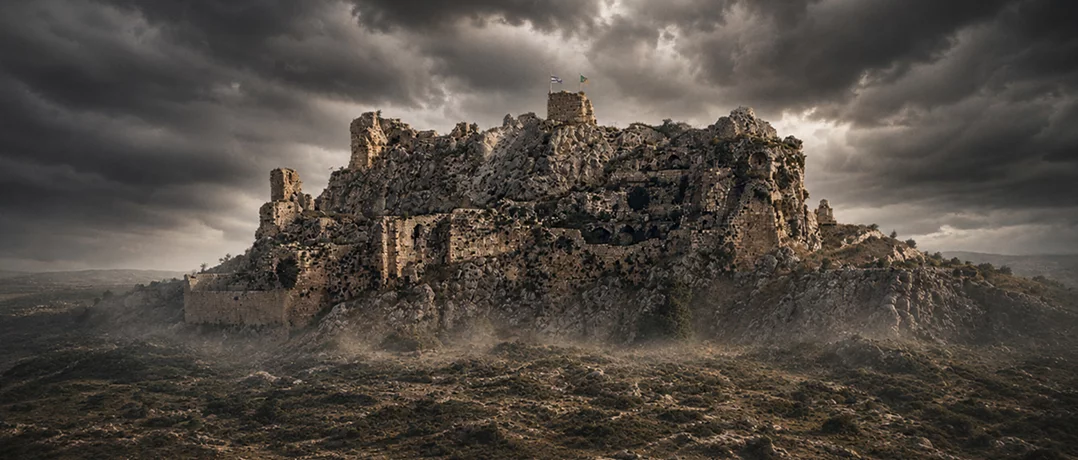
Israel’s announcement that it has regained control of Beaufort Castle (Qalaat al-Shaqif) marks one of the most significant developments in the current phase of the conflict in southern Lebanon. More than a symbolic military achievement, the capture of the historic fortress reflects a broader Israeli effort to reshape the operational environment north of the border and establish new realities on the ground.
Why Beaufort Castle matters: The gateway to Ali al-Taher and Nabatiyeh
Located at an elevation exceeding 700 meters above sea level, Beaufort Castle dominates some of the most strategically important terrain in southern Lebanon. The fortress overlooks the Litani River, the Nabatieh-Marjayoun corridor, and numerous villages including Arnoun, Yahmar al-Shaqif, Zawtar, Kfar Tebnit, Deir Siryan, and Qantara.
The military value of the site stems primarily from its ability to provide extensive observation over a wide geographical area. Forces positioned at the castle can monitor movement across southern Lebanon, direct artillery and air strikes with greater precision, and gather intelligence on activities occurring both north and south of the Litani River. For decades, military planners have viewed the fortress as one of the most important commanding heights in the region.
However, the significance of Beaufort Castle extends beyond its immediate surroundings. The fortress forms part of the broader Ali al-Taher ridge system, a network of elevated terrain overlooking the approaches to Nabatieh, one of the most important urban centers in southern Lebanon. Control of the castle effectively provides a foothold from which military forces can project influence toward the Ali al-Taher heights and the surrounding high ground.
Recent Israeli military movements suggest that this geography is playing a central role in current operational planning. Israeli forces have attempted to advance toward Zawtar al-Sharqiya and Yahmar al-Shaqif while consolidating positions near Deir Siryan and Qantara along the southern bank of the Litani River. Simultaneously, forces have pushed toward Debbin near Khiam, Marjayoun, and Ibl al-Saqi.
Military observers believe these movements are intended to establish a continuous operational corridor extending from Zawtar toward Deir Mimas and the surrounding highlands. Within this framework, Beaufort Castle serves as the central observation and command point anchoring the wider effort. Its control enhances Israel’s ability to monitor supply routes linking southern Lebanon to areas north of the Litani and toward the western Bekaa, potentially restricting Hezbollah’s operational flexibility.
A historic battlefield returns to the forefront
The strategic importance of Beaufort Castle is inseparable from its historical legacy. During Israel’s 1982 invasion of Lebanon, the fortress became the scene of one of the war’s most famous battles. Israeli forces fought fierce engagements against the Palestine Liberation Organization (PLO) entrenched within the castle before eventually capturing the position.
The fortress later became one of Israel’s most recognizable military outposts during its occupation of southern Lebanon, remaining under Israeli control until the withdrawal of 2000. The return of Israeli troops to the site carries considerable symbolic significance, particularly as Israeli officials have portrayed the move as a restoration of strategic ground relinquished decades ago. Indeed, Israel Prime Minister (PM) Benjamin Netanyahu stated that
Today, we have returned to Beaufort differently. We have returned united, determined, and stronger than ever.
For Hezbollah and its supporters, the loss of such a historically significant location represents both a military and psychological setback, given the castle’s prominent place in the narrative surrounding resistance to Israeli occupation.
Challenges to sustained control
Despite its strategic advantages, capturing Beaufort Castle does not automatically guarantee long-term control over the surrounding region.
Southern Lebanon’s rugged terrain has historically favored defensive operations and irregular warfare. Maintaining control over strategic positions requires secure supply lines, continuous surveillance, and the ability to neutralize threats emerging from nearby hills, valleys, and concealed routes.
While Israel may be capable of seizing key terrain through superior firepower and air support, sustaining a permanent presence presents a different challenge altogether. The geography surrounding Beaufort, Ali al-Taher, and Nabatieh remains highly complex, potentially exposing any fixed deployment to prolonged attrition.
From here, Israel’s recapture of Beaufort Castle represents far more than the occupation of a historic fortress. It is a key component of a broader military strategy aimed at expanding operational depth in southern Lebanon, controlling strategic terrain overlooking the Litani River, and reshaping the battlefield around Nabatieh and the Ali al-Taher heights.
While the fortress provides significant advantages in surveillance, intelligence gathering, and battlefield coordination, its greatest importance lies in what it reveals about Israel’s wider objectives. The current campaign suggests an effort to fragment southern Lebanon’s operational landscape, isolate key sectors from one another, and establish a new security architecture extending beyond the traditional border zone.
Hence, Beaufort Castle has once again become one of the most important strategic positions in the conflict, serving as both a military asset and a symbol of the broader struggle shaping southern Lebanon today.
-
-

-
The Beiruter
-
