



Lebanon’s ports of Beirut and Tripoli are entering a new phase after joining the India–Middle East–Europe Economic Corridor, creating an opportunity to reconnect the country with global trade routes, attract investment and revive its maritime sector, but success will depend on infrastructure upgrades, customs reforms and the ability to turn agreements into concrete economic gains.
Beirut and Tripoli Ports enter the race for global trade routes
Beirut and Tripoli Ports enter the race for global trade routes
By Daoud Rammal | October 14, 2026

Reading time: 4 min
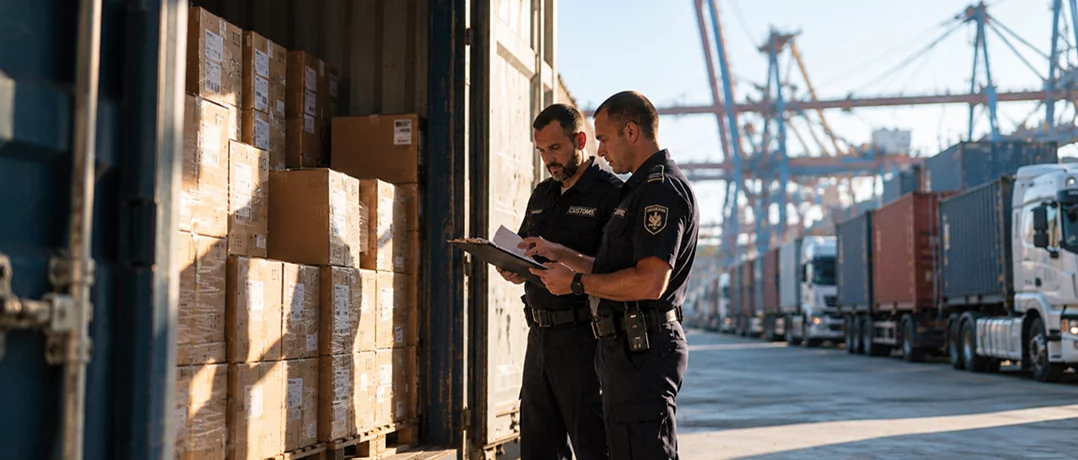
Lebanon’s ports join India–Middle East–Europe corridor, opening new trade opportunities
The inclusion of the ports of Beirut and Tripoli in the India–Middle East–Europe Economic Corridor’s ports network, along with the signing of the joint declaration related to this step in New Delhi, opens a new window for Lebanon to strengthen its position in regional and international trade flows.
The move comes at a time when countries are competing to develop their logistics infrastructure, attract investments and secure their presence on global supply chains. Its importance is not limited to its institutional dimension, but also extends to the opportunities it could create to revive the Lebanese economy, provided it is translated into practical projects and sustainable partnerships.
A well-informed source told Nidaa Al Watan that “this development comes at a time when economic corridors are gaining increasing importance, as they are tools for reshaping trade relations and connecting markets, production centres and consumption centres.”
The source noted that “the economic corridor linking India, the Middle East and Europe is based on the idea of facilitating the movement of goods and strengthening integration between maritime and land transport networks and logistics services, allowing countries and ports capable of developing their operational infrastructure to participate in the transformations taking place in the global economy.”
The source pointed out that “the inclusion of the ports of Beirut and Tripoli gives Lebanon an opportunity to benefit from its geographical location on the eastern Mediterranean coast and from its potential role as a link between Arab, European and Asian markets.”
He considered that “the Port of Beirut, with its commercial location and experience in import and export activities, and the Port of Tripoli, with its potential for expansion and development of services, can represent two complementary pillars within a national vision to rebuild the maritime and logistics sector.”
The source stressed that “the real value of joining this initiative is not measured only by signing agreements or securing a presence within international frameworks, but by the ability to transform this participation into tangible economic gains.”
“This requires modernising port facilities, developing customs clearance systems, accelerating administrative procedures, strengthening links between ports and land transport networks as well as storage and distribution centres, in addition to providing a clear legislative and investment environment that allows the private sector to contribute to developing services and improving operational efficiency according to international standards. All these areas are being worked on by the responsible authorities,” he added.
Regarding the Port of Tripoli, the source said that “developing its role could support commercial activity in northern Lebanon and expand the logistics services available in the region, contributing to attracting investments related to transport, storage, trade and supporting industries, while positively affecting employment opportunities and local economic activity.”
As for the Port of Beirut, he stressed that “enhancing its competitiveness and restoring confidence in its ability to serve trade flows efficiently and reliably are key elements in any plan to develop the sector, with governance, transparency and safety placed at the centre of managing vital facilities.”
The source warned “against separating this opportunity from the challenges facing the Lebanese economy, starting with financial pressures and weak investment, to the deterioration of infrastructure in essential sectors.”
He pointed out that “competition among regional ports requires rapid action, because geographical location alone is not enough to secure a share of trade flows unless it is accompanied by reliable services, competitive operating costs and the ability to meet the needs of companies and markets.”
The source added that “benefiting from this step requires institutional follow-up and coordination between public administrations, the private sector and international partners, alongside establishing a clear implementation plan, identifying investment priorities and linking external cooperation to genuine domestic reforms.”
“Lebanon’s success in completing these requirements would strengthen its position in supply chains and open the way to reviving its commercial role, while the impact of the agreement will remain limited if it does not go beyond the framework of institutional participation,” he said.
The step achieved in New Delhi appears to be the beginning of a path that must be fully invested in, as it could restore Lebanese ports to regional commercial and logistics calculations.
However, moving from a presence on the map of international cooperation to achieving real economic returns will remain linked to Lebanon’s ability to develop its ports, modernise its systems and create an attractive investment environment.
This would transform the country’s participation into a sustainable platform for action. This is the challenge that the relevant authorities must address away from bureaucracy, in a way that restores to Lebanon one of its essential service roles.
-
-

-
Daoud Rammal
-
