Lebanese Prime Minister Nawaf Salam called on Arab and international diplomats for urgent support as Lebanon faces escalating conflict, mass displacement, and a growing humanitarian crisis.


Lebanese Prime Minister Nawaf Salam called on Arab and international diplomats for urgent support as Lebanon faces escalating conflict, mass displacement, and a growing humanitarian crisis.

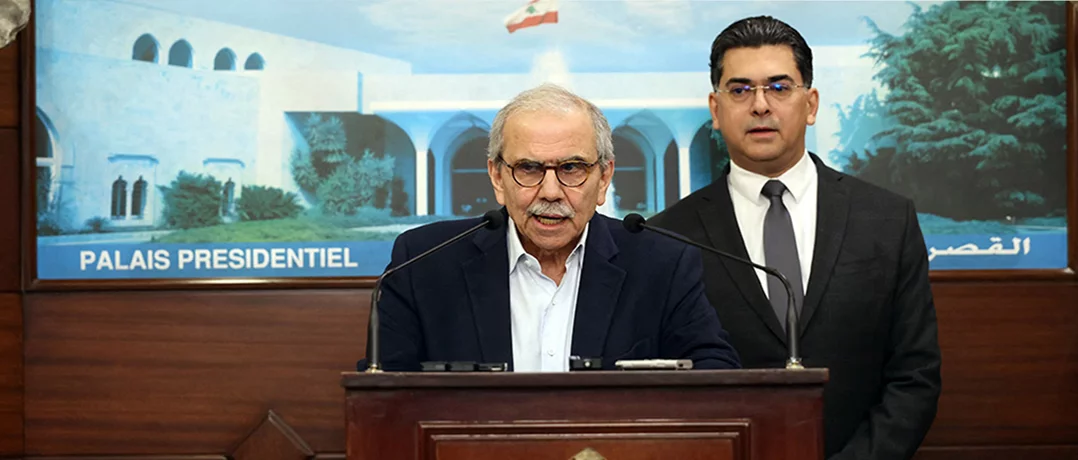
In the wake of intense nights of violence and airstrikes, Lebanon is confronting one of its most critical moments in recent memory. Recognizing the urgent need for international support, Lebanese Prime Minister (PM) Nawaf Salam convened a high-level meeting with Arab and foreign ambassadors accredited to Lebanon at the Grand Serail in Beirut.
The gathering, held in the presence of Minister of Foreign Affairs and Emigrants (MOFA) Youssef Raggi and Minister of Social Affairs Haneen el-Sayed, was aimed at briefing diplomats on the latest developments and mobilizing comprehensive diplomatic and humanitarian assistance for the country.
In his address, Salam outlined the gravity of Lebanon’s current predicament. “Our country has been drawn into a devastating war that we did not seek and did not choose. It was a war imposed upon us,” he stated, stressing that Lebanon’s immediate priority is to halt the conflict and safeguard the lives of its citizens. He warned that the nation is being dragged into an “abyss” of escalating violence and political chaos, calling for unity and responsible governance as essential measures to prevent further destruction.
The PM highlighted that the southern suburbs of Beirut, along with parts of southern Lebanon, have witnessed mass evacuations following Israeli evacuation orders. He described the displacement as a potential humanitarian disaster with unprecedented political and social consequences, stressing that those forced to leave their homes are victims of external aggression rather than participants in the conflict.
Central to Lebanon’s diplomatic appeal is the government’s reaffirmation of its commitment to sovereignty and the rule of law. Salam asserted that “decisions on war and peace must rest exclusively within the legitimate institutions of the state,” reinforcing the government’s decision on 2 March 2026 to ban the security and military activities of Hezbollah and other non-state actors, both Lebanese and foreign.
The PM also noted that Lebanon remains open to negotiations and all diplomatic avenues to mitigate the crisis. He called on international partners to demand an immediate cessation of Israeli military actions and the protection of Lebanon’s population and infrastructure. “Every step we take is guided by one principle: protecting our country and the safety and dignity of our people,” he affirmed.
Recognizing the limitations of the government’s resources in addressing the unfolding humanitarian crisis, Salam underscored the importance of international solidarity. He appealed to the assembled ambassadors to provide support in alleviating the burdens of displacement and delivering relief to affected populations. Minister Haneen el-Sayed was also invited to brief the diplomatic corps on the current humanitarian situation, highlighting the need for urgent intervention to support displaced citizens.
The PM characterized the ongoing cycle of violence as catastrophic for all Lebanese communities. He stressed that while certain areas are bearing the heaviest burden, the entire country suffers from the consequences of war and instability. Lebanon’s government, he asserted, remains committed to safeguarding its population and infrastructure and ensuring that external conflicts do not compromise the nation’s sovereignty.
In conclusion, Lebanon’s meeting with international diplomats underscores the government’s urgent appeal for diplomatic pressure and humanitarian assistance amid escalating conflict. Salam’s address highlighted the country’s precarious situation, the importance of state sovereignty, and the pressing need for coordinated international support to protect civilians and preserve national unity. As Lebanon navigates this crisis, the combined efforts of local authorities and the international community will be critical to mitigating human suffering and stabilizing the nation in the face of external aggression.

