A newly discovered cave in Akkar’s highlands reveals Lebanon’s hidden natural wealth, offering fresh potential for eco-tourism and scientific exploration.




A newly discovered cave in Akkar’s highlands reveals Lebanon’s hidden natural wealth, offering fresh potential for eco-tourism and scientific exploration.

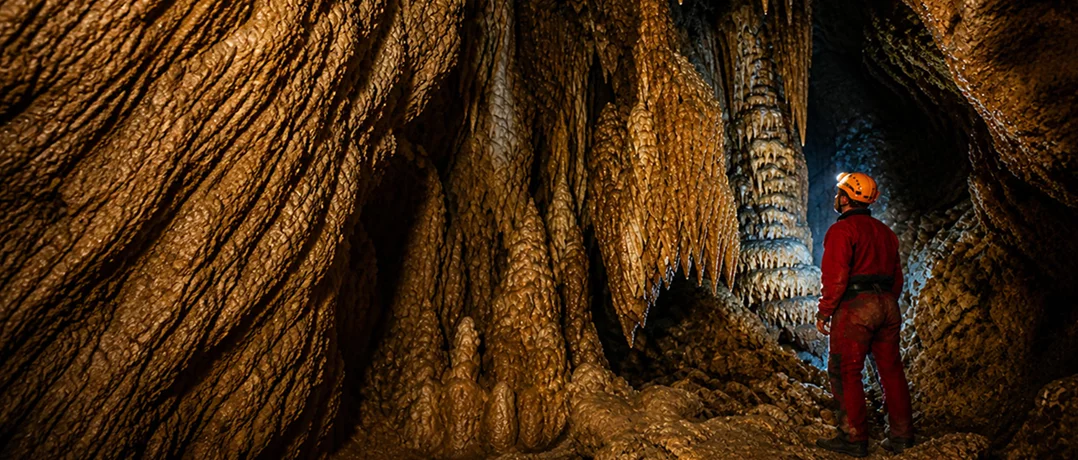
In northern Lebanon, the earth has kept another secret, until now. A newly discovered cave on the outskirts of Tashea, a village nestled in the highlands of Akkar Governorate, is drawing the attention of researchers, environmentalists, and tourism advocates alike. With its winding rocky passages, ancient limestone formations, and a vertical descent of more than 17 meters, the site is a remarkable find in a region long celebrated for its natural wealth but seldom placed on Lebanon's tourism map.
The cave was found on the outskirts of Tashea, a highland town in Akkar, Lebanon's northernmost governorate and one of its most ecologically diverse. Accessible only through ropes and specialized climbing equipment, the cave plunges more than 17 meters below ground, opening into a world of rocky passages and dramatic natural formations: stalactites descending from the ceiling like stone icicles, and stalagmites rising from the floor in ancient, patient columns.
A dedicated team is now conducting surveying and documentation work to study the site, assess its scientific significance, and explore the potential for eco-tourism development in the area. The work is only beginning, and what they have found so far is already extraordinary.
Akkar Governorate, created in 2003 and bordered by the Mediterranean to the west, the Syrian governorates of Tartous and Homs to the north, and the Bekaa to the southeast, is widely regarded as Lebanon's richest region in biodiversity, and among its most economically marginalized.
The region is home to approximately 70% of all plant species known in Lebanon, sprawling oak and cedar forests including the vast Kamouha Forest, historic Crusader fortresses, Roman and Byzantine ruins, and dramatic mountain landscapes. Akkar possesses the largest green space in Lebanon that is void of any construction, rich in heritage from the megalithic era all the way to the Ottomans, yet it remains, in many ways, a place that Lebanese from other regions have never visited, or barely know.
National and international bodies including the United Nations Development Program have invested in sustainable mountain tourism strategies for Akkar, recognizing the twin imperatives of environmental conservation and economic revival.
The discovery of the Tashea cave is a reminder that Lebanon's natural landscape continues to hold surprises, that beneath the surface of an already remarkable country, there are passages and chambers and formations that no human eye has yet fully seen.
For the people of Akkar, it is also a source of hope: that the highlands they have always known to be extraordinary might, at last, be recognized as such by the wider world.

