



Christianity is dividing between lived religious faith and a growing cultural identity rooted in Western heritage.
Between belief and belonging

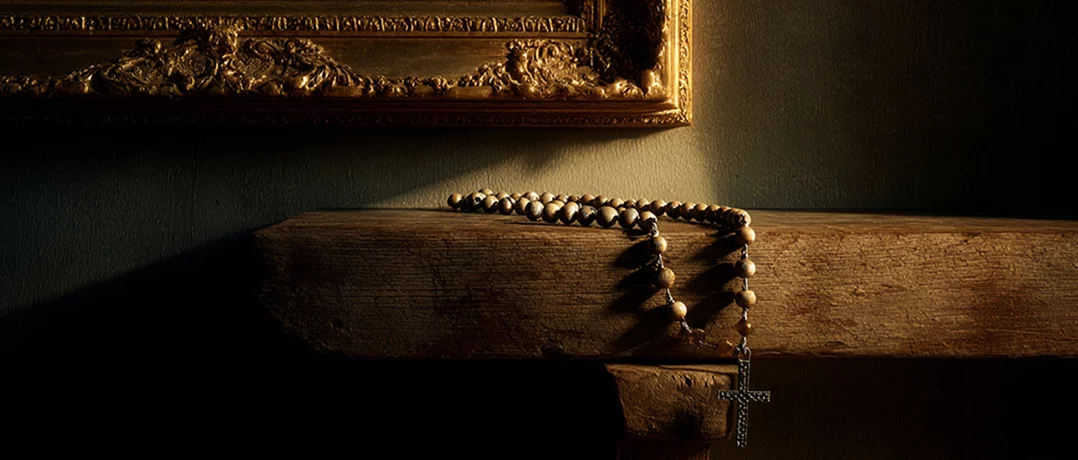
On Sunday mornings across the world, church doors open, hymns are sung, and familiar rituals unfold much as they have for generations. At All Saints’ Church in Bradford, England, the scene is no different. Among the parishioners sits Gareth Talbot, who attends every week with quiet regularity. He does not pray, does not believe in God, and does not consider himself Christian.
Gareth is not alone. Across the World, Christian podcasts and online figures are attracting growing audiences, prompting renewed attention from religious leaders, including Pope Leo XIV, who has cautioned against reducing Christianity to symbols or identity alone.
Yet it is precisely these signals and symbols that attract so many today, and from this attraction emerges a new schism between Christianity practiced as religion and Christianity embraced as identity.
As a faith, Christianity is broadly recognized and understood. It is a religion based on the belief in God Almighty, the life and resurrection of Jesus Christ, and his sacrifice for the good of humanity. In this way, Christianity is a spiritual commitment that influences its practitioners’ entire life rather than just a worldview or philosophy. Conversion, submission, and a daily turn to God are required.
This is the Christianity the Pope speaks of a faith that must be lived, embodied, and practiced within the Church.
But in the West, Christianity has also become more than a religion, it has evolved into a culture, and this cultural layer reaches far beyond personal belief. (//) It lives in the deeper moral instincts of Western societies. A sense of human dignity reflected in John Locke’s belief in God-given rights, the value of the individual emphasized by Tocqueville in his study of democratic equality, the primacy of conscience defended by John Stuart Mill’s writings on liberty, and the expectation that power should be questioned, a theme running through the work of Enlightenment thinkers across the West.
But these two forms of Christianity are no longer aligned. Religious belief continues to decline, even as attachment to Christian heritage and legacy grows stronger. The Church still speaks in the language of faith and discipleship, while many today respond in the language of memory and identity.
This growing reliance on memory and identity becomes easier to understand when we consider how dramatically the cultural landscape of the West has shifted in recent decades. For generations, the Christian foundations of Western life blended into daily habits, rarely noticed or discussed. But as large-scale immigration and new religious communities reshape the cultural landscape of the West, with the European Union registering 4.3 million arrivals from outside the Union in 2023 alone, the Christian way of life stands out once more. The customs of Christmas, Sunday rest and the concept of individual rights have become so solely associated with the West that people are starting to see them as part of their cultural inheritance worth preserving.
Surveys by Pew and Eurobarometer show that weekly church attendance in countries like the United Kingdom and France has fallen to between 4 and 6 percent, yet more than 70 percent of citizens in those same societies continue to celebrate Christmas and other Christian holidays. In Western Europe, non-practicing Christians now outnumber practicing ones by more than three to one, and large majorities, often exceeding 60 percent, describe Christian symbols, cathedrals, and holidays as part of their national culture rather than expressions of living faith. Even in the United States, where belief has traditionally been stronger, nearly 81 percent of religiously unaffiliated Americans still mark Christmas as a cultural event. Those surveys reveal that Christianity, in the West, has become increasingly detached from theological conviction and increasingly anchored in memory and heritage.
In this shifting context, Christian symbols have acquired political significance. Nativity scenes have shifted from a religious celebration to a declaration of heritage; cathedrals are preserved as national monuments; and the cross, for millions of Westerners, has become an identity marker rather than a universal sign of faith open to all races and creeds. Studies in France shows that support for nativity scenes in town halls has increased by 8%, from 71% in 2014 to 79% in 2025, with 92 % approval among ages 18-24. Christian culture has increasingly become a rallying point for those anxious about social fragmentation or demographic change as nationalism gains ground across the West.
This politicization of Christian heritage inevitably brings it into tension with the Church itself, which does not share the nationalist impulses now gathering around its symbols. Since the reforms of Vatican II, the Church has increasingly emphasized themes that many would today describe as left leaning: solidarity with migrants and refugees, social and economic justice, peacebuilding, and care for creation. Anglican, and many Protestant bodies have also echoed this universalist vision, grounding it in the Gospel’s call to protect the vulnerable and welcome the stranger. Perhaps the clearest illustration of this universalist posture came when Pope Francis washed the feet of Muslim and African migrants during the Holy Thursday liturgy, a gesture through which he emphasized that they stood before him not as outsiders but as his brothers.
This universal posture stands in sharp contrast to the emerging identity movements that rally around Christian heritage. These groups, often positioned on the political right, focus on preserving national traditions and identities, resisting demographic change, and strengthening borders. For them, Christianity is less a faith to be lived and more a civilizational inheritance to be guarded.
Nothing captures this contrast more sharply than the very idioms each side adopts: the contemporary Christians institutions speak in the key of Ecclesia ad extra, “the Church turned outward,” aligned with progressive and outward-facing commitments. Meanwhile cultural Christianity resonates instead with Deus vult, “God wills it,” a battle cry first heard during the Crusades and carrying the imprint of a more martial and defensive understanding of Christian heritage.
Christianity is thus entering a new phase in its long history, one in which cultural identity and spiritual commitment no longer move in step. How these two impulses learn to coexist will do much to define what Christianity becomes in the years ahead.
-
-

-
Nami El KhazenJournalistFocusing on geopolitics and international affairs.
-
