The US-Iran conflict faces a fragile diplomatic moment as Trump’s 15-point plan seeks to end hostilities, but Washington’s hardline demands, Iran’s rejection, Israel’s concerns, and strategic mistrust challenge prospects for a lasting resolution.




The US-Iran conflict faces a fragile diplomatic moment as Trump’s 15-point plan seeks to end hostilities, but Washington’s hardline demands, Iran’s rejection, Israel’s concerns, and strategic mistrust challenge prospects for a lasting resolution.

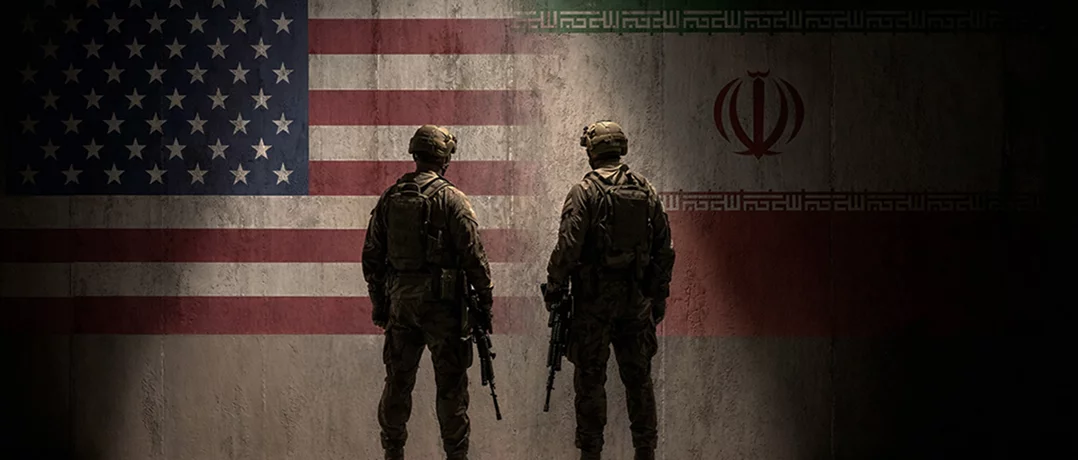
As the conflict between the United States (US), Israel, and Iran stretches into its second month, diplomatic maneuvering has intensified alongside military escalation. At the center of these efforts lies a reported 15-point proposal attributed to President Donald Trump, aimed at ending hostilities and reshaping the strategic balance in the Middle East.
The proposal reflects long-standing American objectives regarding Iran’s nuclear and regional policies, but it also highlights the deep mistrust and competing priorities that complicate any path to peace.
The reported plan appears to address the central issues that have defined tensions between Washington and Tehran for decades.
Foremost among these is Iran’s nuclear program. The proposal reportedly requires Iran to commit permanently to abandoning any ambition to develop nuclear weapons, dismantle existing nuclear infrastructure, and surrender enriched uranium stocks to international authorities. Facilities such as Fordow, Natanz, and Isfahan (already damaged during the conflict) would be permanently decommissioned. In parallel, Iran would be required to restore full cooperation with the International Atomic Energy Agency (IAEA), allowing intrusive inspections and continuous monitoring.
Beyond the nuclear file, the plan extends to Iran’s ballistic missile program and its regional influence. It reportedly includes provisions to limit missile capabilities and curtail support for allied armed groups across the Middle East; issues that Iran has historically refused to negotiate.
In return, the US is expected to offer sanctions relief and broader economic incentives, though the exact terms remain unclear. This includes abolishing the so-called “snapback mechanism,” a provision included in United Nations Security Council (UNSC) Resolution 2231 (2015), which allows for the reimposition of UN sanctions on Iran if it is found to be in significant non-compliance with the 2015 nuclear agreement, known as the Joint Comprehensive Plan of Action (JCPOA).
Furthermore, the transmission of the proposal through Pakistan highlights the importance of third-party mediation in this conflict. Countries such as Pakistan, Egypt, and Turkey have positioned themselves as intermediaries, facilitating indirect communication between Washington and Tehran.
A significant component of the proposal focuses on stabilizing global energy markets. Since the outbreak of war, Iran has effectively disrupted shipping through the Strait of Hormuz, a critical artery for global oil supplies. The plan reportedly calls for the reopening of the waterway and guarantees for freedom of navigation.
This aspect underscores the economic urgency behind Washington’s diplomatic push. Rising oil prices and market volatility have placed pressure not only on the global economy but also on domestic political sentiment in the United States. By addressing the Strait of Hormuz, the proposal seeks to deliver immediate economic relief while creating conditions for longer-term stability.
Iran has publicly dismissed the American proposal and instead outlined its own conditions for ending the war. These demands include an immediate cessation of hostilities and political assassinations, binding and concrete guarantees preventing the recurrence of similar attacks, and compensation for war-related damages.
Perhaps most significantly, Iran has insisted on recognition of its sovereignty over the Strait of Hormuz; a demand that directly conflicts with international norms regarding freedom of navigation, under the 1982 United Nations Convention on the Law of the Sea (UNCLOS). Tehran has also stressed that any agreement must encompass all fronts of the conflict, including hostilities involving regional allies (such as halting Israel’s military campaign against Hezbollah in Lebanon).
Additionally, Iranian believe that these conditions were designed to be rejected. The American proposal demanded matters that the Iranians have already rejected, the latter’s counterproposals requested conditions that the Americans will most likely reject (let alone Israelis).
This response reflects Iran’s broader strategic posture. Rather than negotiating from a position of weakness, Iranian officials appear determined to leverage their regional influence and resilience under pressure. Their stance suggests that any agreement perceived as one-sided or imposed is unlikely to gain acceptance; at least at this given stage.
The proposal has also generated unease in Israel, where leaders fear that a diplomatic settlement may fall short of their strategic objectives. Prime Minister (PM) Benjamin Netanyahu has consistently framed the war as an opportunity to fundamentally weaken or even transform the Iranian regime altogether.
In contrast, recent signals from Washington indicate a possible shift toward de-escalation rather than regime change. This divergence raises questions about the alignment of US and Israeli war aims (especially as Trump declined a joint statement with Netanyahu calling for street protests to overthrow the regime), and whether a negotiated settlement could strain their strategic partnership.
Israel’s continued military operations, even amid diplomatic discussions, further complicate the picture. Any agreement reached without Israeli acceptance risks being undermined on the ground.
The timing of the proposal has led to speculation about its strategic intent. President Trump’s decision to extend a prior ultimatum, while simultaneously signaling progress in talks, suggests a dual-track approach combining diplomacy with military pressure.
The deployment of thousands of Army paratroopers from the 82nd Airborne Division troops to the region reinforces this interpretation. While these forces could serve as leverage in negotiations, they also raise the possibility of further escalation. Some analysts have speculated about potential operations targeting key Iranian assets, which would dramatically alter the conflict’s trajectory.
This interplay between coercion and diplomacy reflects a broader pattern in US strategy, but it also increases the risk of miscalculation. This has revived a long-standing American approach, based on an infamous proverb by former US President Theodore Roosevelt: “speak softly and carry a big stick,” which advocates diplomacy backed by the credible threat of force, highlighting that success often comes from combining gentle persuasion with the readiness to act decisively.
Hence, the reported 15-point plan represents an ambitious attempt to resolve one of the most volatile conflicts in contemporary geopolitics. However, it also exposes the profound obstacles to peace, including mutual distrust, conflicting strategic goals, and the complexities of regional politics. America’s hardline and severe demands, Iran’s rejection and counterproposals, coupled with Israeli reservations and ongoing military activity, underscore the fragile and uncertain nature of current diplomatic efforts. While backchannel communications and mediation offer a potential pathway forward, the gap between the parties remains substantial. Ultimately, the success of any peace initiative will depend not only on the substance of proposals but also on the willingness of all actors to compromise rather than a zero-sum game; an outcome that, for now, remains far from assured.

