



What began as a carefully negotiated boundary is now under strain, as Israel’s push to extend control northward blurs the line between land and maritime claims.
Breakthrough, then uncertainty: The Qana deal revisited
Breakthrough, then uncertainty: The Qana deal revisited
By The Beiruter | April 28, 2026

Reading time: 4 min
In 2022, Lebanon’s rights to the Qana gas field were presented as a rare diplomatic breakthrough, anchored in a U.S.-brokered agreement that fixed the maritime boundary along Line 23 and opened the door to offshore exploration. At the time, expectations were high, with some estimates placing the field’s potential at up to 15 trillion cubic feet of natural gas.
Four years later, that moment is worth revisiting. As Israel signals a push to extend control northward through a new “Yellow Line” buffer zone and questions emerge over the durability of the agreement, the deal looks less like a resolution than a temporary arrangement tied to conditions that no longer hold.
Lines, fields, and the tradeoff
The October 2022 agreement established a maritime boundary between Lebanon and Israel along what is known as Line 23, a technical demarcation used to divide offshore waters in the eastern Mediterranean. For years, the two sides had disagreed on where that line should fall, as Lebanon had for years advanced a more southern claim, known as Line 29, which would have extended its maritime zone into waters believed to contain significant gas reserves.
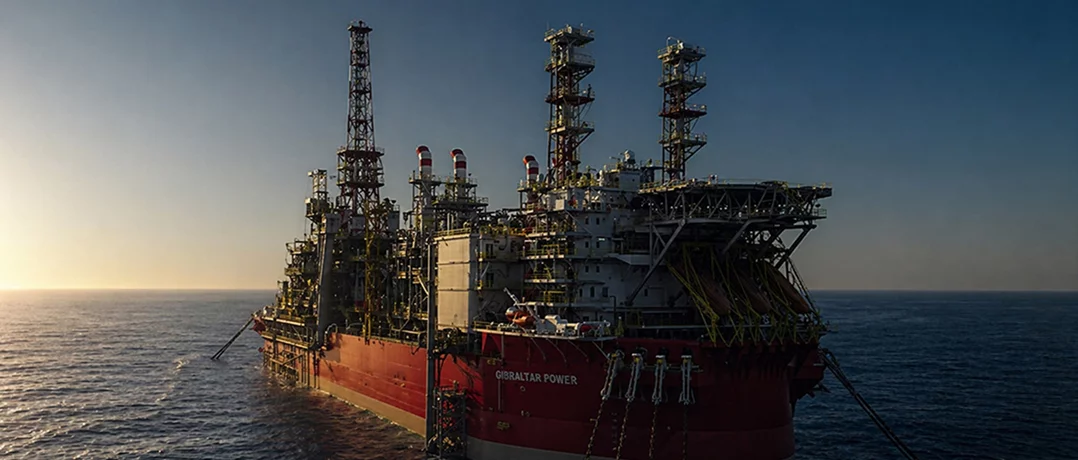
At the center of that dispute were two offshore areas with very different profiles. To the south lay the Karish field, a developed gas field operated by Energean, which began production in late October 2022, just days after the maritime agreement was finalized. Designed to produce up to 6.5 billion cubic meters of gas per year, the field was already positioned for immediate output.
To the north lay the Qana prospect, an undeveloped reservoir that, at the time of the agreement, was believed to hold up to 15 trillion cubic feet of natural gas, with projections suggesting as much as $6 billion in revenue over 15 years. In contrast to Karish, Qana remained untested and required exploration before any commercial activity could begin.
By accepting Line 23, Karish remained under Israeli control as an active producing field, while Qana fell within Lebanon’s exploration zone. In doing so, Lebanon relinquished a larger maritime claim farther south, estimated at roughly 1,800 square kilometers, which would have overlapped with the Karish area. Earlier in the negotiations, Lebanese officials had resisted this position because it meant abandoning any claim to Karish and narrowing the country’s offshore acreage, including parts of Blocks 8 and 9, the designated exploration zones in Lebanon’s offshore licensing map where international companies are granted rights to survey and drill.
At the same time, the arrangement introduced an important constraint. Because part of the Qana reservoir was believed to extend south of Line 23, any future development required a compensation mechanism, with Israel receiving a share of revenues through a side agreement with the field’s operator, TotalEnergies.
Access without resolution
The deal succeeded in the short term because it aligned several interests at once. It resolved a dispute that had intensified after major gas discoveries in the eastern Mediterranean, including Israel’s Tamar and Leviathan fields and Cyprus’s Aphrodite field, which had demonstrated the basin’s commercial potential. It also reduced the immediate risk of confrontation around offshore infrastructure, particularly as Karish moved toward production. U.S. officials framed the agreement in similarly broader terms. Then Secretary of State Antony Blinken described it as a “historic achievement” that would “advance security, stability, and prosperity for the region.”
At the same time, the agreement was designed to unlock energy activity without addressing the broader conflict. Because Lebanon and Israel remained technically at war, the deal avoided direct normalization, creating a narrow framework that allowed both sides to move forward while maintaining their political positions.
Policy analysis at the time pointed to an underlying asymmetry. Research from the Carnegie Endowment for International Peace noted that while Israel secured a producing asset, Lebanon’s position in Qana remained contingent on the commercial decisions of TotalEnergies, the continuation of compensation arrangements, and a security environment stable enough to support long-term offshore development.
Promise meets geology
The economic promise of Qana began to weaken soon after the agreement. In 2023, TotalEnergies drilled the first exploratory well in Block 9, where the Qana prospect is located, but the results did not confirm commercially viable gas reserves. What had been presented as a potential source of near-term revenue instead remained uncertain, with no clear timeline for development.
Activity did not stop there. In January 2026, TotalEnergies, alongside Eni and QatarEnergy, agreed with the Lebanese government to begin a 1,200-square-kilometer 3D survey in Block 8, a separate offshore zone. The survey marked a return to earlier-stage exploration, aimed at identifying new prospects rather than advancing an existing discovery, and signaled a continued commitment to offshore exploration in Lebanon’s energy sector.
Blue Line, Yellow Line and the maritime risk
Only months later, renewed conflict between Israel and Lebanon pulled the Qana prospect into a broader contest over territory and control. As the security environment deteriorated, the focus moved beyond offshore demarcation, bringing the maritime framework established in 2022 into closer contact with developments on land.
At the time of the 2022 October agreement, the maritime boundary of Line 23 operated alongside, but independently from, the Blue Line, the United Nations–recognized withdrawal line marking Israel’s 2000 exit from southern Lebanon. While neither line constituted a final border, both served as reference points that allowed the 2022 arrangement to function in practice.
Recent developments have introduced a third line into that equation. The so-called “Yellow Line,” an Israeli military buffer zone established during the latest war with Hezbollah to create a deeper security perimeter, extends five to ten kilometers into Lebanese territory.
An Israeli military map released in April further suggests that this zone may reach into coastal areas adjacent to waters associated with Qana, while Israel’s Energy Minister, Eli Cohen, has raised the possibility of canceling the maritime agreement altogether. Although Lebanese officials have rejected that premise, with Lebanon’s Energy Minister Joe Saddi saying that the Israeli map “does not change any of the facts established by the maritime border demarcation agreement,” the potential extension into areas linked to the Qana prospect matters.
If control on land begins to affect access to the coastline and adjacent waters, the practical boundaries underpinning the maritime agreement become harder to sustain, even without any formal revision.
A deal under pressure
Seen in this context, the 2022 agreement appears less like a lasting settlement and more like a narrow arrangement tied to a specific set of conditions. It established a workable boundary, enabled production at Karish, and created a pathway for exploration in Qana. But it did not resolve the conflict that surrounds it, nor did it guarantee that the economic promise it carried would materialize.
As Israel’s approach to the border shifts from delineation to control, the distinction between land and maritime boundaries becomes increasingly difficult to maintain. What was once treated as a technical demarcation now risks being reinterpreted through the realities of conflict, leaving Lebanon’s offshore claims, like its territory on land, exposed to pressures that the agreement was never designed to withstand.
-
-

-
The Beiruter
-
