



The full history of Hezbollah and Amal.
Brothers in blood

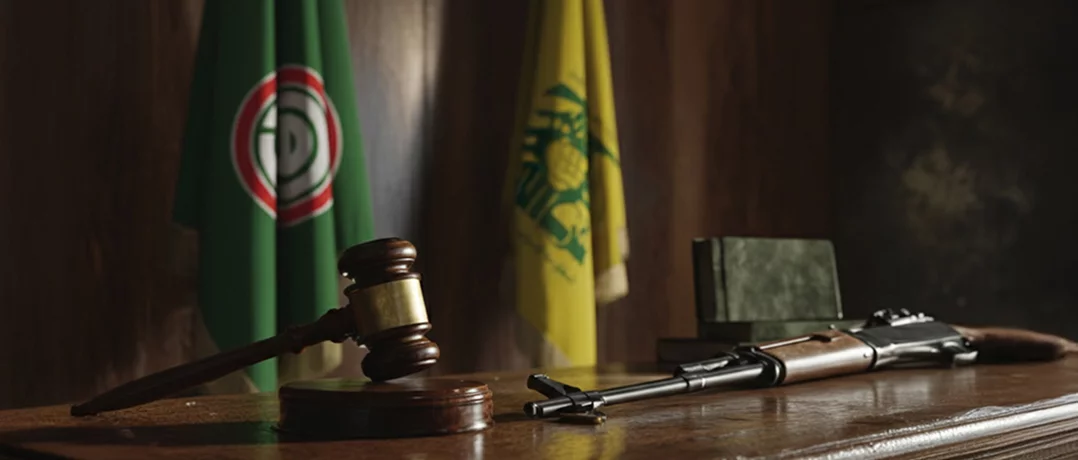
From the killing fields of 1988 to the quiet back channels of 2025, the relationship between Lebanon’s two dominant Shiite movements, Hezbollah and Amal, has been defined by shared origins, violent rivalry and an alliance shaped less by trust than by necessity.
They emerged from the same marginalized community, often from the same families. Today, Hezbollah and Amal present a carefully managed united front: appearing together at press conferences, coordinating parliamentary votes and, as recently as October 2021, marching jointly through Beirut’s streets. Yet beneath that choreography lies one of Lebanon’s most consequential political relationships forged in intra-Shiite bloodshed that killed thousands and now strained by pressures neither movement can easily contain.
The rupture that produced Hezbollah began inside Amal itself.
The original split
When Imam Musa al-Sadr, the cleric who mobilized Lebanon’s long-marginalized Shiite community, disappeared in Libya in 1978, he left behind Amal and a leadership vacuum. Nabih Berri consolidated control of Amal in 1980, steering the movement toward secular Lebanese nationalism, integration into state institutions and pragmatic politics.
In 1982, a faction of the Amal Movement, joined by more radical Shiite groups, broke away to form Hezbollah, with training and oversight provided by officers of Iran’s Islamic Revolutionary Guard Corps. Within months, the splinter faction consolidated with IRGC training units, clerics linked to Qom and other Iranian-backed networks. The nucleus of what would formally emerge as Hezbollah had taken shape.
Hezbollah was not a foreign implant. It was built from Amal’s own membership religious cadres who viewed Berri’s secular pragmatism as a betrayal of Shiite Islamic identity and revolutionary potential. The ideological divide was fundamental. Amal rejected the doctrine of Velayat-e Faqih, the guardianship of the Islamic jurist that underpins Iran’s political system. Hezbollah embraced it as its organizing principle.
One movement looked to Beirut and the Lebanese state. The other looked to Tehran and the wider Islamic umma. Both competed for the loyalty of the same Shiite poor in southern Lebanon and Beirut’s southern suburbs. By the mid-1980s, that competition had turned violent.
The War of Brothers
By 1988, rivalry had become existential. Hezbollah, buoyed by Iranian funding and organizational discipline, was expanding rapidly and absorbing Amal’s base.
The trigger for open war came in February 1988, when American U.N. observer Lt. Col. William Higgins was abducted and later killed after meeting Amal’s political leader for southern Lebanon. Amal blamed Hezbollah. Hezbollah denied responsibility and has maintained that the kidnapping was engineered to provoke intra-Shiite conflict. Regardless of the truth, Amal used the Higgins affair as a pretext to launch a military campaign it had already prepared to fight.
In April 1988, Amal backed by Syrian artillery, logistics and direct troop intervention launched an offensive in the south, driving Hezbollah from most of the region except mountainous pockets around Iqlim al-Tuffah. In May, Hezbollah quickly counterattacked in Beirut, expanding its control across large sections of predominantly Shiite suburbs within days. By June, Syrian forces intervened to prevent Amal’s collapse in the capital.
The toll was intimate and severe. In the first 2 days of fighting in Beirut’s southern suburbs in May, at least 53 people were killed and more than 200 wounded, most of them civilians. By January 1989, monthly casualties across multiple fronts were reaching approximately 660.
The conflict lasted 3 years, marked by assassinations, heavy weapons fire, bombings, kidnappings and psychological warfare waged in neighborhoods and villages where families had lived side by side for generations. It divided households. Hassan Nasrallah had been a senior Amal member before joining Hezbollah; his brother Hussein, known as Jihad al-Husseini, remained a prominent Amal figure during the war.
The War of Brothers was both an intra-Shiite civil war and a proxy struggle between Damascus and Tehran. Syria backed Amal. Iran backed Hezbollah. The Damascus Agreement of 30 January 1989, signed under Syrian and Iranian supervision, produced a formal ceasefire and established a joint operations room for resistance against Israel. The truce repeatedly collapsed, with fighting resuming in December 1989 and continuing intermittently through 1990.
By the end, Hezbollah had prevailed. Despite Syrian backing and numerical advantages on some fronts, Amal could not match Hezbollah’s discipline, ideological cohesion and Iranian resources. Approximately 2,500 Shiites were killed. Amal never regained its dominance.
A division of labor
The ceasefire that concluded both the Amal-Hezbollah conflict and Lebanon’s civil war in 1990 produced an arrangement that has shaped Shiite politics ever since.
Hezbollah would control armed resistance against Israel. Amal would occupy the public-sector posts and ministries allocated to the Shiite community under Lebanon’s confessional system. Berri became speaker of parliament in 1992 and has held the position for over 33 consecutive years. Amal formally disarmed its main militia forces; in September 1991, 2,800 fighters joined the Lebanese Army.
The arrangement appeared stable but was never equal. Hezbollah’s Iranian funding enabled it to build hospitals, schools and social services that rivaled and often outperformed the Lebanese state. Amal’s patronage model, tied to public institutions, increasingly appeared corrupt and dependent.
Each Hezbollah military milestone, Israel’s withdrawal from southern Lebanon in 2000 and the 2006 war, elevated Hezbollah’s prestige while pushing Amal further into its shadow. Younger, religiously motivated Shiites gravitated toward Hezbollah. Amal’s base aged.
Private tensions surfaced in 2006, when a WikiLeaks cable revealed that during Israel’s war against Hezbollah that summer, Berri told U.S. officials that a successful Israeli campaign against Hezbollah would be “like honey,” an effective way to curb the movement’s military ambitions. It reflected a secular-nationalist anxiety that Hezbollah’s armed strategy threatened long-term Shiite interests.
2008: Demonstrating the hierarchy
In May 2008, when Hezbollah seized West Beirut within 24 hours in response to government attempts to dismantle its private telecommunications network, Amal fighters participated but as auxiliaries. The episode underscored what the balance of power had become: Hezbollah as the dominant military force; Amal as political partner and cover.
The October 2019 protests further exposed the asymmetry. As hundreds of thousands of Lebanese demanded the fall of the political class, anger in Shiite areas focused more on Amal than on Hezbollah. Hezbollah retained the legitimacy of resistance. Amal, associated with corruption and patronage networks, did not.
When Amal-affiliated youths attacked protesters in downtown Beirut, images spread widely, damaging the movement’s reputation. The financial collapse of the Lebanese state eroded Amal’s primary source of influence: control over institutions. Hezbollah’s legitimacy, rooted in military resistance, proved less immediately vulnerable.
The Beirut Port explosion and Tayouneh
The 4 August 2020 explosion at the Port of Beirut, which killed more than 200 people and devastated entire neighborhoods, created the alliance’s most acute accountability crisis.
Customs and port officials had affiliations across political parties, but Amal’s exposure was direct. Former Finance Minister Ali Hassan Khalil was sanctioned by the United States for alleged material support to Hezbollah through corruption, including allegations that he used his ministerial role to exempt a Hezbollah affiliate from paying taxes. Judge Tarek Bitar summoned Khalil and fellow Amal figure Ghazi Zaiter; both refused to appear. An arrest warrant was issued for Khalil.
On 14 October 2021, a joint Hezbollah-Amal protest against Bitar escalated into gunfire near the Tayouneh roundabout. Snipers opened fire, and clashes involving rocket-propelled grenades and heavy weapons followed. Seven people were killed and 32 wounded. Images of children sheltering near schools circulated widely.
The episode highlighted the alliance’s internal dynamic: Amal figures faced judicial exposure, while Hezbollah deployed coercive force. The investigation was subsequently paralyzed and Bitar removed.
After 8 October 2023
When Hezbollah opened what it called a “Support Front” against Israel on 8 October 2023, Amal stood publicly beside it. Amal’s military wing participated in strikes beginning in November, and 1 member was killed by Israeli shelling. But the operational structure remained unchanged: Hezbollah led the fighting; Amal supported.
In September 2024, Israel’s targeted campaign against Hezbollah leadership, including the assassination of Nasrallah on 27 September and the elimination of senior commanders, significantly weakened Hezbollah’s military hierarchy. Estimates cited roughly 5,000 Hezbollah fighters killed and 7,000 wounded.
For Berri, the moment was complex. As speaker of parliament, he became the most senior surviving Shiite political figure. Yet Hezbollah’s weakening threatened the resistance narrative underpinning both movements’ influence.
Divergence over disarmament
The debate over Hezbollah’s weapons has produced the most visible public divergence in decades.
In August 2025, Lebanon’s Cabinet approved a disarmament plan, prompting 5 Shiite ministers to walk out. Hezbollah Secretary-General Naim Qassem accused the government of implementing “an American-Israeli order to end the resistance, even if it leads to civil war.” Berri, describing talks with U.S. envoy Barrack as “good and constructive,” signaled openness to discussing a national defense strategy.
Reports in December 2025 indicated that Berri had sent Tehran 3 requests:
- Lebanese neutrality in any Iran-Israel clash.
- A fatwa from Ayatollah Ali Khamenei permitting Hezbollah to surrender precision weapons as part of a U.S.-backed arrangement.
- Urgent financial assistance for displaced Shiite communities.
Iran reportedly agreed only to provide financial aid.
In November 2025, Hezbollah issued an open letter addressed simultaneously to President Joseph Aoun, Prime Minister Nawaf Salam and Berri without prior coordination with the latter’s office. Political sources described Berri as dissatisfied with the move. Separately, reports said Hezbollah told Berri it would not relinquish its weapons under any circumstances, even if Israel withdrew fully from occupied Lebanese territory.
Internal power struggles within Hezbollah, between figures seen as more pragmatic under Qassem and hardline conservatives, have further complicated any negotiations.
As parliamentary elections approach in May 2026, both movements share an electoral imperative: maintaining at least one-third of parliament to preserve veto power. But their strategies diverge. Hezbollah favors confrontation over disarmament. Berri appears to seek a negotiated outcome that safeguards Amal’s institutional position.
Structural fault lines
From here, 5 unresolved tensions define the relationship.
First, a fundamental ideological divide remains: Amal does not adhere to the doctrine of Wilayat al-Faqih, unlike Hezbollah, whose Islamist framework is explicitly aligned with Iran’s clerical leadership model.
Secondly, the power imbalance has deepened, with Hezbollah dominant militarily and Amal dependent institutionally.
Thirdly, the accountability asymmetry persists: Amal embedded in the state, Hezbollah operating largely outside state structures.
Fourthly, their international positioning differs. Amal relies on engagement with foreign donors and international institutions. Hezbollah, by contrast, frames its identity around resistance to the international order. However, Hezbollah-affiliated registered NGOs have nonetheless benefited from funding linked to international donor networks.
Finally, both face succession uncertainties in a post-Nasrallah Hezbollah and an eventual post-Berri Amal.
The War of Brothers was never erased. It was managed by Syria and Iran, institutionalized into a division of labor and sustained by mutual interest. But the memory endures in communities that lost members on both sides.
As Lebanon confronts debates over disarmament, reconstruction and political reform, a competition for control of Shiite Lebanon seems to be reopening. Beneath the choreographed solidarity, Hezbollah and Amal are quietly negotiating separate futures.
Hezbollah, militarily degraded and internally fractured after Nasrallah’s assassination, clings to its weapons as the last pillar of relevance. Amal’s Berri, 3 decades in parliament’s speaker chair, reads the international moment differently engaging Washington while Tehran watches. Their alliance was never built on trust, but rather on mutual dependency enforced by Syria and Iran. Both enforcers have loosened their grip.
With May 2026 elections approaching and reconstruction dollars contingent on reform, Lebanon’s Shiite landscape is shifting not with a rupture, but with a slow, deliberate drift apart.
-
-

-
Josiane Hajj MoussaReporter
-
