



Bulgaria delays extradition of Rhosus owner, complicating Beirut port explosion investigation amid international legal tensions.
Bulgaria keeps Beirut explosion’s black box on hold
Bulgaria keeps Beirut explosion’s black box on hold
By Nader Hijaz | November 15, 2025

Reading time: 3 min
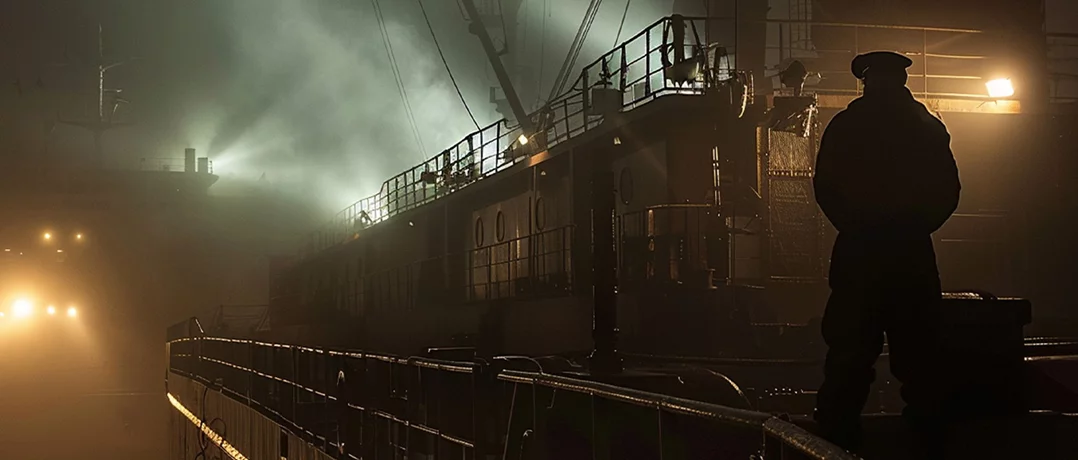
Lebanon was closely awaiting a decision from the Bulgarian judiciary last Monday regarding the extradition of Russian-Cypriot citizen Igor Grechushkin, owner of the ship Rhosus, which is linked to the Beirut port explosion and transported the ammonium nitrate shipment. However, the procedure took a surprising turn when the session was postponed.
The Bulgarian court’s decision coincided with Lebanese President Joseph Aoun’s visit to Sofia, where he stressed, after meeting his Bulgarian counterpart Rumen Radev, the importance of judicial and criminal cooperation between the two countries, particularly concerning the port explosion case. He emphasized that “there will be no retreat from our determination to uncover the circumstances of this case and reveal the truth.”
Formally, the Bulgarian judiciary stated that it requires guarantees, and it seems that President Aoun’s visit was insufficient to push the case forward positively. A spokesperson for the Sofia court explained that “the Bulgarian judges made this decision because they find the statements of the Lebanese authorities on this matter very unclear.”
Bulgaria is requesting that Lebanon confirm that it will not apply the death penalty to Grechushkin, who was arrested at Sofia Airport on September 5 under an Interpol Red Notice.
Substantively, the Bulgarian stance remains somewhat unclear. Are there other backgrounds or legal considerations influencing the case?
Security and judicial affairs journalist Youssef Diab affirmed that “this postponement is the third issued by the Bulgarian Court of Appeals, which has not provided reasons for its latest ruling.”
While Diab considers that “this delay in Grechushkin’s release could be positive for Lebanon,” he notes that “the surprising part is that, so far, the Bulgarian authorities have not agreed to extradite him to Lebanon because they want assurances that the death penalty will not be applied, even though the alleged crime against all defendants in the port explosion does not carry the death penalty. The maximum punishment for intentional homicide does not include the death penalty unless investigations prove it was an act of terrorism, in which case the criminal classification differs.”
Diab also points out that “it is unclear why the Bulgarians will not allow Lebanese investigating judge Tarek Bitar to travel to Bulgaria to interrogate him there. This situation seems to reflect a political clash between Lebanon on one side and Russia on the other, as the individual in question is a Russian citizen, and Moscow may wish to secure his return.”
However, Diab emphasizes that “Bulgaria is part of the European Union and should, in principle, respond more favorably to Lebanon’s request than to Russia’s. But I do not know if there are specific pressures from Russia on Bulgaria delaying the extradition or interrogation by the Lebanese judiciary in Bulgaria.”
According to Diab, the Lebanese Public Prosecution has not yet received the reasons or justifications for Grechushkin’s continued detention, even though the Lebanese judiciary has completed the full case file in response to the Bulgarian court’s request.
Internal and external obstacles continue to hinder the pursuit of justice and truth in the August 4 port explosion. Nevertheless, the owner of Rhosus is considered the “black box” of the case and could reveal the hidden threads within the investigation. Following the latest postponement, information suggests that Bulgaria has offered Lebanon virtual participation in the ongoing investigation of Grechushkin. The question remains: is this measure sufficient to conclude the Beirut port explosion investigation?
