



From Neolithic village to international seaport, Byblos preserves layers of history, linking civilizations across millennia.
Byblos: The world’s most ancient port

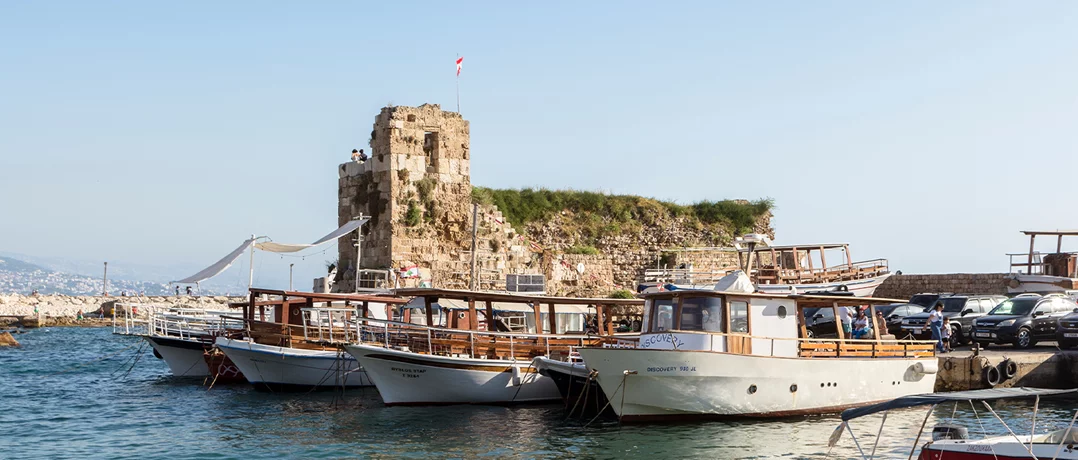
UNESCO recognizes Byblos as one of the oldest ports in the world. By the early Bronze Age, around 3000 BC, Byblos had transformed into the first true international seaport, linking the Middle East to the Mediterranean in a way no other city had before. Its wealth and influence came from a single resource that would define Lebanon for millennia: cedar wood.
The great cedar forests of Mount Lebanon were prized by ancient civilizations for shipbuilding, temples, and monumental architecture. From Byblos, ships carried cedar, silver, wine, and olive oil across the Mediterranean, most notably to Egypt. In return, gold, linen, ivory, lapis lazuli, and precious stones flowed into the port. This exchange created not just economic prosperity but a cultural fusion that shaped the region.
A city layered with civilizations
It was in Byblos that scribes developed the precursor to the Phoenician alphabet, the first phonetic writing system and the basis for Greek, Latin, and eventually modern alphabets. In many ways, Byblos is not only the birthplace of maritime trade, but also the birthplace of written communication as we know it.
Few cities in the world contain as many visible layers as possible of history. Egyptians, Assyrians, Babylonians, Phoenicians, Greeks, Romans, Byzantines, and Crusaders all passed through Byblos, leaving their marks in temples, fortifications, and inscriptions.
Its ties with ancient Egypt were especially deep. The city was so important to Egyptian religion and trade that the Egyptians worshipped a local deity they called the “Lady of Byblos”, associated with the goddess Hathor and sent royal expeditions to the port for cedar wood. Egyptian artifacts found in Byblos are among the richest outside Egypt itself.
A living archive
Byblos today is a place where 7,000 years of history share the same coastline. Walk through its alleys and you move from Roman roads to medieval markets to Bronze Age foundations all within minutes. It is a living city that continues to reinvent itself while carrying the memory of civilizations long gone.
In a region where heritage is often overshadowed by geopolitics, Byblos stands as a quiet assertion of Lebanon’s enduring cultural depth. It embodies something essential about the Lebanese identity: a people who have always been connected outward, who have always served as intermediaries between worlds and who continue to build, rebuild, and take part in the currents of the world despite every historical rupture. Byblos is proof that Lebanon’s story began with a harbour that connected continents, and with the boldness of a people who learned to navigate every hurdle.
Long before Lebanon became a crossroads of modern migration, it was home to a city that opened the Mediterranean to the world. Byblos, Jbeil as we call it today, is widely considered the oldest continuously inhabited port city on Earth, with human settlement dating back to around 6500 BC. What began as a humble Neolithic fishing village grew into one of the most influential urban centers of the ancient world.-
-

-
The Beiruter
-
