



As the School of Citizenship expands from 150 to 300 schools nationwide, The Beiruter speaks with Lyna Comaty, adviser to the First Lady, about the initiative’s progress, its first-year findings, and its efforts to integrate civic responsibility, student participation, and community engagement into everyday school life.
Can citizenship education bridge Lebanon's sectarian divides?
Can citizenship education bridge Lebanon's sectarian divides?
By Michella Rizk | October 21, 2026

Reading time: 6 min
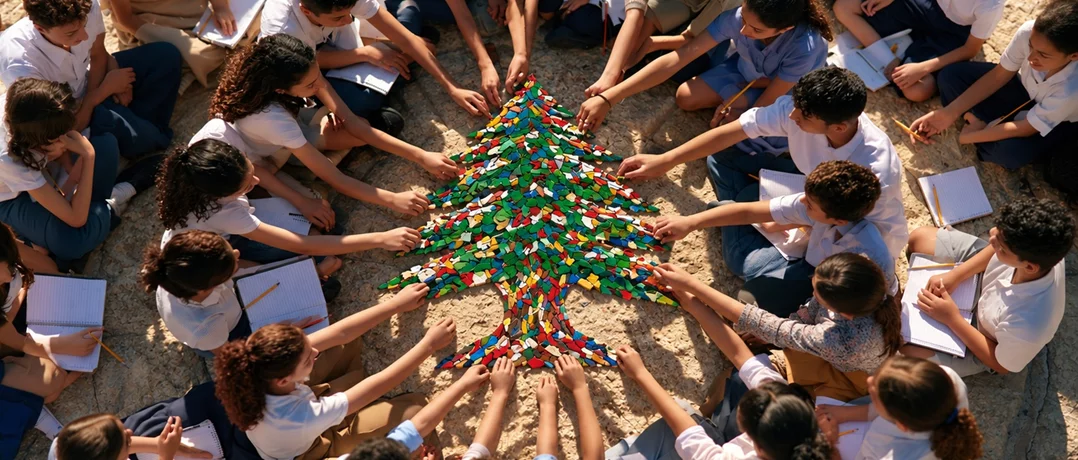
What if citizenship were taught not just through textbooks, but through everyday experiences at school?
Launched by Lebanon’s First Lady, Nehmat Aoun, the School of Citizenship (Madrasat Al Mouwataniya) is now entering its second academic year, expanding from 150 to 300 public and private schools nationwide, with the aim of making citizenship an integral part of students’ everyday school experience.
Building on its first year, the initiative is introducing new grants, international opportunities for participating schools, and a wider network of partners. The expansion follows an initial assessment of how schools have put citizenship into practice, highlighting both the progress achieved and the areas that still need improvement.
Putting citizenship into practice
Teaching students about citizenship is one thing. Giving them the opportunity to practice it is another. The School of Citizenship aims to bridge that gap by making civic responsibility part of everyday school life, rather than limiting it to lessons on rights, duties, and public institutions.
In an interview with The Beiruter, Lyna Comaty, Advisor to the First Lady of the Lebanese Republic, explained that the initiative focuses on four areas: civic knowledge, practical skills, school governance, and community involvement.
Citizenship is a practice, not just a classroom lesson.
Students are encouraged to develop skills such as public speaking, critical thinking, listening to others, and solving problems together. But the initiative also looks at whether schools give them opportunities to use those skills. Can students express their opinions freely? Are student elections held? Do teachers and parents have a say in school decisions?
The same approach extends beyond school grounds. Rather than simply taking part in activities organized by teachers, students are encouraged to identify problems in their communities, explore possible solutions, seek support, and carry out projects of their own.
For Comaty, the goal is to give young people both the confidence and the opportunity to take initiative, make decisions, and contribute to their surroundings. Citizenship, in that sense, becomes something students learn through experience, rather than a subject confined to the classroom.
What the first year revealed
The initiative began with 150 schools, evenly divided between public and private institutions across Lebanon's eight governorates. Each received initial training, followed by tailored support from a network of 30 partner organizations, depending on whether schools needed to strengthen student participation, develop practical skills, or introduce community projects.
A citizenship index developed with UNESCO helped assess schools' progress, while the American University of Beirut's Asfari Institute for Civil Society and Citizenship evaluated the first year and issued policy recommendations.
According to Comaty, one of the most important findings was the role of school principals. Neither location, religious affiliation, nor financial resources proved as influential as strong leadership in encouraging civic participation. Schools whose principals embraced these values were better able to engage teachers and students, highlighting the importance of training and supporting school leaders.
The first year also highlighted the potential of Lebanon’s public schools, many of which delivered impressive results despite limited resources.
"Some public schools are doing the work of ten private schools," Comaty said, noting that several had performed as well as, or even better than, better-funded private institutions.
While private schools often benefit from greater resources, international curricula, and connections abroad, the initiative showed that public schools are equally capable of encouraging active citizenship when given the opportunity.
Comaty also stressed that many schools were already carrying out valuable projects that received little recognition.
Part of the initiative's purpose is to bring these efforts to light, build on what schools are already doing, and provide them with the support needed to achieve more.
Young people taking the initiative
According to Comaty, 65% of participating schools implemented and presented student projects despite the disruption caused by the war.
Rather than simply taking part in activities organized by teachers, students were encouraged to identify problems in their communities, propose solutions, and find ways to put them into action. Whether organizing a local initiative, seeking partnerships, or raising funds, the emphasis was on allowing students to take responsibility for their own projects.
The results revealed a generation of young people eager to contribute when given the opportunity.
The initiative also seeks to bring students together around a shared sense of responsibility toward Lebanon, regardless of their sectarian or regional backgrounds.
Still, she stressed that meaningful change takes time. The School of Citizenship is a five-year initiative, and while its first year showed encouraging levels of participation and enthusiasm, its long-term impact remains to be seen.
Expanding opportunities for students and schools
Interest in the initiative has continued to grow, with around 250 schools expressing their willingness to join within a week of registration reopening, according to Comaty.
Participating schools will continue to receive training and support tailored to their needs, while a growing network of partner organizations will help them strengthen student participation and develop community projects.
The expansion also introduces new opportunities, including the Citizenship Generation Grant, which will benefit approximately 100 students from the ten schools recognized for their achievements during the first year. The grants will reward students who have demonstrated responsibility, helped others, and contributed to their school communities.
Four of these schools were also selected by lottery to attend international leadership conferences in Seoul and Nairobi, with UNESCO's support, giving participants an opportunity to share their experiences and learn from initiatives abroad.
The initiative is also launching a Student Digital Ambassador program to highlight students' projects and experiences online, while promoting responsible technology use, particularly as artificial intelligence becomes increasingly integrated into everyday life.
Teaching peace in a country shaped by conflict
For a country that has endured decades of conflict and sectarian divisions, teaching peace carries particular significance. The School of Citizenship draws on UNESCO's 2023 recommendations on education for peace, human rights and sustainable development, which encourage schools to promote tolerance, cooperation and mutual respect.
According to Comaty,
Lebanon is the only Arab country currently putting these recommendations into practice through such an initiative.
She considers this particularly meaningful in a country still grappling with the consequences of war.
The ambition, however, extends beyond the initiative's five-year plan. First Lady Nehmat Aoun has emphasized that the School of Citizenship is not meant to be a temporary project, but a lasting effort to build bridges, encourage dialogue and strengthen the values that bring Lebanese communities together.
Turning that vision into lasting change will take more than expanding the number of participating schools. It will depend on whether teachers and school leaders can make these values part of everyday life, and whether students carry them beyond the classroom.
The first year has shown encouraging signs, but the real test lies ahead. The challenge is not simply to teach children what citizenship means, but to give them the opportunity to practice it, and perhaps carry a different understanding of belonging into Lebanon's future.
-
-
-
Michella RizkContent Manager/WriterFocusing on social affairs.
-
