



Egypt’s reference to Article 51 in the UN Charter has renewed debate over whether water security threats can justify self-defense under international law.
Can Egypt invoke self-defense concerning the GERD dispute?
Can Egypt invoke self-defense concerning the GERD dispute?
By The Beiruter | September 04, 2026

Reading time: 5 min
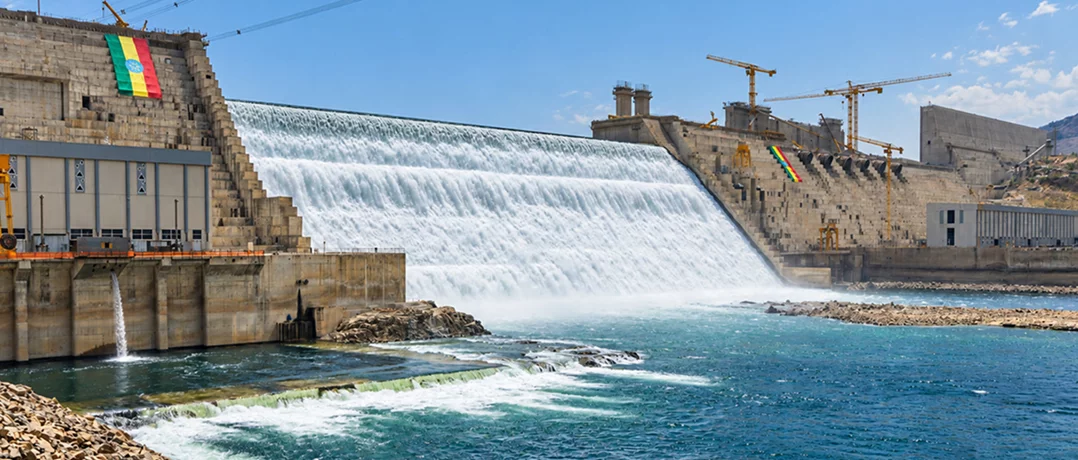
The dispute between Egypt and Ethiopia over the Grand Ethiopian Renaissance Dam (GERD) has evolved into one of Africa’s most complex geopolitical and legal conflicts. Built on the Blue Nile in northwestern Ethiopia, the dam represents a cornerstone of Ethiopia’s economic development strategy while simultaneously raising profound concerns in Egypt over water security.
With Ethiopia having inaugurated the GERD in September 2025 and announcing plans to develop additional hydropower projects on the Blue Nile, tensions have entered a new phase. Although Egypt continues to prioritize diplomacy, the reference of the invocation of Article 51 in the United Nations (UN) Charter reflects the seriousness with which Cairo views the Nile issue as an existential concern.
Egypt’s recent invocation of Article 51 in the UN Charter
The latest escalation followed remarks by Egyptian Foreign Minister Badr Abdelatty, who stated that if any action significantly disrupted the flow of Nile waters, Egypt would have the right to defend itself under international law, specifically referencing Article 51 of the UN Charter.
Article 51 recognizes the inherent right of states to individual or collective self-defense if an armed attack occurs against a member of the UN. States exercising this right must immediately report their actions to the UN Security Council (UNSC), and such measures continue only until the Council takes appropriate action to maintain international peace and security.
Abdelatty’s statement signals that Cairo considers water security a component of national security. Some argue that deliberate actions threatening the survival of millions could justify invoking broader interpretations of self-defense, particularly if upstream policies intentionally deprive downstream populations of essential water resources.
However, this interpretation remains legally controversial.
Can water threats constitute armed aggression?
Under the traditional interpretation of international law, Article 51 applies only after an actual armed attack. Economic pressure, environmental disputes, or resource disagreements generally do not qualify as armed aggression.
Nevertheless, contemporary legal scholarship has increasingly examined whether intentional deprivation of critical resources, particularly water, could, under exceptional circumstances, amount to an act threatening a state’s existence. Some scholars argue that if water were deliberately weaponized to inflict catastrophic humanitarian consequences, the legal concept of self-defense might evolve accordingly.
Despite these academic discussions, no established international legal precedent currently recognizes the operation of a dam, by itself, as constituting an armed attack within the meaning of Article 51.
Why the GERD matters
The GERD is Africa’s largest hydroelectric dam, with an installed capacity exceeding 5,000 megawatts and a reservoir capable of storing approximately 74 billion cubic meters of water. Ethiopia argues that the project is essential to addressing chronic electricity shortages, accelerating industrialization, and promoting regional energy integration through electricity exports.
For Addis Ababa, the dam symbolizes national sovereignty and economic transformation. Around half of Ethiopia’s population historically lacked reliable electricity access, making hydropower a strategic priority for development. Ethiopian officials have consistently maintained that the GERD is intended primarily for electricity generation rather than irrigation and therefore does not permanently consume Nile waters.
Egypt, however, views the issue differently. More than 90% of its freshwater originates from the Nile River, making any upstream alteration to water flows a matter of national survival. Egyptian concerns focus less on hydropower generation itself than on reservoir filling schedules, drought management, water releases, and the absence of a legally binding agreement governing dam operations.
Historical and legal background
The dispute reflects decades of disagreement over Nile water rights.
Egypt has traditionally relied on the 1929 Anglo-Egyptian Treaty and the 1959 Nile Waters Agreement with Sudan, which allocated the vast majority of Nile waters between the two downstream countries while granting Egypt significant influence over upstream projects.
Ethiopia rejects these agreements, arguing that it was never a party to them and therefore cannot be bound by colonial-era arrangements that excluded upstream states despite contributing roughly 85% of the Blue Nile’s flow.
In 2015, Egypt, Sudan, and Ethiopia signed the Declaration of Principles, committing themselves to cooperation, avoiding significant harm, and pursuing negotiated solutions regarding the GERD. However, years of negotiations failed to produce a binding agreement on reservoir filling and long-term operation, leaving fundamental disagreements unresolved.
Ethiopia’s next dams and Egypt’s strategic challenge
The dispute has become even more significant following Ethiopia’s reported plans to revive three additional Blue Nile hydropower projects: Karadobi, Mandaya, and Beko Abo.
Although these projects remain at the planning stage and their final technical specifications may change, they demonstrate Ethiopia’s long-term commitment to expanding hydropower development across the Blue Nile basin.
For Egypt, the challenge has shifted from preventing construction to influencing how future dams are designed, filled, and operated. The GERD experience demonstrated that diplomatic pressure alone could not halt Ethiopia’s flagship project. Instead, Cairo now seeks greater transparency, advance notification, binding operational rules, and effective drought-management mechanisms for both existing and future infrastructure.
Egypt’s strongest leverage as diplomatic rather than coercive. Cooperation with Sudan, engagement through African and international institutions, and continued efforts to secure legally binding operational agreements remain Cairo’s principal policy instruments.
Sudan’s position
Sudan occupies a unique position between the two rivals. While Khartoum shares Egypt’s concerns regarding dam safety, information sharing, and coordinated water management, it also stands to benefit from more stable river flows, reduced flooding, and access to affordable Ethiopian electricity.
However, Sudan’s prolonged internal conflict has significantly constrained its diplomatic role, limiting its ability to actively shape negotiations despite being directly affected by developments on the Blue Nile.
As Ethiopia advances additional hydropower projects, the central challenge for all parties will be establishing transparent, predictable, and cooperative mechanisms governing dam operations. The future of the basin will largely be determined by whether Ethiopia, Egypt, and Sudan can reconcile development ambitions with the shared responsibility of managing one of the world’s most vital transboundary rivers.
-
-

-
The Beiruter
-
