



In an exclusive interview with The Beiruter, ISF General Joseph Moussallem reveals why Lebanon’s road accidents are rising—and what must change to save lives.
Can Lebanon put the brakes on rising road deaths?
Can Lebanon put the brakes on rising road deaths?
By The Beiruter | August 22, 2026

Reading time: 8 min
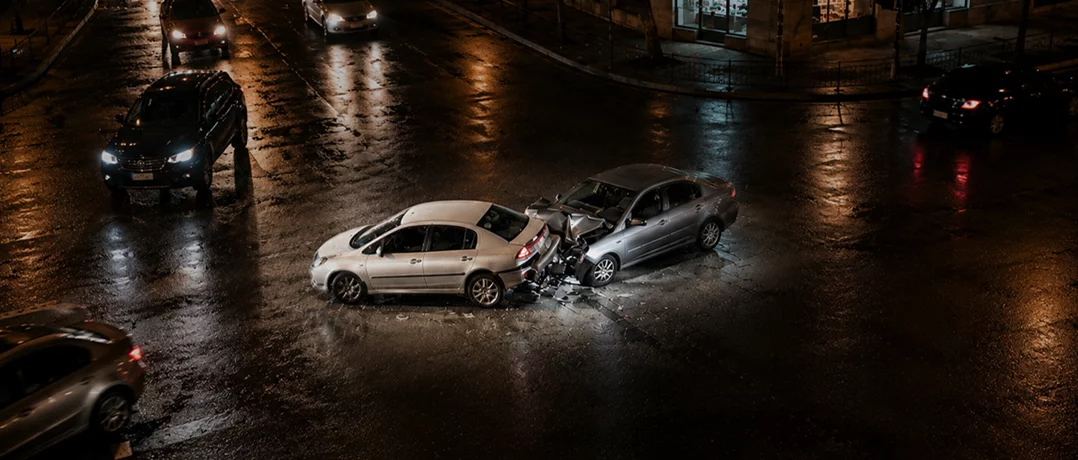
Road traffic accidents remain one of Lebanon’s most pressing public safety concerns, claiming hundreds of lives and leaving thousands injured every year. Although the country witnessed a notable decline in fatalities following the introduction of the 2015 Traffic Law, recent statistics indicate that this progress has slowed, with accident rates once again on the rise.
In an interview with The Beiruter, General Joseph Moussallem, Head of the Public Relations Division at the General Directorate of the Internal Security Forces (ISF), explained the factors behind Lebanon’s road safety trends, the challenges limiting law enforcement, and the measures required to reduce what he described as “traffic homicides;” preventable deaths caused by dangerous driving behavior.
Road accident statistics show a sharp increase
The latest figures provided by the General Directorate of the ISF to The Beiruter illustrate a significant rise in road accidents the year 2025 compared with that of 2024.
According to the official statistics, Lebanon recorded 2,680 road accidents in 2025, compared with 1,991 accidents in 2024, representing an increase of 689 accidents, or 34.61%.
The number of people injured also increased considerably, rising from 2,359 to 3,177, an additional 818 injuries, equivalent to a 34.68% increase.
Fatalities followed the same upward trend. Deaths climbed from 389 in 2024 to 451 in 2025; an increase of 62 deaths, or 15.94%.
Monthly figures show that the highest number of accidents in 2025 occurred in June and July, with 234 accidents recorded in each month, while July also witnessed the highest number of injuries at 284 and 43 fatalities.
The preliminary figures available for 2026, covering the first 7 months of the year reflected in the official comparison, indicate 1,479 accidents, 1,650 injuries, and 56 fatalities. Compared with the equivalent reporting period in 2025 (meaning only the first 7 months), this represents decreases of 11.34% in accidents and 7.20% in injuries, while fatalities also declined substantially by 78.71%.
Although encouraging, these figures remain preliminary and will require further monitoring as the year progresses. All in all, however, Lebanon witnessed 6,150 accidents, 7,186 injuries, and 1,096 fatalities from 1 January 2024 until 31 July 2026.
The impact of the 2015 Traffic Law
General Moussallem highlighted that Lebanon’s 2015 Traffic Law marked a turning point in improving road safety.
Before the legislation came into force, Lebanon recorded approximately 21 to 22.5 road traffic deaths per 100,000 inhabitants. Following the law’s implementation, combined with intensive awareness campaigns and strict enforcement, the rate fell to roughly 16 deaths per 100,000 inhabitants between 2016 and 2019.
Today, Lebanon’s mortality rate fluctuates between 16 and 18 deaths per 100,000 inhabitants, demonstrating that the law produced measurable improvements, even if recent years have witnessed some deterioration.
The Traffic Law of 2015 succeeded in reducing road accidents, fatalities, and injuries.
Nevertheless, Lebanon continues to perform significantly worse than many European countries. General Moussallem noted that countries such as Sweden and Germany record approximately 3 deaths per 100,000 inhabitants, while France records around 5, illustrating the considerable gap that still separates Lebanon from international best practices.
Why the numbers began rising again
While the Traffic Law initially succeeded in reducing accidents, General Moussallem explained that several developments gradually weakened its effectiveness.
We should always move toward addressing the causes, not the consequences.
The first challenge emerged after the 2019 economic crisis and nationwide protests, which complicated enforcement efforts as security forces were increasingly occupied with maintaining public order.
The rapid depreciation of the Lebanese pound also dramatically reduced the real value of traffic fines. Although Parliament later increased fines tenfold, inflation largely erased their real value and deterrent effect.
A tenfold increase is reasonable, but the penalties have still not regained their deterrent effect.
General Moussallem also pointed out that the gradual recovery of economic activity, especially following the COVID-19 pandemic, has naturally led to increased traffic volumes. More vehicles on the roads inevitably create greater opportunities for collisions, helping explain the rise in accidents between 2024 and 2025.
He added that the suspension of several technological projects and road safety initiatives following the economic collapse interrupted the momentum achieved between 2015 and 2019, when Lebanon had begun implementing more advanced traffic management systems.
Building a stronger road safety culture
General Moussallem stressed that reducing road accidents requires a comprehensive strategy rather than relying on a single measure.
Protecting young drivers through education:
According to General Moussallem, road traffic accidents remain the leading cause of death worldwide among children and young adults aged 5 and 29, making youth protection one of the ISF’s highest priorities.
Rather than relying solely on enforcement, the ISF has invested heavily in improving driver education. Informal driving offices have gradually been transformed into structured driving schools, while instructors are now required to undergo specialized professional training before they are permitted to teach. Indeed, Mousallem believed that education plays a central role in preventing accidents, particularly among younger drivers who remain the group most vulnerable to road traffic deaths.
The examination committees responsible for assessing new drivers have also been modernized. Committee members now receive formal instruction at the ISF Institute, replacing what he described as an outdated and insufficiently qualified system.
Highlighting the importance of quality instruction, he said:
We spend so much to educate our children in the best schools. Why should we hesitate to have them taught driving by the very best specialists?
According to General Moussallem, producing better-trained instructors ultimately results in better-prepared drivers who understand not only how to operate a vehicle safely but also the responsibility that comes with sharing the road.
He also stressed that families have an important role to play by ensuring their children receive proper road safety education before obtaining a driver’s license and by helping build a culture that values responsible driving from an early age.
Restoring the deterrent effect and consistent enforcement of the law:
Another key priority is restoring the deterrent effect of traffic fines. Given the depreciation of the Lebanese pound, many penalties have lost much of their practical value, making them less effective in discouraging dangerous violations such as speeding, driving against traffic, running red lights, and reckless overtaking. Updating fines to reflect current economic realities would help restore their effectiveness while ensuring that sanctions remain meaningful.
Equally important is the consistent enforcement of the Traffic Law. The progress achieved following the introduction of the 2015 legislation demonstrated that visible police presence, regular checkpoints, and strict application of the law can significantly reduce accidents, injuries, and fatalities. Maintaining that level of enforcement requires sufficient resources, coordination among security agencies, and sustained political support.
Expanding public awareness:
General Moussallem stressed that public awareness campaigns must become a permanent effort rather than occasional initiatives.
Alongside improvements in driver education, the ISF has expanded its outreach through television, schools, universities, and social media platforms such as TikTok and Instagram to reach younger audiences with messages promoting seatbelt use, speed limits, distracted driving awareness, and respect for traffic regulations. Developing a culture in which road safety is viewed as a shared civic responsibility, he argued, is just as important as enforcing penalties.
He also highlighted the importance of incorporating road safety education into schools and secondary education so that young people are prepared long before they begin driving.
Investing in safer roads and smarter transport:
Road safety also depends on improvements to Lebanon’s physical infrastructure. Well-maintained roads, functioning traffic lights, adequate street lighting, clear lane markings, properly designed intersections, and visible road signs all help reduce the likelihood of collisions. Likewise, regular vehicle inspections can prevent mechanical failures from contributing to serious accidents.
General Moussallem also highlighted the importance of investing in modern public transportation. Expanding reliable public transport networks would reduce the country’s heavy dependence on private vehicles, easing congestion and enormous pressure on law enforcement as well as lowering overall accident rates while making traffic law enforcement more manageable. Developing a modern public transport system, including buses and eventually rail services, would also make traffic management significantly easier while contributing to economic growth.
A shared national responsibility:
General Moussallem argued that reducing road accidents requires a partnership between the state and society.
Authorities must continue strengthening legislation, enforcement, education, infrastructure, and technological monitoring systems, while motorists themselves must adopt safer driving habits. Respecting speed limits, avoiding mobile phone use while driving, wearing seatbelts, maintaining vehicles properly, and exercising patience on the road are simple yet critical actions that save lives.
He identified speeding as the leading cause of fatal road accidents, explaining that higher speeds dramatically increase both the likelihood of collisions and the severity of injuries. He also warned that driving under the influence of alcohol or drugs, texting while driving, and reading messages behind the wheel are among today’s most dangerous behaviors.
Texting while driving is like driving blind for several seconds.
He explained that drivers using mobile phones often fail to brake before impact, making crashes significantly more severe than other types of collisions.
General Moussallem further highlighted pedestrian safety, noting that approximately 40% of road fatalities in Lebanon are pedestrians. He urged citizens to learn and respect basic pedestrian safety rules, including using sidewalks whenever available, crossing roads correctly, and walking against the direction of traffic when sidewalks are absent in order to better observe approaching vehicles.
Finally, he encouraged all citizens to familiarize themselves with Lebanon’s Traffic Law, arguing that it is one of the few laws every person encounters daily and one of the most important for protecting lives.
Creating safer roads is not solely the responsibility of the ISF, it is a collective national commitment that depends on changing both public policy and driving culture.
-
-

-
The Beiruter
-
